
“No man knows what he can do until he tries.”
Carter G. Woodson book The Mis-Education of the Negro
Source: The Mis-Education of the Negro
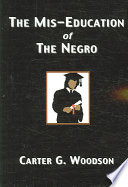
The Mis-Education of the Negro is a book originally published in 1933 by Dr. Carter G. Woodson. The thesis of Dr. Woodson's book is that blacks of his day were being culturally indoctrinated, rather than taught, in American schools. This conditioning, he claims, causes blacks to become dependent and to seek out inferior places in the greater society of which they are a part. He challenges his readers to become autodidacts and to "do for themselves", regardless of what they were taught:
“No man knows what he can do until he tries.”
Carter G. Woodson book The Mis-Education of the Negro
Source: The Mis-Education of the Negro
Carter G. Woodson book The Mis-Education of the Negro
Source: The Mis-Education of the Negro (1933), Chapter XVIII: The Study of the Negro<!-- p. 131 -->
Context: The chief reason why so many give such a little attention to the background of the Negro is the belief that this study is unimportant. They consider as history only such deeds as those of Mussolini who after building up an efficient war machine with the aid of other Europeans would now use it to murder unarmed and defenseless Africans who have restricted themselves exclusively to attending to their own business. If Mussolini succeeds in crushing Abyssinia he will be recorded in "history" among the Caesars, and volumes written in praise of the conqueror will find their way to the homes and libraries of thousands of miseducated Negroes. The oppressor has always indoctrinated the weak with this interpretation of the crimes of the strong.
“When you control a man's thinking you do not have to worry about his actions.”
Carter G. Woodson book The Mis-Education of the Negro
Preface <!-- p. 21 -->
Source: The Mis-Education of the Negro (1933)
Context: When you control a man's thinking you do not have to worry about his actions. You do not have to tell him not to stand here or go yonder. He will find his "proper place" and will stay in it. You do not need to send him to the back door. He will go without being told. In fact, if there is no back door, he will cut one for his special benefit. His education makes it necessary.
The same educational process which inspires and stimulates the oppressor with the thought that he is everything and has accomplished everything worth while, depresses and crushes at the same time the spark of genius in the Negro by making him feel that his race does not amount to much and never will measure up to the standards of other peoples. The Negro thus educated is a hopeless liability of the race.
Carter G. Woodson book The Mis-Education of the Negro
Source: The Mis-Education of the Negro (1933), Chapter XVIII: The Study of the Negro<!-- p. 131 -->
Context: The chief reason why so many give such a little attention to the background of the Negro is the belief that this study is unimportant. They consider as history only such deeds as those of Mussolini who after building up an efficient war machine with the aid of other Europeans would now use it to murder unarmed and defenseless Africans who have restricted themselves exclusively to attending to their own business. If Mussolini succeeds in crushing Abyssinia he will be recorded in "history" among the Caesars, and volumes written in praise of the conqueror will find their way to the homes and libraries of thousands of miseducated Negroes. The oppressor has always indoctrinated the weak with this interpretation of the crimes of the strong.
Carter G. Woodson book The Mis-Education of the Negro
Source: The Mis-Education of the Negro (1933), Chapter XVIII: The Study of the Negro
“The average Negro has not been sufficiently mis-educated to become hopeless.”
Carter G. Woodson book The Mis-Education of the Negro
Source: The Mis-Education of the Negro (1933), Chapter X: The Loss of Vision<!-- p. 84 -->
Context: The average Negro has not been sufficiently mis-educated to become hopeless.
Our minds must become sufficiently developed to use segregation to kill segregation, and thus bring to pass that ancient and yet modern prophecy, "The wrath of man shall praise thee." If the Negro in the ghetto must eternally be fed by the hand that pushes him into the ghetto, he will never become strong enough to get out of the ghetto. This assumption of Negro leadership in the ghetto, then, must not be confined to matters of religion, education, and social uplift; it must deal with such fundamental forces in life as make these things possible. If the Negro area, however, is to continue as a district supported wholly from without, the inept dwellers therein will merit and will receive only the contempt of those who may occasionally catch glimpses of them in their plight.
Carter G. Woodson book The Mis-Education of the Negro
Preface
The Mis-Education of the Negro (1933)
Context: The educational system as it has developed both in Europe and America an antiquated process which does not hit the mark even in the case of the needs of the white man himself. If the white man wants to hold on to it, let him do so; but the Negro, so far as he is able, should develop and carry out a program of his own.
The so-called modern education, with all its defects, however, does others so much more good than it does the Negro, because it has been worked out in conformity to the needs of those who have enslaved and oppressed weaker peoples. For example, the philosophy and ethics resulting from our educational system have justified slavery, peonage, segregation, and lynching. The oppressor has the right to exploit, to handicap, and to kill the oppressed. Negroes daily educated in the tenets of such a religion of the strong have accepted the status of the weak as divinely ordained, and during the last three generations of their nominal freedom they have done practically nothing to change it.


