
“A leader leads by example not by force.”
Sun Tzu book The Art of War
Source: The Art of War, Chapter IX · Movement and Development of Troops
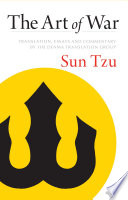
The Art of War is an ancient Chinese military treatise dating from the Late Spring and Autumn Period . The work, which is attributed to the ancient Chinese military strategist Sun Tzu , is composed of 13 chapters. Each one is devoted to an aspect of warfare and how it applies to military strategy and tactics. For almost 1,500 years it was the lead text in an anthology that would be formalised as the Seven Military Classics by Emperor Shenzong of Song in 1080. The Art of War remains the most influential strategy text in East Asian warfare and has influenced both Eastern and Western military thinking, business tactics, legal strategy, lifestyles and beyond.
“A leader leads by example not by force.”
Sun Tzu book The Art of War
Source: The Art of War, Chapter IX · Movement and Development of Troops
Sun Tzu book The Art of War
The Art of War, Chapter X · Terrain
Context: If words of command are not clear and distinct, if orders are not thoroughly understood, the general is to blame. But if his orders are clear, and the soldiers nevertheless disobey, then it is the fault of their officers.
“The art of war is of vital importance to the State.”
Sun Tzu book The Art of War
The Art of War, Chapter I · Detail Assessment and Planning
Context: The art of war is of vital importance to the State. It is a matter of life and death, a road either to safety or to ruin. Hence it is a subject of inquiry which can on no account be neglected.
“Sweat more during peace; bleed less during war.”
Sun Tzu book The Art of War
Source: The Art of War (Umění války)
Sun Tzu book The Art of War
(zh-TW) 微乎微乎,至於無形;神乎神乎,至於無聲;故能為敵之司命。
Alternative translation: Subtle and insubstantial, the expert leaves no trace; divinely mysterious, he is inaudible. Thus he is master of his enemy's fate.
Alternative translation: O divine art of subtlety and secrecy! Through you we learn to be invisible, through you inaudible and hence we can hold the enemy's fate in our hands.
The Art of War, Chapter VI · Weaknesses and Strengths
“WANG XI Opponents cannot exhaust you.”
Sun Tzu book The Art of War
The Art of War: Complete Texts and Commentaries
Sun Tzu book The Art of War
Alternative translation: Subtle and insubstantial, the expert leaves no trace; divinely mysterious, he is inaudible. Thus he is master of his enemy's fate.
Alternative translation: O divine art of subtlety and secrecy! Through you we learn to be invisible, through you inaudible and hence we can hold the enemy's fate in our hands.
The Art of War, Chapter VI · Weaknesses and Strengths
Context: Be extremely subtle, even to the point of formlessness. Be extremely mysterious, even to the point of soundlessness. Thereby you can be the director of the opponent's fate.
Sun Tzu book The Art of War
(zh-TW) 孫子曰:國之上下,死生之地,存亡之道,不可不察也。
The Art of War, Chapter 1 · Detail Assessment and Planning
“Thus, what is of supreme importance in war is to attack the enemy's strategy.”
Sun Tzu book The Art of War
是故上攻伐谋
The Art of War, Chapter III · Strategic Attack
Variant: Thus, what is of supreme importance in war is to attack the enemy's strategy.


