Quotes from book
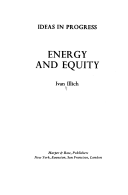
Energy and Equity


Ivan Illich photo

“He has lost faith in the political power of the feet and of the tongue. As a result, what he wants is not more liberty as a citizen but better service as a client. He does not insist on his freedom to move and to speak to people but on his claim to be shipped and to be informed by media. He wants a better product rather than freedom from servitude to it. It is vital that he come to see that the acceleration he demands is self-defeating, and that it must result in a further decline of equity, leisure, and autonomy.”

Ivan Illich book Energy and Equity

"Energy and Equity" (1974).
Context: The habitual passenger cannot grasp the folly of traffic based overwhelmingly on transport. His inherited perceptions of space and time and of personal pace have been industrially deformed. He has lost the power to conceive of himself outside the passenger role. Addicted to being carried along, he has lost control over the physical, social, and psychic powers that reside in man's feet. The passenger has come to identify territory with the untouchable landscape through which he is rushed. He has become impotent to establish his domain, mark it with his imprint, and assert his sovereignty over it. He has lost confidence in his power to admit others into his presence and to share space consciously with them. He can no longer face the remote by himself. Left on his own, he feels immobile.
The habitual passenger must adopt a new set of beliefs and expectations if he is to feel secure in the strange world where both liaisons and loneliness are products of conveyance. To "gather" for him means to be brought together by vehicles. He comes to believe that political power grows out of the capacity of a transportation system, and in its absence is the result of access to the television screen. He takes freedom of movement to be the same as one's claim on propulsion. He believes that the level of democratic process correlates to the power of transportation and communications systems. He has lost faith in the political power of the feet and of the tongue. As a result, what he wants is not more liberty as a citizen but better service as a client. He does not insist on his freedom to move and to speak to people but on his claim to be shipped and to be informed by media. He wants a better product rather than freedom from servitude to it. It is vital that he come to see that the acceleration he demands is self-defeating, and that it must result in a further decline of equity, leisure, and autonomy.

Ivan Illich photo

“The habitual passenger cannot grasp the folly of traffic based overwhelmingly on transport. His inherited perceptions of space and time and of personal pace have been industrially deformed. He has lost the power to conceive of himself outside the passenger role.”

Ivan Illich book Energy and Equity

"Energy and Equity" (1974).
Context: The habitual passenger cannot grasp the folly of traffic based overwhelmingly on transport. His inherited perceptions of space and time and of personal pace have been industrially deformed. He has lost the power to conceive of himself outside the passenger role. Addicted to being carried along, he has lost control over the physical, social, and psychic powers that reside in man's feet. The passenger has come to identify territory with the untouchable landscape through which he is rushed. He has become impotent to establish his domain, mark it with his imprint, and assert his sovereignty over it. He has lost confidence in his power to admit others into his presence and to share space consciously with them. He can no longer face the remote by himself. Left on his own, he feels immobile.
The habitual passenger must adopt a new set of beliefs and expectations if he is to feel secure in the strange world where both liaisons and loneliness are products of conveyance. To "gather" for him means to be brought together by vehicles. He comes to believe that political power grows out of the capacity of a transportation system, and in its absence is the result of access to the television screen. He takes freedom of movement to be the same as one's claim on propulsion. He believes that the level of democratic process correlates to the power of transportation and communications systems. He has lost faith in the political power of the feet and of the tongue. As a result, what he wants is not more liberty as a citizen but better service as a client. He does not insist on his freedom to move and to speak to people but on his claim to be shipped and to be informed by media. He wants a better product rather than freedom from servitude to it. It is vital that he come to see that the acceleration he demands is self-defeating, and that it must result in a further decline of equity, leisure, and autonomy.

Similar authors

Ivan Illich photo
Ivan Illich66
austrian philosopher and theologist 1926–2002
Ludwig Wittgenstein photo
Ludwig Wittgenstein228
Austrian-British philosopher None
Erwin Schrödinger photo
Erwin Schrödinger67
Austrian physicist None
Stefan Zweig photo
Stefan Zweig106
Austrian writer None
Elfriede Jelinek photo
Elfriede Jelinek50
Austrian writer None
Friedrich Hayek photo
Friedrich Hayek79
Austrian and British economist and Nobel Prize for Economic… None
Ludwig von Mises photo
Ludwig von Mises62
austrian economist None
Rudolf Steiner photo
Rudolf Steiner20
Austrian esotericist None
Martin Buber photo
Martin Buber58
German Jewish Existentialist philosopher and theologian None
Wolfgang Pauli photo
Wolfgang Pauli35
Austrian physicist, Nobel prize winner None