Quotes from book
A Passage to India

A Passage to India

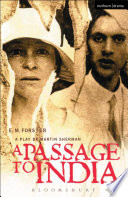
A Passage to India is a novel by English author E. M. Forster set against the backdrop of the British Raj and the Indian independence movement in the 1920s. It was selected as one of the 100 great works of 20th century English literature by the Modern Library and won the 1924 James Tait Black Memorial Prize for fiction. Time magazine included the novel in its "All Time 100 Novels" list. The novel is based on Forster's experiences in India, deriving the title from Walt Whitman's 1870 poem "Passage to India" in Leaves of Grass.The story revolves around four characters: Dr. Aziz, his British friend Mr. Cyril Fielding, Mrs. Moore, and Miss Adela Quested. During a trip to the fictitious Marabar Caves , Adela thinks she finds herself alone with Dr. Aziz in one of the caves , and subsequently panics and flees; it is assumed that Dr. Aziz has attempted to assault her. Aziz's trial, and its run-up and aftermath, bring to a boil the common racial tensions and prejudices between Indians and the British who rule India.


E.M. Forster photo

“Life never gives us what we want at the moment that we consider appropriate.”

E.M. Forster book A Passage to India

Variant: Adventures do occur, but not punctually. Life rarely gives us what we want at the moment we consider appropriate.
Source: A Passage to India

E.M. Forster photo

“Most of life is so dull that there is nothing to be said about it, and the books and talks that would describe it as interesting are obliged to exaggerate, in the hope of justifying their own existence.”

E.M. Forster book A Passage to India

Source: A Passage to India (1924), Ch. 14
Context: Most of life is so dull that there is nothing to be said about it, and the books and talks that would describe it as interesting are obliged to exaggerate, in the hope of justifying their own existence. Inside its cocoon of work or social obligation, the human spirit slumbers for the most part, registering the distinction between pleasure and pain, but not nearly as alert as we pretend. There are periods in the most thrilling day during which nothing happens, and though we continue to exclaim, “I do enjoy myself", or, “I am horrified,” we are insincere.

E.M. Forster photo
E.M. Forster photo
E.M. Forster photo
E.M. Forster photo
E.M. Forster photo

“Adventures do occur, but not punctually.”

E.M. Forster book A Passage to India

Source: A Passage to India (1924), Ch. 3

E.M. Forster photo
E.M. Forster photo
E.M. Forster photo
E.M. Forster photo
E.M. Forster photo

“Why can't we be friends now?' said the other, holding him affectionately. 'It's what I want. It's what you want.”

E.M. Forster book A Passage to India

But the horses didn't want it — they swerved apart: the earth didn't want it, sending up rocks through which riders must pass single file; the temple, the tank, the jail, the palace, the birds, the carrion, the Guest House, that came into view as they emerged from the gap and saw Mau beneath: they didn't want it, they said in their hundred voices 'No, not yet,' and the sky said 'No, not there.'
Source: A Passage to India (1924), Ch. 37

Similar authors

E.M. Forster photo
E.M. Forster200
English novelist 1879–1970
John Galsworthy photo
John Galsworthy48
English novelist and playwright None
Mario Benedetti photo
Mario Benedetti4
Uruguayan journalist, novelist, and poet None
Vladimir Nabokov photo
Vladimir Nabokov193
Russian-American novelist, lepidopterist, professor None
Rudyard Kipling photo
Rudyard Kipling200
English short-story writer, poet, and novelist None
Aldous Huxley photo
Aldous Huxley290
English writer None
Henri Barbusse photo
Henri Barbusse197
French novelist None
Samuel Beckett photo
Samuel Beckett122
Irish novelist, playwright, and poet None
Erich Maria Remarque photo
Erich Maria Remarque63
German novelist None
Clive Staples Lewis photo
Clive Staples Lewis272
Christian apologist, novelist, and Medievalist None