Thomas Malory książka Śmierć Artura
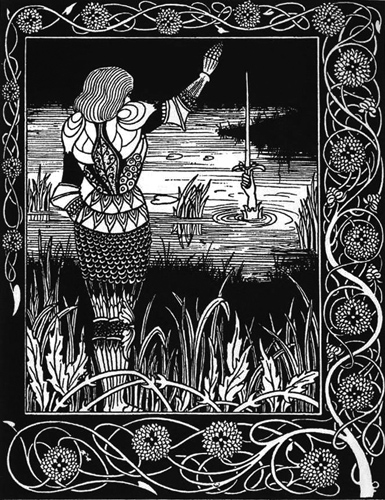
spytał Artur.
– Zwą ją Panią Jeziora – odrzekł Merlin.
Śmierć Artura
Sir Thomas Malory – pisarz angielski, autor romansu rycerskiego Śmierć Artura , stanowiącego kompilację legend o królu Arturze i uważanego za jedno z najwybitniejszych dzieł angielskiej literatury średniowiecznej.
Nazwisko Malory'ego pochodzi z języka francuskiego, starofrancuskie maleüré oznacza "nieszczęśnika". Istnieją różne wersje jego pisowni, np. Maillorie i Maleore.
Malory w swojej pracy inspirował się zarówno źródłami francuskimi , jak i angielskimi .
Niewiele jest na temat życiorysu Malory'ego informacji. Prawdopodobnie pochodził z Newbold Revel w Warwickshire. Wiadomo na pewno, że był rycerzem i więźniem, a odautorski opis siebie samego zawarty w kolofonie Śmierci Artura może sugerować, że był również księdzem. Uważa się, że został pasowany na rycerza w 1442 roku, co umożliwiło mu wejście w skład angielskiego parlamentu, jako przedstawiciela Warwickshire w 1445 roku. Prawdopodobnie w 1450 roku zszedł na drogę zbrodni, był oskarżony m.in. o gwałt, morderstwo i kradzieże. Prawdopodobnie był więziony w londyńskim Newgate w latach pięćdziesiątych XV wieku i tam właśnie rozpoczął spisywanie legend o królu Arturze i rycerzach okrągłego stołu, nadając im pierwotnie tytuł The Book of King Arthur and His Noble Knights of the Round Table. W czasie Wojny Dwóch Róż był prawdopodobnie stronnikiem Lancasterów. Jego dzieło zostało opublikowane przez Williama Caxtona pod tytułem Le Morte d'Arthur w 1485 roku. Malory napisał, iż skończył utwór w dziewiątym roku panowania Króla Edwarda IV, czyli około roku 1470. Wikipedia
Thomas Malory książka Śmierć Artura
spytał Artur.
– Zwą ją Panią Jeziora – odrzekł Merlin.
Śmierć Artura
„Kto wyciągnie ten miecz z kamienia tego i kowadła jest prawowitym królem całej Anglii.”
Thomas Malory książka Śmierć Artura
Whoso pulleth out this sword of this stone and anvil is rightwise King born of all England. (ang.)
Śmierć Artura
Źródło: Śmierć Artura, Londyn 1485.
“With that truncheon thou hast slain a good knight, and now it sticketh in thy body.”
Thomas Malory książka Śmierć Artura
Book II, ch. 14
Le Morte d'Arthur (c. 1469) (first known edition 1485)
“Then Sir Launcelot saw her visage, but he wept not greatly, but sighed.”
Thomas Malory książka Śmierć Artura
Book XXI, ch. 11
Le Morte d'Arthur (c. 1469) (first known edition 1485)
“For it giveth unto all lovers courage, that lusty month of May.”
Thomas Malory książka Śmierć Artura
Book XVIII, ch. 25
Le Morte d'Arthur (c. 1469) (first known edition 1485)
Kontekst: The month of May was come, when every lusty heart beginneth to blossom, and to bring forth fruit; for like as herbs and trees bring forth fruit and flourish in May, in likewise every lusty heart that is in any manner a lover, springeth and flourisheth in lusty deeds. For it giveth unto all lovers courage, that lusty month of May.
Thomas Malory książka Śmierć Artura
Book XVIII, ch. 25
Le Morte d'Arthur (c. 1469) (first known edition 1485)
Kontekst: Nowadays men cannot love seven night but they must have all their desires: that love may not endure by reason; for where they be soon accorded and hasty, heat soon it cooleth. Right so fareth love nowadays, soon hot soon cold: this is no stability. But the old love was not so.
Thomas Malory książka Śmierć Artura
Book XXI, ch. 9
Le Morte d'Arthur (c. 1469) (first known edition 1485)
“Whoso pulleth out this sword of this stone and anvil, is rightwise King born of all England.”
Thomas Malory książka Śmierć Artura
Book I, ch. 5
Le Morte d'Arthur (c. 1469) (first known edition 1485)
Thomas Malory książka Śmierć Artura
Book XXI, ch. 13
Le Morte d'Arthur (c. 1469) (first known edition 1485)
Thomas Malory książka Śmierć Artura
Book I, ch. 1
Le Morte d'Arthur (c. 1469) (first known edition 1485)
Thomas Malory książka Śmierć Artura
Book XVIII, ch. 25
Le Morte d'Arthur (c. 1469) (first known edition 1485)
“The joy of love is too short, and the sorrow thereof, and what cometh thereof, dureth over long.”
Thomas Malory książka Śmierć Artura
Book X, ch. 56
Le Morte d'Arthur (c. 1469) (first known edition 1485)
“Then were they afeard when they saw a knight.”
Thomas Malory książka Śmierć Artura
Book I, ch. 23
Le Morte d'Arthur (c. 1469) (first known edition 1485)
Thomas Malory książka Śmierć Artura
Book I, ch. 1
Le Morte d'Arthur (c. 1469) (first known edition 1485)
Thomas Malory książka Śmierć Artura
Book I, ch. 25
Le Morte d'Arthur (c. 1469) (first known edition 1485)
Thomas Malory książka Śmierć Artura
Book XXI, ch. 9
Le Morte d'Arthur (c. 1469) (first known edition 1485)
“What, nephew, said the king, is the wind in that door?”
Thomas Malory książka Śmierć Artura
Book VII, ch. 34
Le Morte d'Arthur (c. 1469) (first known edition 1485)
Thomas Malory książka Śmierć Artura
Book IV, ch. 9
Le Morte d'Arthur (c. 1469) (first known edition 1485)
“I shall curse you with book and bell and candle.”
Thomas Malory książka Śmierć Artura
Book XXI, ch. 1
Le Morte d'Arthur (c. 1469) (first known edition 1485)
“Knight, keep well thy head, for thou shalt have a buffet for the slaying of my horse.”
Thomas Malory książka Śmierć Artura
Book III, ch. 12
Le Morte d'Arthur (c. 1469) (first known edition 1485)