Źródło: Piotr Stasiński, Histeria amerykańskich bogaczy, wyborcza.pl, 15 października 2011 http://wyborcza.pl/1,86746,10475308,Histeria_amerykanskich_bogaczy.html
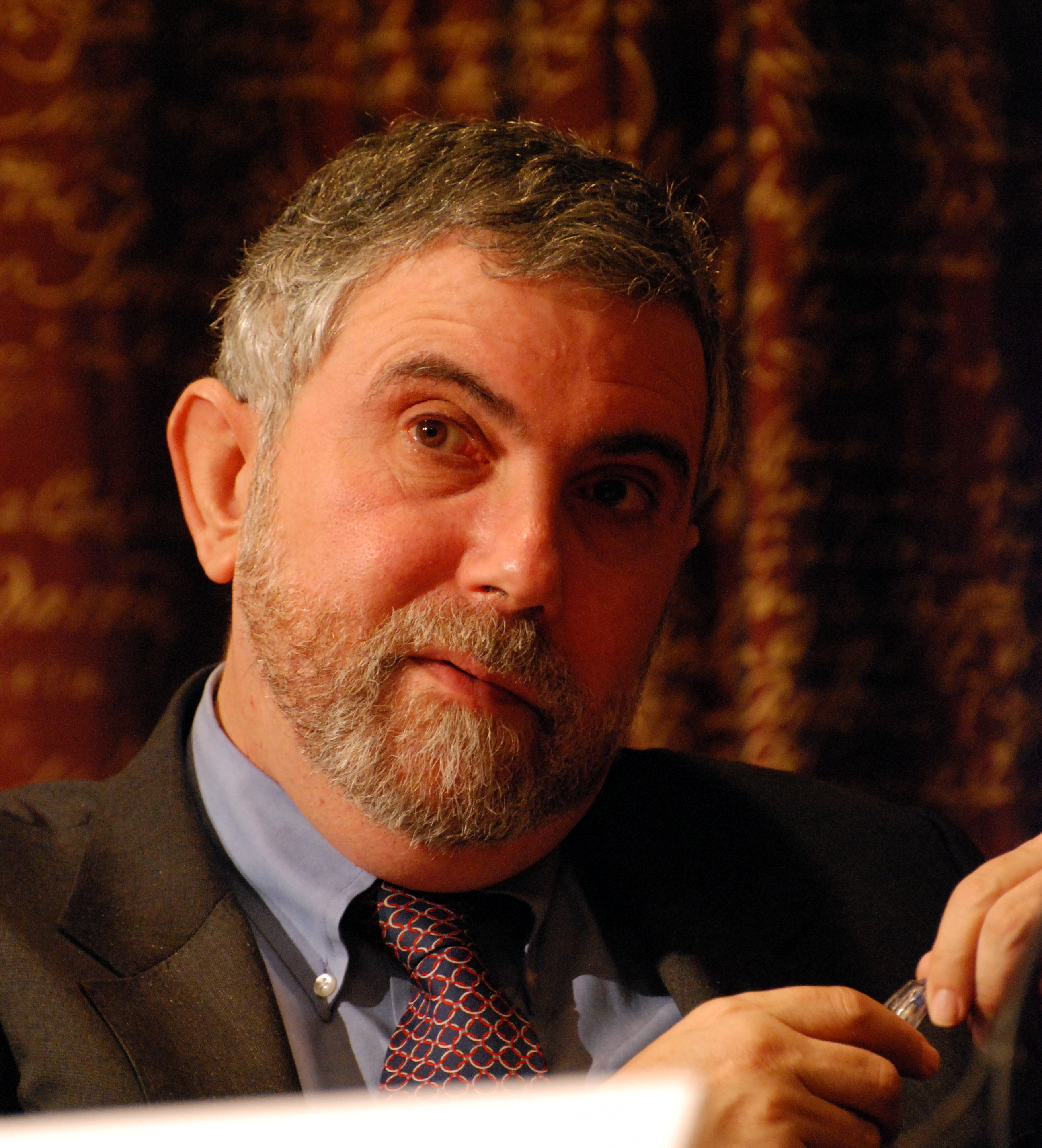
Paul Krugman: 116 cytatów0 Polubień
Paul Krugman słynne cytaty
Źródło: Piotr Stasiński, Histeria amerykańskich bogaczy, wyborcza. pl, 15 października 2011 http://wyborcza.pl/1,86746,10475308,Histeria_amerykanskich_bogaczy.html
Źródło: Zakładnik Republikanów, „The New York Times”, tłum. „Forum”, 1 sierpnia 2011.
Economists who have spent their entire careers on equilibrium business cycle theory are now discovering, in effect, that they invested their savings with Bernie Madoff. (ang.) <br class="br">Źródło: blog Paula Krugmana, 27 stycznia 2009 http://krugman.blogs.nytimes.com/2009/01/27/madoff-economics/
Źródło: Piotr Stasiński, Histeria amerykańskich bogaczy, wyborcza.pl, 15 października 2011 http://wyborcza.pl/1,86746,10475308,Histeria_amerykanskich_bogaczy.html
Paul Krugman cytaty
Źródło: blog Paula Krugmana, 31 marca 2011 http://www.nytimes.com/2011/04/01/opinion/01krugman.html?_r=0
Źródło: Floyd Norris, ... i odpuść nam nasze długi, „The New York Times”, tłum. „Forum”, 25 lipca 2011.
o kapitulacji przed mającymi większość w Izbie Reprezentantów Republikanami, w sprawie porozumienia wokół podniesienia limitów zadłużenia.
Źródło: Mariusz Zawadzki, Ameryka przebija sufit, „Gazeta Wyborcza”, 2 sierpnia 2011.
Źródło: Patrycja Maciejewicz, Leszek Baj, Wojna ratingowa, „Gazeta Wyborcza”, 9 sierpnia 2011.
Paul Krugman: Cytaty po angielsku
Paul Krugman książka Peddling Prosperity
Introduction: Looking for Magicians
Peddling Prosperity (1994)
Pop Internationalism (1996), Asia's Miracle (1994)
think guns <br class="br"> Sanders Over The Edge http://www.nytimes.com/2016/04/08/opinion/sanders-over-the-edge.html (April 8, 2016) <br class="br">The New York Times Columns
"Two Cheers for Formalism", The Economic Journal, Vol. 108, No. 451 (Nov., 1998)
The New York Times Columns, The Populism Perplex (November 25, 2016)
"Don't Laugh at Me, Argentina", Slate (July 20, 1999)
When asked to define the economic policy of the Bush administration in a BuzzFlash interview http://www.buzzflash.com/interviews/03/09/11_krugman.html, 11 September 2003
"Why aren't we all Keynesians yet?", Fortune (Aug. 3, 1998)
"Is Capitalism Too Productive?", Foreign Affairs (September/October 1997)
Źródło: Economics (4th ed., 2015), Chapter 33. Macroeconomics: Events and Ideas
Introduction
The Return of Depression Economics and The Crisis of 2008 (2009)
Paul Krugman książka Peddling Prosperity
Źródło: Peddling Prosperity (1994), Ch. 1 : The Attack on Keynes
The New York Times Columns, The Populism Perplex (November 25, 2016)
"Who Was Milton Friedman?", The New York Review of Books (February 15, 2007)
The New York Review of Books articles
Sanders Over The Edge http://www.nytimes.com/2016/04/08/opinion/sanders-over-the-edge.html (April 8, 2016) <br class="br">The New York Times Columns
Development, Geography, and Economic Theory (1995), Ch. 1. The Fall and Rise of Development Economics
Op-ed, "Franklin Delano Obama," New York Times, November 10, 2008 http://www.nytimes.com/2008/11/10/opinion/10krugman.html <br class="br">The New York Times Columns
"Baby-Sitting the Economy", Slate (Aug. 13, 1998)
"The Curious Politics of Immigration" http://krugman.blogs.nytimes.com/2010/04/26/the-curious-politics-of-immigration/, 26 April 2010, The Conscience of a Liberal blog at The New York Times
in Paul Krugman Interview https://www.youtube.com/watch?v=Z-8yFPTwhKs&feature=youtu.be&t=363 by Norwegian TV channel NRK (January 8, 2014)
Źródło: The Return of Depression Economics and The Crisis of 2008 (2009), Chapter 10. The Return of Depression Economics
Paul Krugman książka The Conscience of a Liberal
Źródło: The Conscience of a Liberal (2007), Ch. 13. The Conscience of a Liberal
Paul Krugman and Richard Layard, "A Manifesto for Economic Sense" (June 27, 2012)
"Who Was Milton Friedman?", The New York Review of Books (February 15, 2007)
The New York Review of Books articles
"Who Was Milton Friedman?", The New York Review of Books (February 15, 2007)
The New York Review of Books articles
"Who Was Milton Friedman?", The New York Review of Books (February 15, 2007)
The New York Review of Books articles
Paul Krugman książka Peddling Prosperity
Epilogue
Peddling Prosperity (1994)
"The Big Zero", The New York Times (27th December, 2009)
Pop Internationalism (1996), Competitiveness: A Dangerous Obsession (1994)


