.jpg)
Marguerite Yourcenar książka Pamiętniki Hadriana
Memoirs of Hadrian
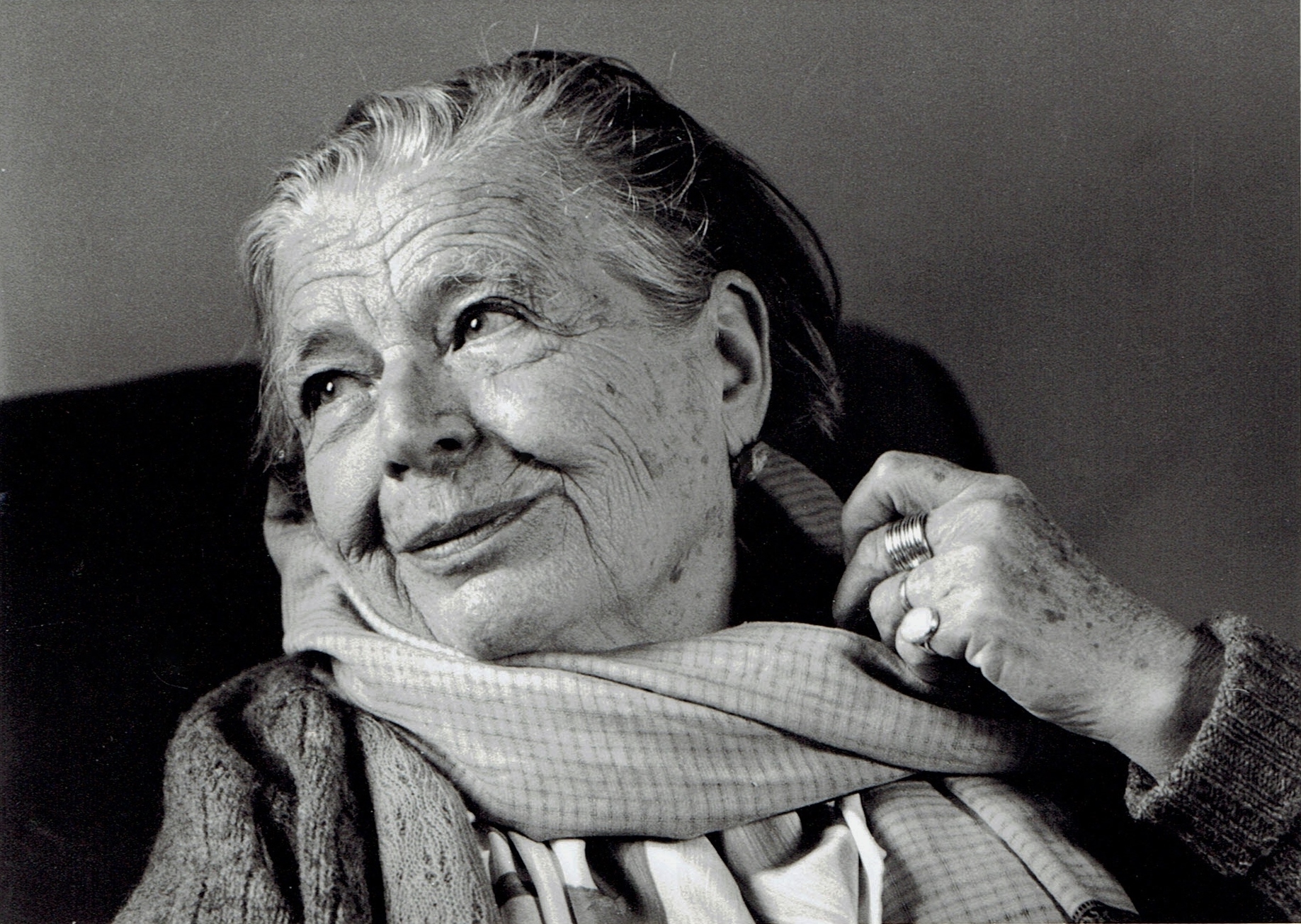
Marguerite Yourcenar, właśc. Marguerite de Crayencour – francuska pisarka.
Marguerite Yourcenar książka Pamiętniki Hadriana
Źródło: Memoirs of Hadrian
“Of all our games, love's play is the only one which threatens to unsettle the soul…”
Marguerite Yourcenar książka Pamiętniki Hadriana
Źródło: Memoirs of Hadrian
“Doubtless it signified one or the other meaning alternately, or perhaps both at the same time.”
Marguerite Yourcenar książka The Abyss
Author's note, p. 367
The Abyss (1968)
Kontekst: In alchemical treatises, the formula L'Oeuvre au Noir … designates what is said to be the most difficult phase of the alchemist's process, the separation and dissolution of substance. It is still not clear whether the term applied to daring experiments on matter itself, or whether it was understood to symbolize trials of the mind in discarding all forms of routine and prejudice. Doubtless it signified one or the other meaning alternately, or perhaps both at the same time.
Alexis (1929)
Kontekst: Every silence is composed of nothing but unspoken words. Perhaps that is why I became a musician. Someone had to express this silence, make it render up all the sadness it contained, make it sing as it were. Someone had to use not words, which are always too precise not to be cruel, but simply music.
Marguerite Yourcenar książka The Abyss
Author's note, p. 367
The Abyss (1968)
Kontekst: In alchemical treatises, the formula L'Oeuvre au Noir … designates what is said to be the most difficult phase of the alchemist's process, the separation and dissolution of substance. It is still not clear whether the term applied to daring experiments on matter itself, or whether it was understood to symbolize trials of the mind in discarding all forms of routine and prejudice. Doubtless it signified one or the other meaning alternately, or perhaps both at the same time.
Marguerite Yourcenar książka Pamiętniki Hadriana
Źródło: Memoirs of Hadrian
Marguerite Yourcenar książka Pamiętniki Hadriana
Le véritable lieu de naissance est celui où l'on a porté pour la première fois un coup d'oeil intelligent sur soi-même: mes premières patries ont été des livres.
Źródło: Memoirs of Hadrian (1951), p. 33
“Nothing is slower than the true birth of a man.”
Marguerite Yourcenar książka Pamiętniki Hadriana
Rien n'est plus lent que la véritable naissance d'un homme.
Źródło: Memoirs of Hadrian (1951), p. 258
“There are books which one should not attempt before having passed the age of forty.”
Marguerite Yourcenar książka Pamiętniki Hadriana
Źródło: Memoirs of Hadrian
Marguerite Yourcenar książka Pamiętniki Hadriana
Źródło: Memoirs of Hadrian
“Few bipeds, from Adam's time down, have been worthy of the name of man.”
Marguerite Yourcenar książka The Abyss
Peu de bipèdes depuis Adam ont mérité le nom d'homme.
"A Conversation in Innsbruck", p. 114
The Abyss (1968)
Marguerite Yourcenar książka Pamiętniki Hadriana
Je savais que le bien comme le mal est affaire de routine, que le temporaire se prolonge, que l'extérieur s'infiltre au dedans, et que le masque, à la longue, devient visage.
Źródło: Memoirs of Hadrian (1951), p. 97
Marguerite Yourcenar książka A Coin in Nine Hands
Le malheur est que, parfois, des souhaits s'accomplissent, afin que se perpétue le supplice de l'espérance.
Denier du rêve (1934), translated as A Coin in Nine Hands (1994) by Dori Katz, Ch. 3, p. 31 ISBN 0-226-96527-9
“To have merit to abstain from a fault, is a manner to be guilty.”
Avoir du mérite à s'abstenir d'une faute, c'est une façon d'être coupable.
Alexis (1929)
Marguerite Yourcenar książka The Abyss
The Highroad, p. 11<!-- Le Grand Chemin p. 564 -->
The Abyss (1968)
“We believe ourselves pure as long as we despise what we do not desire.”
Nous nous croyons purs tant que nous méprisons ce que nous ne désirons pas.
Alexis (1929)
“One must not fear the words anymore when one consented to the things.”
On ne doit plus craindre les mots lorsqu'on a consenti aux choses.
Alexis (1929)
Marguerite Yourcenar książka The Abyss
Źródło: The Abyss (1968), p. 190
Marguerite Yourcenar książka Pamiętniki Hadriana
La mémoire de la plupart des hommes est un cimetière abandonné, où gisent sans honneurs des morts qu'ils ont cessé de chérir.
Źródło: Memoirs of Hadrian (1951), p. 209
“A touch of madness is, I think, almost always necessary for constructing a destiny.”
Je crois qu'il faut presque toujours un coup de folie pour bâtir un destin.
Les yeux ouverts: entretiens avec Matthieu Galey [With Open Eyes: Conversations With Matthieu Galey] (1980)
Marguerite Yourcenar książka Pamiętniki Hadriana
Les êtres humains avouent leurs pires faiblesses quand ils s'étonnent qu'un maître du monde ne soit pas sottement indolent, présomptueux, ou cruel.
Źródło: Memoirs of Hadrian (1951), p. 103
“Passion satisfied has its innocence, almost as fragile as any other.”
Marguerite Yourcenar książka Pamiętniki Hadriana
La passion comblée a son innocence, presque aussi fragile que toute autre.
Źródło: Memoirs of Hadrian (1951), p. 156
“It is not difficult to nourish admirable thoughts when the stars are present.”
Il n'est pas difficile de nourrir des pensées admirables lorsque les étoiles sont présentes.
Alexis (1929)
“Our defects are sometimes the better adversaries when we oppose our vices.”
Nos défauts sont parfois les meilleurs adversaires que nous opposions à nos vices.
Alexis (1929)
Marguerite Yourcenar książka Pamiętniki Hadriana
Toute loi trop souvent transgressée est mauvaise: c'est au législateur à l'abroger ou à la changer.
Źródło: Memoirs of Hadrian (1951), p. 113
Marguerite Yourcenar książka Pamiętniki Hadriana
Tout bonheur est un chef-d'oeuvre: la moindre erreur le fausse, la moindre hésitation l'altère, la moindre lourdeur le dépare, la moindre sottise l'abêtit.
Źródło: Memoirs of Hadrian (1951), p. 164
Marguerite Yourcenar książka Pamiętniki Hadriana
Nos lois civiles ne seront jamais assez souples pour s'adapter à l'immense et fluide variété des faits. Elles changent moins vite que les moeurs; dangereuses quand elles retardent sur celles-ci, elles le sont davantage quand elles se mêlent de les précéder.
Źródło: Memoirs of Hadrian (1951), p. 113
Marguerite Yourcenar książka Pamiętniki Hadriana
Źródło: Memoirs of Hadrian (1951), p. 148