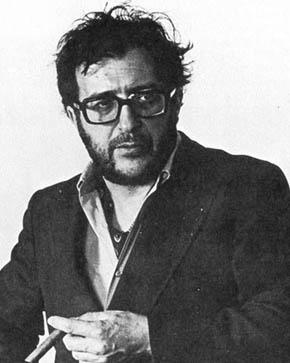
Luciano Berio cytaty

Luciano Berio – włoski kompozytor doby powojennej awangardy, słynący ze swoich muzycznych eksperymentów i działalności w zakresie muzyki elektronicznej. Zwrócił na siebie uwagę także swoimi transkrypcjami dzieł innych kompozytorów różnych epok – od Henry’ego Purcella po Igora Strawinskiego oraz inspirowaniem się dziełami filozoficznymi, literackimi, poetyckimi, Biblią aż po utwory Jamesa Joyce’a. Wikipedia  

✵ 24. Październik 1925 – 27. Maj 2003
Luciano Berio Fotografia
Luciano Berio: 3 cytaty0 Polubień

Luciano Berio: Cytaty po angielsku

“A composer's awareness of the plurality of functions of his own tools forms the basis for his responsibility just as, in everyday life, every man's responsibility begins with the recognition of the multiplicity of human races, conditions, needs, and ideals. I would go as far as to say (as my anger comes back) that any attempt to codify musical reality into a kind of imitation grammar (I refer mainly to the efforts associated with the Twelve-Tone System) is a brand of fetishism which shares with Fascism and racism the tendency to reduce live processes to immobile, labeled objects, the tendency to deal with formalities rather than substance.”

Luciano Berio

"The Composer on His Work : Meditation on a Twelve-Tone Horse", in Classic Essays on Twentieth-Century Music : A Continuing Symposium (1996) edited by Richard Kostelanetz and Joseph Darby, , p. 169
Kontekst: A composer's awareness of the plurality of functions of his own tools forms the basis for his responsibility just as, in everyday life, every man's responsibility begins with the recognition of the multiplicity of human races, conditions, needs, and ideals. I would go as far as to say (as my anger comes back) that any attempt to codify musical reality into a kind of imitation grammar (I refer mainly to the efforts associated with the Twelve-Tone System) is a brand of fetishism which shares with Fascism and racism the tendency to reduce live processes to immobile, labeled objects, the tendency to deal with formalities rather than substance. Claude Lévi-Strauss describes (though to illustrate a different point) a captain at sea, his ship reduced to a frail raft without sails, who, by enforcing a meticulous protocol on his crew, is able to distract them from nostalgia for a safe harbor and from the desire for a destination.

“Alas, this industrialized twelve-tone horse, dull on the outside and empty inside, constantly being perfected and dragged to a new Troy in shadow of an ideological war long since fought and won by responsible minds like Schoenberg, with neither systems nor scholarship for armor!”

Luciano Berio

"The Composer on His Work : Meditation on a Twelve-Tone Horse", in Classic Essays on Twentieth-Century Music : A Continuing Symposium (1996) edited by Richard Kostelanetz and Joseph Darby

Podobni autorzy

Federico Fellini Fotografia
Federico Fellini13
włoski reżyser filmowy None
Sophia Loren Fotografia
Sophia Loren13
włoska aktorka filmowa None
Enrico Fermi Fotografia
Enrico Fermi1
włoski fizyk None
Cesare Pavese Fotografia
Cesare Pavese20
włoski poeta i tłumacz None
Alberto Moravia Fotografia
Alberto Moravia21
włoski powieściopisarz, nowelista i dziennikarz None
Gabriele d'Annunzio Fotografia
Gabriele d'Annunzio8
włoski poeta, dramaturg i prozaik None
Benito Mussolini Fotografia
Benito Mussolini23
wódz ("duce") włoskich faszystów, premier Włoch None
Umberto Eco Fotografia
Umberto Eco74
włoski filozof i pisarz None
Frank Zappa Fotografia
Frank Zappa54
amerykański muzyk rockowy, multiinstrumentalista, kompozytor None
Ojciec Pio Fotografia
Ojciec Pio23
włoski zakonnik i duchowny, święty kościoła katolickiego (o… None