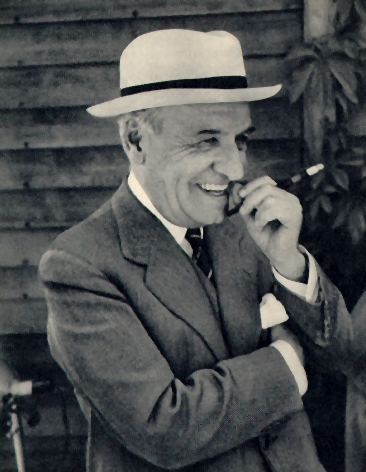
José Ortega y Gasset słynne cytaty
José Ortega y Gasset cytaty
José Ortega y Gasset: Cytaty po angielsku
“The metaphor is perhaps one of man's most fruitful potentialities.”
"Taboo and Metaphor"
The Dehumanization of Art and Ideas about the Novel (1925)
Kontekst: The metaphor is perhaps one of man's most fruitful potentialities. Its efficacy verges on magic, and it seems a tool for creation which God forgot inside one of His creatures when He made him. All our other faculties keep us within the realm of the real, of what is already there. The most we can do is to combine things or to break them up. The metaphor alone furnishes an escape; between the real things, it lets emerge imaginary reefs, a crop of floating islands. A strange thing, indeed, the existence in man of this mental activity which substitutes one thing for another — from an urge not so much to get at the first as to get rid of the second.
José Ortega Y Gasset książka The Revolt of the Masses
Chap. VIII: The Masses Intervene In Everything, And Why Their Intervention Is Solely By Violence
The Revolt of the Masses (1929)
José Ortega Y Gasset książka The Revolt of the Masses
Źródło: The Revolt of the Masses (1929), Chapter XV: We Arrive At The Real Question
José Ortega Y Gasset książka The Revolt of the Masses
Źródło: The Revolt of the Masses (1929), Chapter XIII: The Greatest Danger, The State
José Ortega Y Gasset książka The Revolt of the Masses
Źródło: The Revolt of the Masses (1929), Chapter XIV: Who Rules The World?
José Ortega Y Gasset książka The Revolt of the Masses
Źródło: The Revolt of the Masses (1929), Chapter XII: The Barbarism Of "Specialisation"
José Ortega Y Gasset książka The Revolt of the Masses
Źródło: The Revolt of the Masses (1929), Chapter XIII: The Greatest Danger, The State
Źródło: History as a System (1962), p. 16
José Ortega Y Gasset książka The Revolt of the Masses
Horace, Odes, III.6]
Chap. III: The Height Of The Times
The Revolt of the Masses (1929)
Źródło: History as a System (1962), p. 13
Źródło: What is Philosophy? (1964), p. 19
José Ortega Y Gasset książka The Revolt of the Masses
Źródło: The Revolt of the Masses (1929), Chapter XII: The Barbarism Of "Specialisation"
José Ortega Y Gasset książka The Revolt of the Masses
Źródło: The Revolt of the Masses (1929), Chapter XIV: Who Rules The World?
“Man has no nature”
History as a System (1962)
José Ortega Y Gasset książka The Revolt of the Masses
These are the ascetics.
Chap. VII: Noble Life And Common Life, Or Effort And Inertia
The Revolt of the Masses (1929)
José Ortega Y Gasset książka The Revolt of the Masses
Źródło: The Revolt of the Masses (1929), Chapter XI: The Self-Satisfied Age
Źródło: What is Philosophy? (1964), pp. 16-17
“Man has no nature”
History as a System (1962)
José Ortega Y Gasset książka The Revolt of the Masses
Chap. VIII: The Masses Intervene In Everything, And Why Their Intervention Is Solely By Violence
The Revolt of the Masses (1929)
José Ortega Y Gasset książka The Revolt of the Masses
Źródło: The Revolt of the Masses (1929), Chapter XV: We Arrive At The Real Question


