John Wilmot, 2. hrabia Rochester
Źródło: Miłość i życie, tłum. Stanisław Barańczak
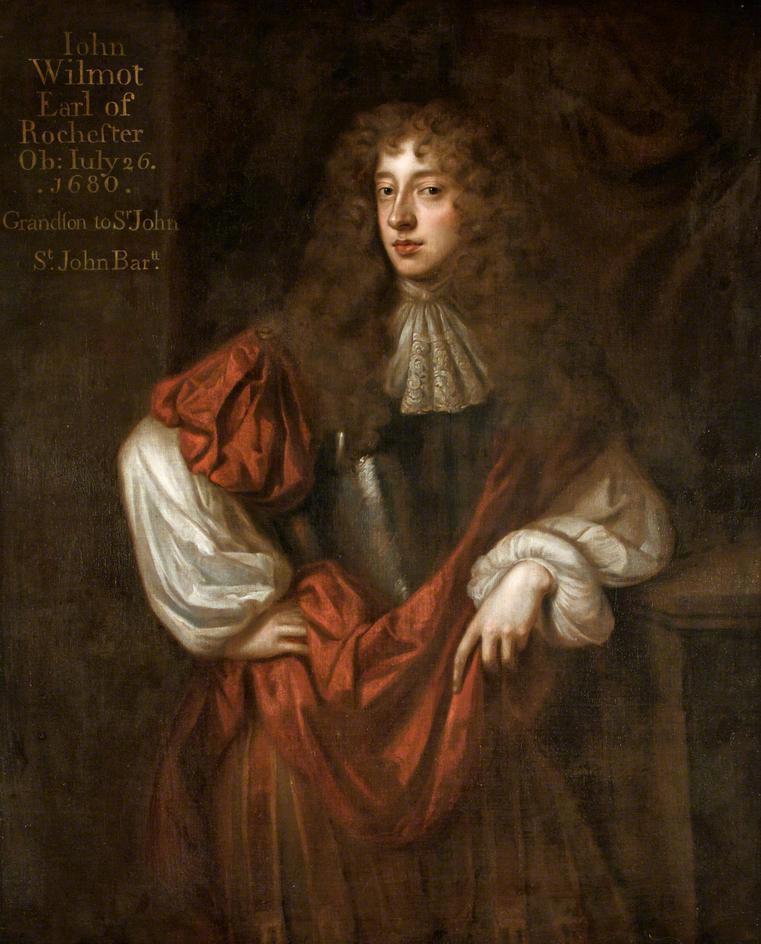
John Wilmot, 2. hrabia Rochester – angielski arystokrata, awanturnik i poeta, przyjaciel króla Karola II. Autor satyrycznych, często rozwiązłych utworów.
Był synem Henry’ego Wilmota, pierwszego hrabiego Rochester, bliskiego przyjaciela Karola II. Studiował w Oxfordzie, następnie rozpoczął karierę dworską, w czym pomogła mu sława bohatera w bitwach morskich z Holendrami. Towarzyszył królowi w hulankach, znany był z erotyzmu i pociągu niemal w stronę pornografii. Był bohaterem wielu skandali towarzyskich, jednym z najsłynniejszych było porwanie i poślubienie bogatej dziedziczki, Elizabeth Malet; za ten czyn został na krótko uwięziony w Tower.
Zmarł przedwczesną śmiercią w wieku 33 lat. Umierając, żałował za grzechy, czego świadkiem był Gilbert Burnet, późniejszy biskup Salisbury. Nawrócenie znanego grzesznika zostało szeroko rozpropagowane i było przykładem poruszanym w wielu późniejszych kazaniach.
W swojej poezji opowiadał się za racjonalizmem, wychwalał potęgę rozumu ludzkiego i nawiązywał do postawy libertyńskiej, zwłaszcza w znanym utworze Satyra na ludzkość . Bibliografia jego utworów jest dość niepewna, ponieważ nie przywiązywał wagi do ich publikacji, a w wydaniach pośmiertnych często przypisywano mu wiele obscenicznych wierszy o nieustalonym autorstwie.
W 2004 Laurence Dunmore nakręcił o nim film Rozpustnik na podstawie sztuki Stephena Jeffreysa pod tym samym tytułem. Głównego bohatera zagrał Johnny Depp. Wikipedia
John Wilmot, 2. hrabia Rochester
Źródło: Miłość i życie, tłum. Stanisław Barańczak
John Wilmot, 2nd Earl of Rochester
Written on the Bedchamber Door of Charles II, as quoted in The Book of Days : A Miscellany of Popular Antiquities (1832) by Robert Chambers, Viol. II, July 26, p. 126.
John Wilmot, 2nd Earl of Rochester
ll. 1-7.
A Satire Against Mankind (1679)
John Wilmot, 2nd Earl of Rochester
As quoted in The New Speaker's Treasury of Wit and Wisdom (1958) by Herbert Victor Prochnow
John Wilmot, 2nd Earl of Rochester
Upon Nothing, ll. 28–33.
Other
John Wilmot, 2nd Earl of Rochester
Letter to the diplomat Henry Savile (1673-1674).
Other
John Wilmot, 2nd Earl of Rochester
About King Charles II of England, as quoted in Blackwood's Edinburgh Magazine Vol. XLIV (January - June 1857) p. 592; It is said to that this was written on the door of Charles II’s bedchamber, and that on seeing it, the king replied, “This is very true: for my words are my own, and my actions are my ministers’....”
Other
John Wilmot, 2nd Earl of Rochester
The Maim'd Debauchee, ll. 13–20.
Other
“Reason, an Ignis fatuus of the Mind,
Which leaves the light of Nature, Sense, behind.”
John Wilmot, 2nd Earl of Rochester
ll. 12-13.
A Satire Against Mankind (1679)
“For pointed satire I would Buckhurst choose,
The best good man with the worst-natured muse.”
John Wilmot, 2nd Earl of Rochester
An allusion to Horace, Satire x. Book i. Compare: "Thou best-humour'd man with the worst-humour'd muse!", Oliver Goldsmith, Retaliation, Postscript.
Other
John Wilmot, 2nd Earl of Rochester
Absent from thee, I languish still, ll. 13-16.
Other
John Wilmot, 2nd Earl of Rochester
ll. 212-221
A Satire Against Mankind (1679)
John Wilmot, 2nd Earl of Rochester
A Song of a Young Lady to Her Ancient Lover, ll. 7-14.
Other
“Love, the most generous passion of the mind
The softest refuge innocence can find”
John Wilmot, 2nd Earl of Rochester
A Letter from Artemisia in Town to Chloe in the Country (1679)
John Wilmot, 2nd Earl of Rochester
ll. 16–21.
A Satire Against Mankind (1679)
John Wilmot, 2nd Earl of Rochester
A Letter from Artemisia in Town to Chloe in the Country (1679)
John Wilmot, 2nd Earl of Rochester
The Imperfect Enjoyment (published 1680).
Other
“For all Men would be Cowards if they durst:
And Honesty’s against all common Sense.”
John Wilmot, 2nd Earl of Rochester
ll. 158-159.
A Satire Against Mankind (1679)