„Szczęśliwy człowiek nie ma koszuli.”
The happy man's without a shirt.
Źródło: Be Merry Friends
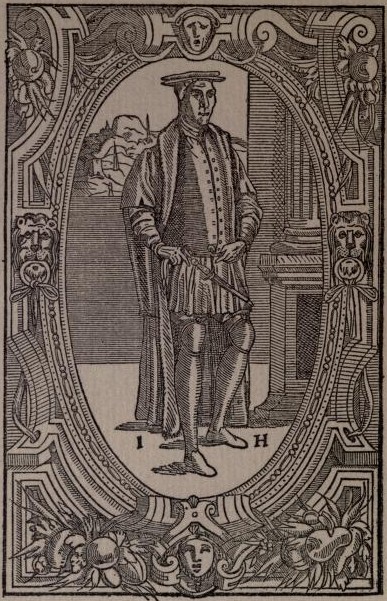
John Heywood – angielski dramaturg i poeta.
Najbardziej znanym utworem dramatycznym Johna Heywooda jest farsa The Four P's . Jego bohaterowie: Palmer , Pardoner , Potycary i Pedler współzawodniczą w konkursie na największe kłamstwo. Inną sztuką jest Wytty and Wytless . Poeta pozostawił po sobie również wiele epigramatów.
Fraszki Heywooda są dostępne w internetowej antologii poezji angielskiej. Wikipedia
„Szczęśliwy człowiek nie ma koszuli.”
The happy man's without a shirt.
Źródło: Be Merry Friends
“Pryde will have a fall;
For pryde goeth before and shame commeth after.”
Part I, chapter 10.
Proverbs (1546), Bartlett's Familiar Quotations, 10th ed. (1919)
“Prove your friend ere you have need, but in deed
A friend is never known till a man have need.”
Part I, chapter 11.
Proverbs (1546)
“I perfectly feele even at my fingers end.”
Part I, chapter 6.
Proverbs (1546), Bartlett's Familiar Quotations, 10th ed. (1919)
“Leape out of the frying pan into the fyre.”
Part II, chapter 5.
Proverbs (1546), Bartlett's Familiar Quotations, 10th ed. (1919)
“Better is halfe a lofe than no bread.”
Part I, chapter 11.
Proverbs (1546), Bartlett's Familiar Quotations, 10th ed. (1919)
Wariant: Throw no gyft agayne at the geuers head,
For better is halfe a lofe than no bread.
“A short horse is soone currid.”
Part I, chapter 10.
Proverbs (1546), Bartlett's Familiar Quotations, 10th ed. (1919)
Who hopes in God's help, his help can not start:
Nothing is impossible to a willing heart,
And will may win my heart, herein to consent,
To take all things as it comes, and be content.
Part I, chapter 4.
Proverbs (1546)
“Fieldes have eies and woods have eares.”
Part II, chapter 5.
Proverbs (1546), Bartlett's Familiar Quotations, 10th ed. (1919)
“The greatest Clerkes be not the wisest men.”
Part II, chapter 5.
Proverbs (1546), Bartlett's Familiar Quotations, 10th ed. (1919)
“I pray thee let me and my fellow have
A haire of the dog that bit us last night.”
Part I, chapter 11.
Proverbs (1546), Bartlett's Familiar Quotations, 10th ed. (1919)
Wariant: A heare of the dog that bote vs last night.
“The still sowe eats up all the draffe.”
Part I, chapter 10.
Proverbs (1546), Bartlett's Familiar Quotations, 10th ed. (1919)
“It is a foule byrd that fyleth his owne nest.”
Part II, chapter 5.
Proverbs (1546), Bartlett's Familiar Quotations, 10th ed. (1919)
“He must needes goe whom the devill doth drive.”
Part II, chapter 7.
Proverbs (1546), Bartlett's Familiar Quotations, 10th ed. (1919)
“God never sends th' mouth but he sendeth meat.”
Part I, chapter 4.
Proverbs (1546), Bartlett's Familiar Quotations, 10th ed. (1919)
Rome was not built in one day, said he, and yet stood
Till it was finished, as some say, full fair.
Part I, chapter 11.
Proverbs (1546)
“To th' end of a shot and beginning of a fray.”
Part II, chapter 7.
Proverbs (1546), Bartlett's Familiar Quotations, 10th ed. (1919)
“All is fish that comth to net.”
Part I, chapter 11.
Proverbs (1546), Bartlett's Familiar Quotations, 10th ed. (1919)
“Ka me, ka the, one good tourne askth an other.”
Serve me, serve thee, one good turn asks another.
Part I, chapter 11.
Proverbs (1546)
Wariant: One good turne asketh another.
“The nere to the churche, the ferther from God.”
The nearer to the church, the farther from God.
Part I, chapter 9.
Proverbs (1546)
“A fooles bolt is soone shot.”
Part II, chapter 3.
Proverbs (1546), Bartlett's Familiar Quotations, 10th ed. (1919)
“Who is worse shod than the shoemaker's wife?”
Part I, chapter 11.
Proverbs (1546), Bartlett's Familiar Quotations, 10th ed. (1919)
Wariant: Who is wurs shod, than the shoemakers wyfe,
With shops full of shoes all hir lyfe?
“Two heddis are better then one.”
Two heads are better than one.
Part I, chapter 9.
Proverbs (1546)
“To hold with the hare and run with the hound.”
Part I, chapter 10.
Proverbs (1546)
“Many handis make light warke.”
Many hands make light work.
Part II, chapter 5.
Proverbs (1546)
Wariant: Many hands make light work.
“Thrée maie a kepe counsayle, if two be away.”
Three may keep counsel, if two be away.
Part II, chapter 5.
Proverbs (1546)
“Som thingis that prouoke young men to wed in haste,
Show after weddyng, that hast maketh waste.”
Some things that provoke young men to wed in haste,
Show after wedding, that haste makes waste.
Part I, chapter 2.
Proverbs (1546)
Proverbs (1546)
Wariant: And ones their hastie heate a littell controlde,
Than perceiue they well, hotte love soone colde.
And whan hasty witlesse mirth is mated weele,
Good to be mery and wise, they thinke and feele.
“A hard beginning makes a good ending.”
Part I, chapter 4.
Proverbs (1546)
“The moone is made of a greene cheese.”
Part II, chapter 7.
Proverbs (1546), Bartlett's Familiar Quotations, 10th ed. (1919)
Time is fickle, and out of sight out of mind.
Than catch and hold while I may, fast bind fast find.
Part I, chapter 3.
Proverbs (1546)