
“And hand in hand, on the edge of the sand,
They danced by the light of the moon.”
Edward Lear The Owl and the Pussycat
Źródło: The Owl and the Pussycat
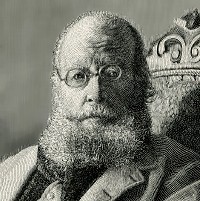
Edward Lear – angielski poeta i rysownik, autor limeryków.
Pochodził z wielodzietnej rodziny , wychowała go najstarsza siostra, Anna. Sam nigdy rodziny nie założył, podejrzewany był zresztą o tendencje homoseksualne. Nie miał formalnego wykształcenia, ale wcześnie zaczął rysować i z rysunku utrzymywał się od piętnastego roku życia. Mimo słabego zdrowia był twórcą niezmiernie płodnym – pozostawił obszerne zbiory rysunków, ilustracji i obrazów olejnych, ponadto pisał wiersze i wspomnienia z licznych podróży, prowadził szeroką korespondencję, a nawet komponował. Wiele dzieł zostało wydanych pośmiertnie.
Miał talent do pozyskiwania przyjaciół, m.in. Alfreda Tennysona i Edwarda Stanleya, hrabiego Derby, który zlecił mu wykonanie rysunków ze swego zwierzyńca; przez pewien czas uczył także rysunku królową Wiktorię. Dzięki m.in. poparciu kolejnych hrabiów Derby uzyskał zamówienia, które pozwoliły mu na podróże po całej Europie, a także do krajów Lewantu, Indii i Cejlonu. Znaczną część życia spędził na południu Europy, w Grecji i we Włoszech. Przez 17 lat jego wiernym towarzyszem podróży był kot Foss.
Aczkolwiek był wybitnym rysownikiem i ilustratorem ery wiktoriańskiej, do historii przeszedł jako twórca poezji nonsensownej, w szczególności limeryków, który to gatunek rozpropagował . Spośród jego ponad 20 książek, najbardziej znaną jest A Book of Nonsense, zbiór 112 limeryków z własnymi ilustracjami.
W uznaniu osiągnięć Leara jako ilustratora książek o ptakach, jego nazwisko nosi ara błękitna . Wikipedia
“And hand in hand, on the edge of the sand,
They danced by the light of the moon.”
Edward Lear The Owl and the Pussycat
Źródło: The Owl and the Pussycat
Book of Nonsense http://www.gutenberg.org/dirs/etext97/nnsns10.txt, Limerick 1 (1846).
" The Jumblies http://www.nonsenselit.org/Lear/ns/jumblies.html", st. 1, in Nonsense Songs, Stories, Botany, and Alphabets (1871).
Edward Lear The Owl and the Pussycat
St. 3.
Źródło: The Owl and the Pussycat (1871)
The Dong with the Luminous Nose http://www.nonsenselit.org/Lear/ll/dln.html, st. 1 (1877).
“They sailed away for a year and a day
To the land where the bong-tree grows.”
Edward Lear The Owl and the Pussycat
St. 2.
The Owl and the Pussycat (1871)
The Pobble Who Has No Toes http://www.nonsenselit.org/Lear/ll/pobble.html, st. 1 (1877).
St. 1. <br class="br"> The Courtship of the Yonghy-Bongy-Bò http://www.nonsenselit.org/Lear/ll/ybb.html (1877)
St. 5. <br class="br"> The Courtship of the Yonghy-Bongy-Bò http://www.nonsenselit.org/Lear/ll/ybb.html (1877)
St. 2. <br class="br"> The Courtship of the Yonghy-Bongy-Bò http://www.nonsenselit.org/Lear/ll/ybb.html (1877)
How Pleasant to Know Mr. Lear http://www.nonsenselit.org/Lear/pw/mrlear.html, st. 1 (1871).
But his shoes were far too tight. <br class="br"> Incidents in the Life of my Uncle Arly http://www.nonsenselit.org/Lear/pw/arly.html, st. 7 (1895).
The Quangle Wangle's Hat http://www.nonsenselit.org/Lear/ll/quangle.html, st. 1 (1877).
" The Jumblies http://www.nonsenselit.org/Lear/ns/jumblies.html", st. 1, in Nonsense Songs, Stories, Botany, and Alphabets (1871).
“Who, or why, or which, or what,
Is the Akond of Swat?”
The Akond of Swat http://www.nonsenselit.org/Lear/ll/akond.html, l. 1 (1877).
Calico Pie http://www.nonsenselit.org/Lear/ns/calico.html, st. 1 (1871).
“It's a fact the whole world knows,
That Pebbles are happier without their toes.”
The Pobble Who Has No Toes, st. 6.
The Pelican Chorus http://www.nonsenselit.org/Lear/ll/pelican.html, chorus (1877).
“"Dear pig, are you willing to sell for one shilling
Your ring?" Said the Piggy, "I will."”
Edward Lear The Owl and the Pussycat
St. 3.
The Owl and the Pussycat (1871)