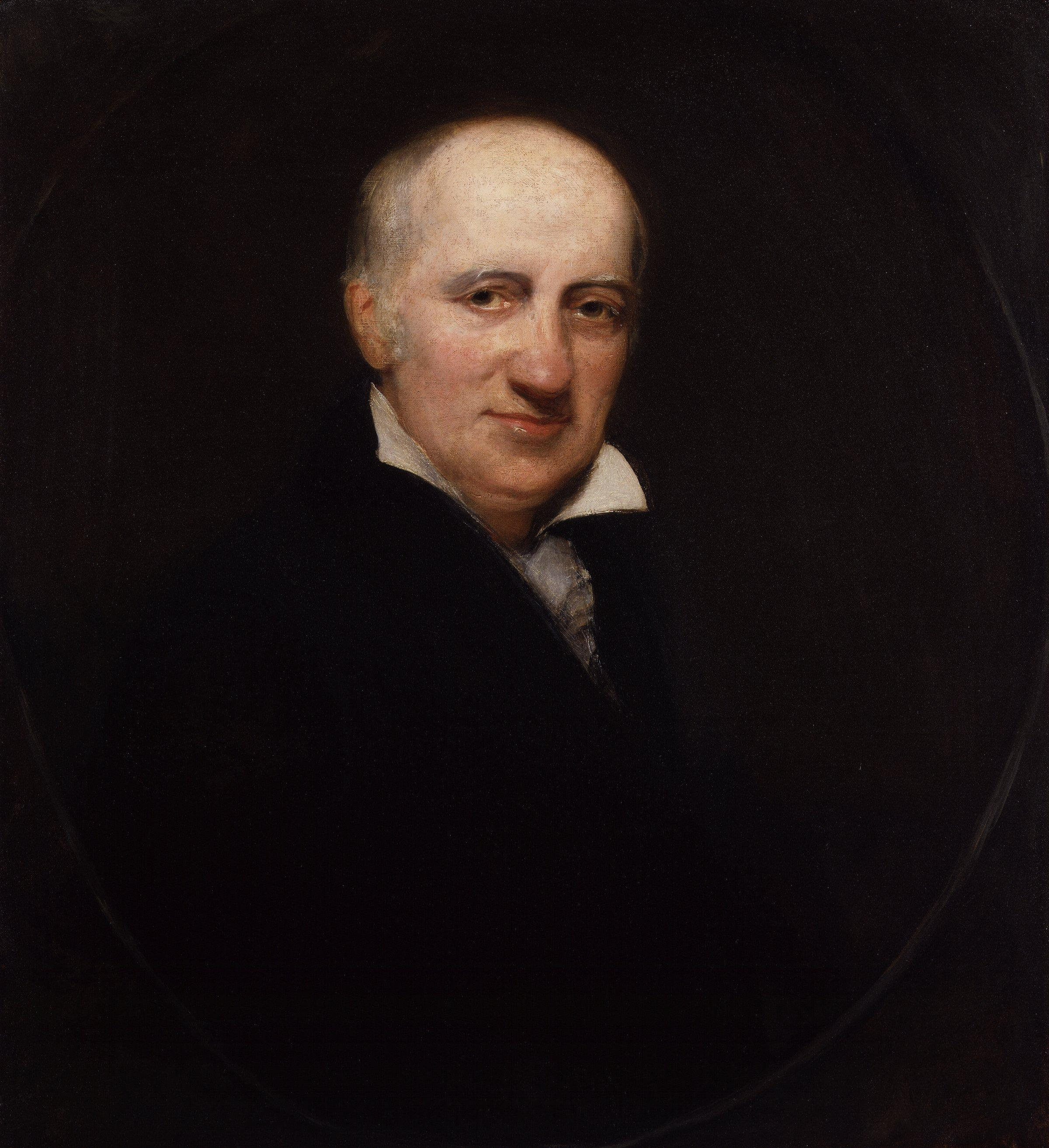
Enquête sur la justice politique et son influence sur la morale et le bonheur d'aujourd'hui, 1795
William Godwin: 37 citations0 J'aime
William Godwin Citations
William Godwin: Citations en anglais
Contexte: It has an unhappy effect upon the human understanding and temper, for a man to be compelled in his gravest investigation of an argument, to consider, not what is true, but what is convenient. The lawyer never yet existed who has not boldly urged an objection which he knew to be fallacious, or endeavoured to pass off a weak reason for a strong one. Intellect is the greatest and most sacred of all endowments; and no man ever trifled with it, defending an action to-day which he had arraigned yesterday, or extenuating an offence on one occasion, which, soon after, he painted in the most atrocious colours, with absolute impunity. Above all, the poet, whose judgment should be clear, whose feelings should be uniform and sound, whose sense should be alive to every impression and hardened to none, who is the legislator of generations and the moral instructor of the world, ought never to have been a practising lawyer, or ought speedily to have quitted so dangerous an engagement.
The Life of Geoffrey Chaucer vol. 1, p. 370 (1803)
“Mind modifies body involuntarily.”
Vol. 2, bk. 8, ch. 7
Enquiry Concerning Political Justice (1793)
Contexte: Let us here return to the sublime conjecture of Franklin, that “mind will one day become omnipotent over matter.” If over all other matter, why not over the matter of our own bodies? If over matter at ever so great a distance, why not over matter which, however ignorant we may be of the tie that connects it with the thinking principle, we always carry about with us, and which is in all cases the medium of communication between that principle and the external universe? In a word, why may not man be one day immortal?
The different cases in which thought modifies the external universe are obvious to all. It is modified by our voluntary thoughts or design. We desire to stretch out our hand, and it is stretched out. We perform a thousand operations of the same species every day, and their familiarity annihilates the wonder. They are not in themselves less wonderful than any of those modifications which we are least accustomed to conceive. — Mind modifies body involuntarily.
The Life of Geoffrey Chaucer vol. 1, p. 370 (1803)
Contexte: It has an unhappy effect upon the human understanding and temper, for a man to be compelled in his gravest investigation of an argument, to consider, not what is true, but what is convenient. The lawyer never yet existed who has not boldly urged an objection which he knew to be fallacious, or endeavoured to pass off a weak reason for a strong one. Intellect is the greatest and most sacred of all endowments; and no man ever trifled with it, defending an action to-day which he had arraigned yesterday, or extenuating an offence on one occasion, which, soon after, he painted in the most atrocious colours, with absolute impunity. Above all, the poet, whose judgment should be clear, whose feelings should be uniform and sound, whose sense should be alive to every impression and hardened to none, who is the legislator of generations and the moral instructor of the world, ought never to have been a practising lawyer, or ought speedily to have quitted so dangerous an engagement.
Vol. 2, bk. 7, ch. 5
Enquiry Concerning Political Justice (1793)
William Godwin livre Things as They Are; or, The Adventures of Caleb Williams
Caleb Williams (1794)
Vol. 1m bk. 1, ch. 3
Enquiry Concerning Political Justice (1793)
"Summary of Principles" 2.7
Enquiry Concerning Political Justice (1793)
Variante: Government was intended to suppress injustice, but it offers new occasions and temptations for the commission of it.
Vol. 1, bk. 1, ch.4
Enquiry Concerning Political Justice (1793)
“Perfectibility is one of the most unequivocal characteristics of the human species.”
Vol. 1, bk. 1, ch. 2
Enquiry Concerning Political Justice (1793)
Vol.1, bk. 2, ch. 2
Enquiry Concerning Political Justice (1793)
Vol. 2, bk. 6, ch. 1
Enquiry Concerning Political Justice (1793)
Vol. 2, bk. 8, ch. 6
Enquiry Concerning Political Justice (1793)
Principles of Society, The Rights of Man
Enquiry Concerning Political Justice (1793)
Enquiry Concerning Political Justice (1793)
Portable Enlightenment Reader, p. 477
Enquiry Concerning Political Justice (1793)
Book 7, Ch. 5
Enquiry Concerning Political Justice (1793)
Book V, Chapter 12, "Of Titles"
Enquiry Concerning Political Justice (1793)
Book V, Chapter 13
Enquiry Concerning Political Justice (1793)
Book V, Chapter 11, "Moral Effects of Aristocracy"
Enquiry Concerning Political Justice (1793)
Book V, Chapter 11, "Moral Effects of Aristocracy"
Enquiry Concerning Political Justice (1793)
Book V, Ch. 5
Enquiry Concerning Political Justice (1793)
Book V, "Of Education"
Enquiry Concerning Political Justice (1793)
“The pistol and dagger may as easily be made the auxiliaries of vice, as of virtue.”
Book IV, "Of Tyrannicide"
Enquiry Concerning Political Justice (1793)
Book III, Chapter 9
Enquiry Concerning Political Justice (1793)
Book III, "Of Obedience"
Enquiry Concerning Political Justice (1793)
Book III, "Of Obedience"
Enquiry Concerning Political Justice (1793)
Book II, "Of Rights"
Enquiry Concerning Political Justice (1793)
"Summary of Principles" 1.3
Enquiry Concerning Political Justice (1793)


