Arthur Schopenhauer citations

Arthur Schopenhauer écouter [ˈartʊr ʃoːpʰœnhoːwøʁ] est un philosophe allemand, né le 22 février 1788 à Dantzig en Prusse, mort le 21 septembre 1860 à Francfort-sur-le-Main.

✵ 22. février 1788 – 21. septembre 1860
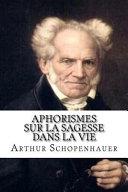
Arthur Schopenhauer photo

Œuvres

Arthur Schopenhauer: 279 citations2 J'aime

Arthur Schopenhauer citations célèbres

“Dans toute controverse ou argumentation, il faut que l'on s'entende sur quelque chose, un principe à partir duquel on va juger du problème posé : on ne saurait discuter avec quelqu'un qui conteste les principes.”
Contra negantem principia non est disputandum.

Arthur Schopenhauer

La Dialectique éristique publiée en Français sous le titre L'Art d'avoir toujours raison, 1830

Arthur Schopenhauer Citations

“L'Art d’avoir toujours raison La dialectique 1 éristique est l’art de disputer, et ce de telle sorte que l’on ait toujours raison, donc per fas et nefas (c’est-à-dire par tous les moyens possibles)2. On peut en effet avoir objectivement raison quant au débat lui-même tout en ayant tort aux yeux des personnes présentes, et parfois même à ses propres yeux. En effet, quand mon adversaire réfute ma preuve et que cela équivaut à réfuter mon affirmation elle-même, qui peut cependant être étayée par d’autres preuves – auquel cas, bien entendu, le rapport est inversé en ce qui concerne mon adversaire : il a raison bien qu’il ait objectivement tort. Donc, la vérité objective d’une proposition et la validité de celle-ci au plan de l’approbation des opposants et des auditeurs sont deux choses bien distinctes. (C'est à cette dernière que se rapporte la dialectique.) D’où cela vient-il ? De la médiocrité naturelle de l’espèce humaine. Si ce n’était pas le cas, si nous étions foncièrement honnêtes, nous ne chercherions, dans tout débat, qu’à faire surgir la vérité, sans nous soucier de savoir si elle est conforme à l’opinion que nous avions d’abord défendue ou à celle de l’adversaire : ce qui n’aurait pas d’importance ou serait du moins tout à fait secondaire. Mais c’est désormais l’essentiel. La vanité innée, particulièrement irritable en ce qui concerne les facultés intellectuelles, ne veut pas accepter que notre affirmation se révèle fausse, ni que celle de l’adversaire soit juste. Par conséquent, chacun devrait simplement s’efforcer de n’exprimer que des jugements justes, ce qui devrait inciter à penser d’abord et à parler ensuite. Mais chez la plupart des hommes, la vanité innée s’accompagne d’un besoin de bavardage et d’une malhonnêteté innée. Ils parlent avant d’avoir réfléchi, et même s’ils se rendent compte après coup que leur affirmation est fausse et qu’ils ont tort, il faut que les apparences prouvent le contraire. Leur intérêt pour la vérité, qui doit sans doute être généralement l’unique motif les guidant lors de l’affirmation d’une thèse supposée vraie, s’efface complètement devant les intérêts de leur vanité : le vrai doit paraître faux et le faux vrai.”

Arthur Schopenhauer

L'art d'avoir toujours raison

“Celui qui se donne la mort voudrait vivre; il n'est mécontent que des conditions dans lesquelles la vie lui est échue.”

Arthur Schopenhauer

Le Monde comme volonté et comme représentation, 1818-1819 et 1844

“Tout homme blanc est un homme décoloré.”

Arthur Schopenhauer

Le Monde comme volonté et comme représentation, 1818-1819 et 1844

“Étudier la logique en vue de ses avantages pratiques, ce serait vouloir apprendre au castor à bâtir sa hutte.”

Arthur Schopenhauer

Le Monde comme volonté et comme représentation, 1818-1819 et 1844

Arthur Schopenhauer: Citations en anglais

“Talent hits a target no one else can hit; Genius hits a target no one else can see.”

Arthur Schopenhauer livre The World as Will and Representation

Das Talent gleicht dem Schützen, der ein Ziel trifft, welches die Uebrigen nicht erreichen können; das Genie dem, der eines trifft, bis zu welchem sie nicht ein Mal zu sehn vermögen...
Vol. II, Ch. III, para. 31 (On Genius), 1844
As cited in The Little Book of Bathroom Philosophy: Daily Wisdom from the Greatest Thinkers‎ (2004) by Gregory Bergman, p. 137
The World as Will and Representation (1819; 1844; 1859)

“Every man takes the limits of his own field of vision for the limits of the world.”

Arthur Schopenhauer livre Parerga and Paralipomena

"Psychological Observations"
Parerga and Paralipomena (1851), Studies in Pessimism
Variante: Everyone takes the limits of his own vision for the limits of the world.
Source: Studies in Pessimism: The Essays

“Mostly it is loss which teaches us about the worth of things.”

Arthur Schopenhauer livre Parerga and Paralipomena

Meistens belehrt uns erst der Verlust über den Wert der Dinge.
Source: Parerga and Paralipomena (1851), Aphorisms on the Wisdom of Life

“The old woman dies, the burden is lifted.”
Obit anus, abit onus.

Arthur Schopenhauer

Statement Schopenhauer wrote in Latin into his account book, after the death of a seamstress to whom he had made court-ordered payments of 15 thalers a quarter for over twenty years, after she had accused him of having injured her arm; as quoted in Modern Philosophy: From Descartes to Schopenhauer and Hartmann (1877) by Francis Bowen, p. 392. Schopenhauer had won the original case, and, being assured by the head of the Kammergericht that the original judgment would be upheld, he left Berlin. In his absence, the judgement was overturned. Schopenhauer believed that the seamstress was feigning her injuries and that she would be sly enough to do so for the remainder of her life. The only visible signs of the assault were a few minor bruises. ; as quoted in A Biography" (2010) by David E. Cartwright, p. 408-411.

“The person who writes for fools is always sure of a large audience.”

Arthur Schopenhauer

Source: Religion: A Dialogue and Other Essays

“The composer reveals the innermost nature of the world, and expresses the profoundest wisdom in a language that his reasoning faculty does not understand”

Arthur Schopenhauer livre The World as Will and Representation

Vol. I, Ch. III, The World As Representation
The World as Will and Representation (1819; 1844; 1859)
Contexte: The composer reveals the innermost nature of the world, and expresses the profoundest wisdom in a language that his reasoning faculty does not understand, just as a magnetic somnambulist gives information about things of which she has no conception when she is awake. Therefore in the composer, more than in any other artist, the man is entirely separate and distinct from the artist.

“Reason is feminine in nature; it can only give after it has received. Of itself it has nothing but the empty forms of its operation.”

Arthur Schopenhauer livre The World as Will and Representation

Vol. I, Ch. 10, as translated by R. B. Haldane
Variant translations:
Reason is feminine in nature; it can give only after it has received. Of itself alone, it has nothing but the empty forms of its operation.
As translated by Eric F. J. Payne (1958) Vol. II, p. 50
Reason is feminine in nature: it will give only after it has received.
The World as Will and Representation (1819; 1844; 1859)
Contexte: Reason is feminine in nature; it can only give after it has received. Of itself it has nothing but the empty forms of its operation. There is no absolutely pure rational knowledge except the four principles to which I have attributed metalogical truth; the principles of identity, contradiction, excluded middle, and sufficient reason of knowledge. For even the rest of logic is not absolutely pure rational knowledge. It presupposes the relations and the combinations of the spheres of concepts. But concepts in general only exist after experience of ideas of perception, and as their whole nature consists in their relation to these, it is clear that they presuppose them.

“Truth that is naked is the most beautiful, and the simpler its expression the deeper is the impression it makes”

Arthur Schopenhauer

Essays, On Authorship and Style
Contexte: Truth that is naked is the most beautiful, and the simpler its expression the deeper is the impression it makes; this is partly because it gets unobstructed hold of the hearer’s mind without his being distracted by secondary thoughts, and partly because he feels that here he is not being corrupted or deceived by the arts of rhetoric, but that the whole effect is got from the thing itself.

“Man can do what he wills but he cannot will what he wills.”

Arthur Schopenhauer

Der Mensch kann tun was er will; er kann aber nicht wollen was er will. <br class="br">Einstein paraphrasing Schopenhauer. Reportedly from On The Freedom Of The Will (1839), as translated in The Philosophy of American History: The Historical Field Theory (1945) by Morris Zucker, p. 531 <br class="br">Variant translations: <br class="br">Man can do what he wants but he cannot want what he wants. <br class="br">As quoted in The Motivated Brain: A Neurophysiological Analysis of Human Behavior (1991) by Pavel Vasilʹevich Simonov, p. 198 <br class="br">We can do what we wish, but we can only wish what we must. <br class="br">As quoted by Einstein in &quot;What Life Means to Einstein: An Interview by George Sylvester Viereck&quot; The Saturday Evening Post (26 October 1929) p. 17. A scan of the article is available online here http://www.saturdayeveningpost.com/wp-content/uploads/satevepost/what_life_means_to_einstein.pdf (see p. 114). <br class="br">Attributed <br class="br">Source: Essays and Aphorisms

“We forfeit three-fourths of ourselves in order to be like other people.”

Arthur Schopenhauer

As attributed in Dictionary of Quotations from Ancient and Modern English and Foreign Sources (1899) by James Wood, p. 624

“According to me, the influence of Sanskrit literature on our time will not be lesser than what was in the 16th century Greece's influence on Renaissance. One day, India's wisdom will flow again on Europe and will totally transform our knowledge and thought.”

Arthur Schopenhauer livre The World as Will and Representation

preface of his The World as Will and Representation., quoted in Londhe, S. (2008). A tribute to Hinduism: Thoughts and wisdom spanning continents and time about India and her culture. New Delhi: Pragun Publication.
The World as Will and Representation (1819; 1844; 1859)

“Each day is a little life: every waking and rising a little birth, every fresh morning a little youth, every going to rest and sleep a little death.”

Arthur Schopenhauer livre Parerga and Paralipomena

Vol. 2, Ch. 2: Our Relation To Ourselves http://ebooks.adelaide.edu.au/s/schopenhauer/arthur/counsels/chapter2.html <br class="br">Parerga and Paralipomena (1851), Counsels and Maxims <br class="br">Contexte: Do not shorten the morning by getting up late, or waste it in unworthy occupations or in talk; look upon it as the quintessence of life, as to a certain extent sacred. Evening is like old age: we are languid, talkative, silly. Each day is a little life: every waking and rising a little birth, every fresh morning a little youth, every going to rest and sleep a little death.

“The animal lacks both anxiety and hope because its consciousness is restricted to what is clearly evident and thus to the present moment: the animal is the present incarnate.”

Arthur Schopenhauer livre Parerga and Paralipomena

Vol. 2 "On the Suffering of the World" as translated in Essays and Aphorisms (1970), as translated by R. J. Hollingdale
Parerga and Paralipomena (1851), Counsels and Maxims
Contexte: The animals are much more content with mere existence than we are; the plants are wholly so; and man is so according to how dull and insensitive he is. The animal’s life consequently contains less suffering but also less pleasure than the human’s, the direct reason being that on the one hand it is free from care and anxiety and the torments that attend them, but on the other is without hope and therefore has no share in that anticipation of a happy future which, together with the enchanting products of the imagination which accompany it, is the source of most of our greatest joys and pleasures. The animal lacks both anxiety and hope because its consciousness is restricted to what is clearly evident and thus to the present moment: the animal is the present incarnate.

“The bad thing about all religions is that, instead of being able to confess their allegorical nature, they have to conceal it”

Arthur Schopenhauer The Christian System

"The Christian System" in Religion: A Dialogue, and Other Essays (1910) as translated by Thomas Bailey Saunders, p. 106
Contexte: The bad thing about all religions is that, instead of being able to confess their allegorical nature, they have to conceal it; accordingly, they parade their doctrines in all seriousness as true sensu proprio, and as absurdities form an essential part of these doctrines we have the great mischief of a continual fraud. Nay, what is worse, the day arrives when they are no longer true sensu proprio, and then there is an end of them; so that, in that respect, it would be better to admit their allegorical nature at once. But the difficulty is to teach the multitude that something can be both true and untrue at the same time. Since all religions are in a greater or less degree of this nature, we must recognise the fact that mankind cannot get on without a certain amount of absurdity, that absurdity is an element in its existence, and illusion indispensable; as indeed other aspects of life testify.

Auteurs similaires

Georg Wilhelm Friedrich Hegel photo
Georg Wilhelm Friedrich Hegel12
philosophe allemand None
Friedrich Nietzsche photo
Friedrich Nietzsche104
philologue, philosophe et poète allemand None
Friedrich Engels photo
Friedrich Engels25
philosophe allemand et théoricien socialiste None
Karl Marx photo
Karl Marx69
philosophe, sociologue et économiste allemand None
Richard Wagner photo
Richard Wagner6
Compositeur allemand de la période romantique None
Pierre-Joseph Proudhon photo
Pierre-Joseph Proudhon10
polémiste, journaliste, économiste, philosophe et sociologu… None
Émile Durkheim photo
Émile Durkheim13
sociologue français None
Fedor Dostoïevski photo
Fedor Dostoïevski13
écrivain russe None
Honoré de Balzac photo
Honoré de Balzac193
romancier, critique littéraire, essayiste, journaliste et é… None
Oscar Wilde photo
Oscar Wilde78
poète irlandais None