William Cobbett citations
Page 2

William Cobbett , est un journaliste et homme politique britannique.

✵ 9. mars 1763 – 18. juin 1835
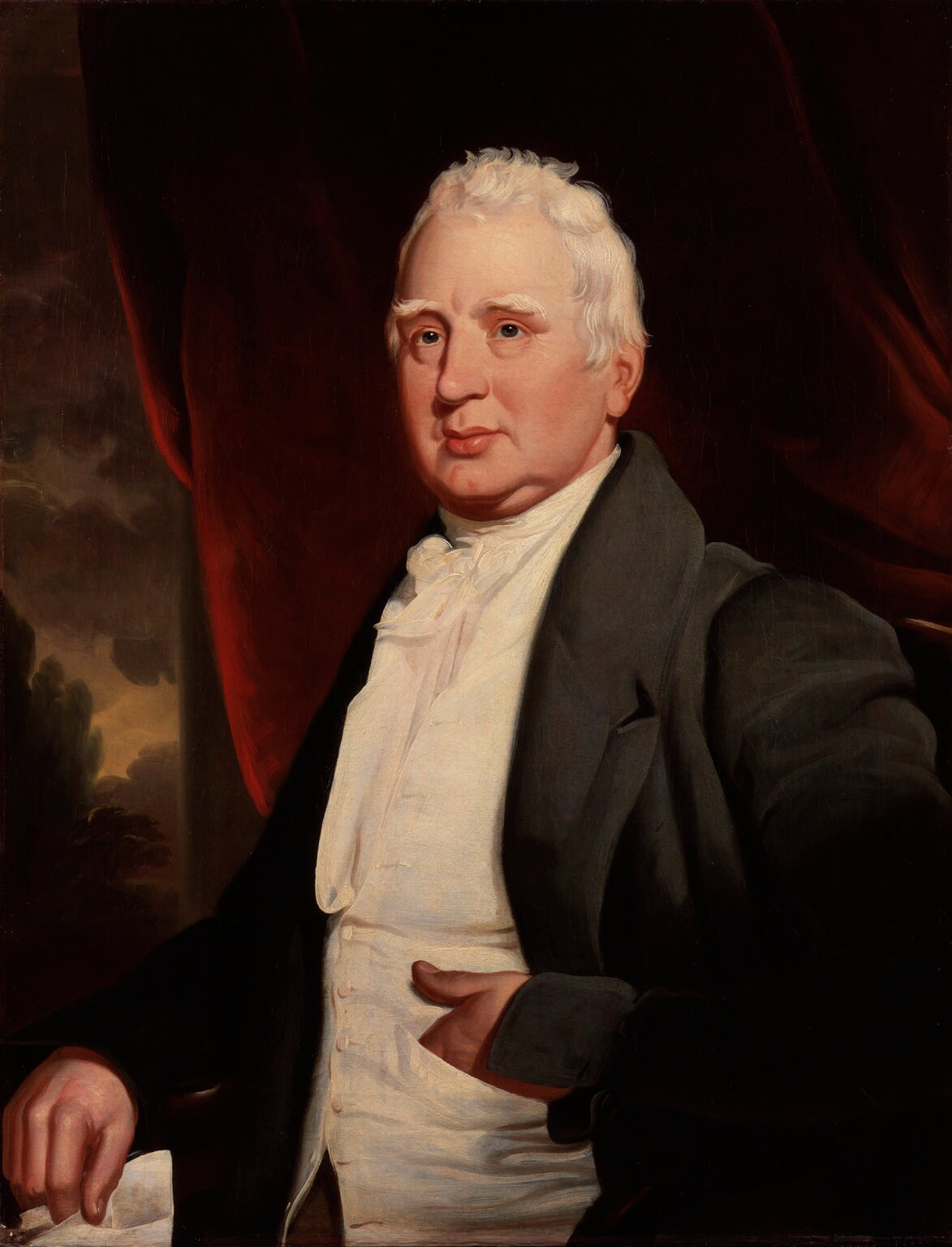
William Cobbett photo
William Cobbett: 58 citations0 J'aime

William Cobbett: Citations en anglais

“However roguish a man may be, he always loves to deal with an honest man.”

William Cobbett

Letter, Philadelphia, to Rachel Smithers (6 July 1794), published in The Autobiography of William Cobbett: The Progress of a Plough-boy to a Seat in Parliament, ch. 5, p. 57 (1933).

“[T]he very best and most virtuous of all mankind, the agricultural labourers of this land, so favoured by God Almighty, and for so many ages the freest and happiest country in the world!”

William Cobbett

‘To the Labourers of England, on their duties and their rights’, Political Register (29 January 1831), p. 288
1830s

“We want great alteration, but we want nothing new.”

William Cobbett

Political Register (2 November 1816), pp. 454–55
1810s

“It is not true, that the granting of the independence of America was “an advantage to England.””

William Cobbett

It was, on the contrary, the greatest evil that and ever befell her. It was the primary cause of the present war, and of all the calamities which it has brought upon England and upon Europe. If England and the American States had continued united, they would have prevented France from disturbing the peace of the world. That fatal measure, though it has not curtailed our commerce, has created a power who will be capable of assisting France in any of her future projects against us, and whose neutrality, when France recovers her marine, must be purchased by us at the expense, first of commercial concessions, and, finally, by much more important sacrifices. In short, it laid the foundation of the ruin of the British empire, which can be prevented by nothing but a wisdom, and an energy, which have never yet marked the councils of our Government, in its transactions with the American States.

‘A Summary View of the Politics of the United States from the close of the War to the year 1794’, Porcupine's Works; containing various writings and selections, exhibiting a faithful picture of the United States of America, Volume I (1801), pp. 47–8
1790s
“All that I can boast of in my birth, is, that I was born in Old England.”

William Cobbett

Source: 1790s, Life and Adventures of Peter Porcupine (1796), P. 1

“[B]efore the passing of the Poor-Law Bill, I wished to avoid [a] convulsive termination. I now do not wish it to be avoided.”

William Cobbett

Letter to John Oldfield (6 June 1835), quoted in Ian Dyck, William Cobbett and Rural Popular Culture (1992), p. 208
1830s

“The profession of arms is always the most honourable.”

William Cobbett

‘Boxing’, Political Register (10 August 1805), p. 199
1800s

“A man of all countries is a man of no country: and let all those citizens of the world remember, that he who has been a bad subject in his own country...will never be either trusted or respected.”

William Cobbett

‘Observations on Priestley's Emigration’ (August 1794), Porcupine's Works; containing various writings and selections, exhibiting a faithful picture of the United States of America, Volume I (1801), p. 169
1790s

“After this, who will say that an Englishman ought not to despise “all the nations of Europe?””

William Cobbett

For my part I do, and that most “heartily.”

Porcupine's Gazette (December 1797), Porcupine's Works; containing various writings and selections, exhibiting a faithful picture of the United States of America, Volume VII (1801), p. 428
1790s

“It has long been a fashion amongst you, which you have had the complaisance to adopt at the instigation of a corrupt press, to call every friend of reform, every friend of freedom, a Jacobin, and to accuse him of French principles. ... What are these principles?—That governments were made for the people, and not the people for governments.—That sovereigns reign legally only by virtue of the people's choice.—That birth without merit ought not to command merit without birth.--That all men ought to be equal in the eye of the law.—That no man ought to be taxed or punished by any law to which he has not given his assent by himself or by his representative.—That taxation and representation ought to go hand in hand.—That every man ought to be judged by his peers, or equals.—That the press ought to be free. ... Ten thousand times as much has been written on the subject in England as in all the rest of the world put together. Our books are full of these principles. ... There is not a single political principle which you denominate French, which has not been sanctioned by the struggles of ten generations of Englishmen, the names of many of whom you repeat with veneration, because, apparently, you forget the grounds of their fame. To Tooke, Burdett, Cartwright, and a whole host of patriots of England, Scotland and Ireland, imprisoned or banished, during the administration of Pitt, you can give the name of Jacobins, and accuse them of French principles. Yet, not one principle have they ever attempted to maintain that Hampden and Sydney did not seal with their blood.”

William Cobbett

‘To the Merchants of England’, Political Register (29 April 1815), pp. 518–19
1810s

Auteurs similaires

Emily Brontë photo
Emily Brontë18
écrivaine britannique None
Lewis Carroll photo
Lewis Carroll4
romancier, essayiste, photographe et mathématicien britanni… None
John Ruskin photo
John Ruskin3
auteur, poète, artiste et critique d’art britannique None
Thomas Carlyle photo
Thomas Carlyle1
Romancier, historien et essayiste écossais None
Napoléon Bonaparte photo
Napoléon Bonaparte31
général, premier consul et empereur des Français None
Samuel Butler photo
Samuel Butler10
écrivain britannique None
Anne Brontë photo
Anne Brontë4
écrivaine britannique None
Bram Stoker photo
Bram Stoker5
journaliste, puis administrateur de théâtre et romancier br… None
Joseph Mallord William Turner photo
Joseph Mallord William Turner1
peintre anglais None