Anne Brontë livre La Recluse de Wildfell Hall
Roman, La Recluse de Wildfell Hall, 1848
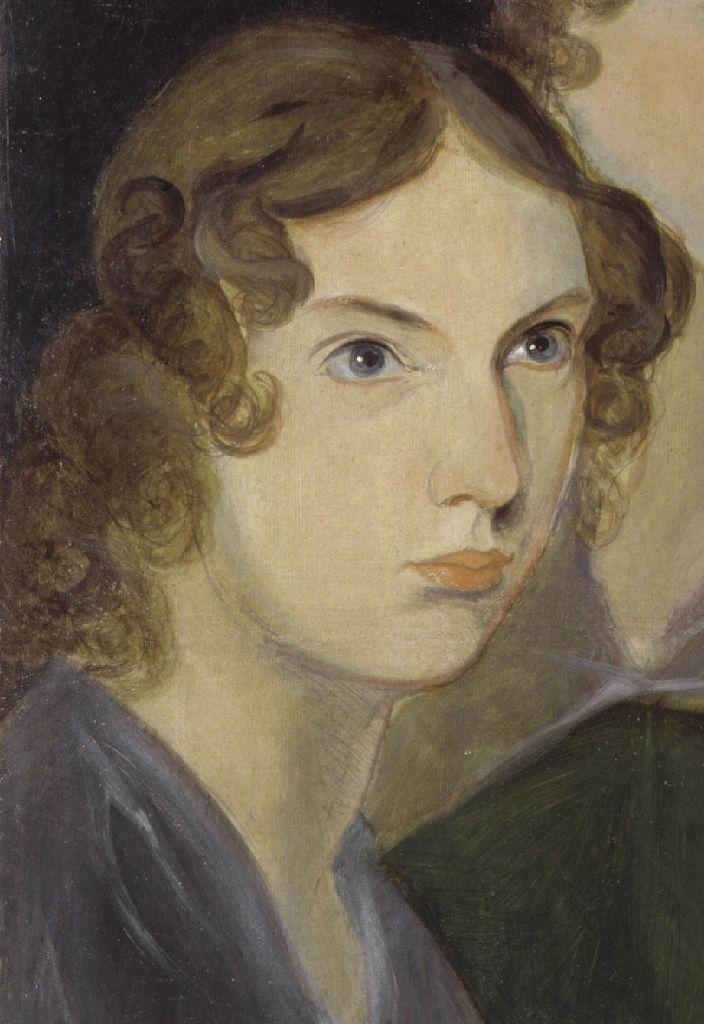
Anne Brontë [æn ˈbɹɒnteɪ] est, tout comme ses sœurs Emily Brontë et Charlotte Brontë, une femme de lettres britannique.
Elle est fortement marquée par son expérience de gouvernante, qu'elle décrit en particulier dans Agnes Grey avec un fort souci de véracité, en soulignant la lourde responsabilité des parents dans le manque de rectitude morale chez les enfants de certaines familles riches.
Son second roman, The Tenant of Wildfell Hall , est marqué par la déchéance de son frère Branwell. Il raconte l’histoire d’une femme qui quitte son mari abusif et débauché, et qui doit subvenir à ses propres besoins et à ceux de son jeune fils. Il est considéré comme l’un des premiers romans féministes. Publié en juin 1848, il défie la morale qui prévaut à l’époque. Charlotte Brontë empêchera la republication de l'ouvrage pour ce motif après la mort d'Anne.
Très proche de sa sœur Emily, au point qu'on les a comparées à des jumelles, elle participe avec elle au cycle du Gondal. Wikipedia
Anne Brontë livre La Recluse de Wildfell Hall
Roman, La Recluse de Wildfell Hall, 1848
Anne Brontë livre La Recluse de Wildfell Hall
Roman, La Recluse de Wildfell Hall, 1848
Anne Brontë livre La Recluse de Wildfell Hall
Roman, La Recluse de Wildfell Hall, 1848
Anne Brontë livre La Recluse de Wildfell Hall
Roman, La Recluse de Wildfell Hall, 1848
Anne Brontë livre La Recluse de Wildfell Hall
Source: The Tenant of Wildfell Hall (1848), Ch. XV : An Encounter and its Consequences; Gilbert Markham
Anne Brontë livre La Recluse de Wildfell Hall
Preface, 2nd edition (22 July 1848)
Source: The Tenant of Wildfell Hall (1848)
Contexte: I am satisfied that if a book is a good one, it is so whatever the sex of the author may be. All novels are, or should be, written for both men and women to read, and I am at loss to conceive how a man should permit himself to write anything that would be really disgraceful to a woman, or why a woman should be censured for writing anything that would be proper and becoming for a man.
“Reading is my favourite occupation, when I have leisure for it and books to read.”
Anne Brontë livre Agnes Grey
Source: Agnes Grey
“There is always a 'but' in this imperfect world.”
Anne Brontë livre La Recluse de Wildfell Hall
Source: The Tenant of Wildfell Hall (1848), Ch. XXII : Traits of Friendship; Helen Graham
“But he, that dares not grasp the thorn
Should never crave the rose.”
The Narrow Way (1848)
Contexte: On all her breezes borne
Earth yields no scents like those;
But he, that dares not grasp the thorn
Should never crave the rose.
“It is better to arm and strengthen your hero, than to disarm and enfeeble your foe.”
Anne Brontë livre La Recluse de Wildfell Hall
Source: The Tenant of Wildfell Hall (1848), Ch. III : A Controversy; Gilbert to Helen
Anne Brontë livre Poems by Currer, Ellis, and Acton Bell
Poems by Currer, Ellis, and Acton Bell (1846), Dreams (1845)
“All true histories contain instruction”
Anne Brontë livre Agnes Grey
Source: Agnes Grey (1847), Ch. I : The Parsonage
Contexte: All true histories contain instruction; though, in some, the treasure may be hard to find, and when found, so trivial in quantity, that the dry, shrivelled kernel scarcely compensates for the trouble of cracking the nut. Whether this be the case with my history or not, I am hardly competent to judge. I sometimes think it might prove useful to some, and entertaining to others; but the world may judge for itself. Shielded by my own obscurity, and by the lapse of years, and a few fictitious names, I do not fear to venture; and will candidly lay before the public what I would not disclose to the most intimate friend.
Anne Brontë livre La Recluse de Wildfell Hall
Source: The Tenant of Wildfell Hall (1848), Ch. XII : A Tête-à-tête and a Discovery; Gilbert and Helen
Anne Brontë livre Poems by Currer, Ellis, and Acton Bell
Poems by Currer, Ellis, and Acton Bell (1846), Dreams (1845)
Contexte: While on my lonely couch I lie,
I seldom feel myself alone,
For fancy fills my dreaming eye
With scenes and pleasures of its own.
Then I may cherish at my breast
An infant's form beloved and fair,
May smile and soothe it into rest
With all a Mother's fondest care.
Anne Brontë livre La Recluse de Wildfell Hall
Source: The Tenant of Wildfell Hall (1848), Ch. XXXV : Provocations; Helen to Walter
Letter to Ellen Hussey (5 April 1849), published in The Letters of Charlotte Brontë : With a Selection of Letters by Family and Friends (1995), edited by Margaret Smith, Vol. II: 1848–1851, p. 195
Contexte: I have no horror of death: if I thought it inevitable I think I could quietly resign myself to the prospect... But I wish it would please God to spare me not only for Papa's and Charlotte's sakes, but because I long to do some good in the world before I leave it. I have many schemes in my head for future practice – humble and limited indeed – but still I should not like them all to come to nothing, and myself to have lived to so little purpose. But God's will be done.
Anne Brontë livre Poems by Currer, Ellis, and Acton Bell
Poems by Currer, Ellis, and Acton Bell (1846), To Cowper (1842)
Contexte: p>All for myself the sigh would swell,
The tear of anguish start;
I little knew what wilder woe
Had filled the Poet's heart.I did not know the nights of gloom,
The days of misery;
The long, long years of dark despair,
That crushed and tortured thee.</p
Anne Brontë livre Poems by Currer, Ellis, and Acton Bell
Poems by Currer, Ellis, and Acton Bell (1846), A Word to the Calvinists (1843)
Contexte: p>I ask not how remote the day
Nor what the sinner's woe
Before their dross is purged away,
Enough for me to knowThat when the cup of wrath is drained,
The metal purified,
They'll cling to what they once disdained,
And live by Him that died.</p
Anne Brontë livre Poems by Currer, Ellis, and Acton Bell
Poems by Currer, Ellis, and Acton Bell (1846), To Cowper (1842)
Contexte: p>All for myself the sigh would swell,
The tear of anguish start;
I little knew what wilder woe
Had filled the Poet's heart.I did not know the nights of gloom,
The days of misery;
The long, long years of dark despair,
That crushed and tortured thee.</p
Anne Brontë livre Poems by Currer, Ellis, and Acton Bell
Poems by Currer, Ellis, and Acton Bell (1846), A Prayer (1844)
Anne Brontë livre Poems by Currer, Ellis, and Acton Bell
Poems by Currer, Ellis, and Acton Bell (1846), A Word to the Calvinists (1843)
Contexte: p>I ask not how remote the day
Nor what the sinner's woe
Before their dross is purged away,
Enough for me to knowThat when the cup of wrath is drained,
The metal purified,
They'll cling to what they once disdained,
And live by Him that died.</p
Anne Brontë livre Poems by Currer, Ellis, and Acton Bell
Poems by Currer, Ellis, and Acton Bell (1846), Dreams (1845)
“What business had I to think of one that never thought of me?”
Anne Brontë livre Agnes Grey
Source: Agnes Grey
Anne Brontë livre La Recluse de Wildfell Hall
Source: The Tenant of Wildfell Hall (1848), Ch. IV : The Party; Gilbert Markham about Frederick Lawrence
“My heart is too thoroughly dried to be broken in a hurry, and I mean to live as long as I can.”
Anne Brontë livre La Recluse de Wildfell Hall
Source: The Tenant of Wildfell Hall
Anne Brontë livre La Recluse de Wildfell Hall
Source: The Tenant of Wildfell Hall (1848), Ch. XXVII : Misdemeanour; Helen to Arthur
“My soul is awakened, my spirit is soaring and carried aloft on the wings of the breeze.”
Anne Brontë livre Poems by Currer, Ellis, and Acton Bell
Poems by Currer, Ellis, and Acton Bell (1846), Lines Composed in a Wood on a Windy Day (1842)
Contexte: My soul is awakened, my spirit is soaring <br/> And carried aloft on the wings of the breeze; <br/> For above and around me the wild wind is roaring, <br/> Arousing to rapture the earth and the seas.
Contexte: My soul is awakened, my spirit is soaring
And carried aloft on the wings of the breeze;
For above and around me the wild wind is roaring,
Arousing to rapture the earth and the seas.
“What a fool you must be," said my head to my heart, or my sterner to my softer self.”
Anne Brontë livre Agnes Grey
Source: Agnes Grey
Anne Brontë livre La Recluse de Wildfell Hall
Source: The Tenant of Wildfell Hall (1848), Ch. XVI : The Warning of Experience; Mrs. Maxwell to Helen
Contexte: Beauty is that quality which, next to money, is generally the most attractive to the worst kinds of men; and, therefore, it is likely to entail a great deal of trouble on the possessor.
Anne Brontë livre La Recluse de Wildfell Hall
Source: The Tenant of Wildfell Hall (1848), Ch. III : A Controversy; Gilbert to Helen


