“Sky—what a scowl of cloud
Till, near and far,
Ray on ray split the shroud:
Splendid, a star!”
The two Poets of Croisic.
Bartlett's Familiar Quotations, 10th ed. (1919)
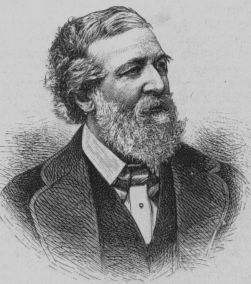
Robert Browning, né à Camberwell, Surrey, le 7 mai 1812 et mort à Venise le 12 décembre 1889, est un poète et dramaturge britannique, reconnu comme l'un des deux plus grands créateurs poétiques de l'Angleterre victorienne, l'égal, quoique dans un style tout différent, de Tennyson.
Il passe son enfance et sa jeunesse dans une famille éprise des lettres et des arts. L'accès illimité à des ouvrages de haut niveau et sa grande curiosité intellectuelle lui permettent d'acquérir un immense savoir et de cultiver son goût pour la poésie. Comme il ne supporte pas d'être scolarisé, ses tentatives d'études secondaires puis supérieures laissent vite place à un parcours intellectuel éclectique.
Toutes ses œuvres sont ambitieuses, souvent longues et écrites en une langue parfois difficile. Le public, comme la critique, sont, à l'occasion, déroutés par son originalité, qui se manifeste aussi dans sa vie personnelle. Ébloui par la lecture de poèmes publiés par Elizabeth Barrett, cloîtrée en sa chambre, il lui écrit pour lui dire son admiration. Ainsi commence une correspondance amoureuse qui se termine en 1846 par un enlèvement, un mariage et une fuite en Italie où le couple voyage et publie pendant quinze ans jusqu'à la mort d'Elizabeth en 1861. À son retour en Angleterre, Browning retrouve les cercles littéraires et les clubs où se réunit l'intelligentsia londonienne.
Ses œuvres les plus importantes sont les recueils Dramatic Lyrics, Dramatic Romances and Lyrics, Men and Women, selon Margaret Drabble, le chef-d'œuvre de sa maturité , et Dramatis Personae, et le poème narratif The Ring and the Book. Robert Browning y utilise la technique du monologue dramatique, adressé à un auditeur silencieux mais non inerte. La personnalité du locuteur se creuse peu à peu par son seul discours. Sa prise de parole fait apparaître une situation, parvenue à un état de crise présente ou passée, et un ou plusieurs protagonistes, leurs conflits et la résolution, souvent dramatique ou tragique.
Au cours de ses dernières années, Browning publie quinze nouveaux volumes, souvent très longs, quelquefois polémiques, et voyage en France et en Italie où réside son fils, critique, sculpteur et peintre, chez qui il meurt à Venise en 1889. Il repose aux côtés d'Alfred, Lord Tennyson dans le Coin des poètes de l'abbaye de Westminster.
Robert Browning tient une place à part dans la littérature victorienne, essentiellement parce qu'il a privilégié l'oralité, non pas de manière euphonique comme Tennyson, mais en restituant le grain de la voix et créant, « entre les différentes voix qui résonnent, un réseau signifiant ». Cette originalité marque et inspire la poésie de certains de ses jeunes contemporains et successeurs, en particulier Ezra Pound et T. S. Eliot. Wikipedia
“Sky—what a scowl of cloud
Till, near and far,
Ray on ray split the shroud:
Splendid, a star!”
The two Poets of Croisic.
Bartlett's Familiar Quotations, 10th ed. (1919)
Robert Browning Pippa Passes
Introduction.
Pippa Passes (1841)
“I judge people by what they might be,—not are, nor will be.”
A Soul's Tragedy (1846), Act ii.
The Statue and the Bust.
Bartlett's Familiar Quotations, 10th ed. (1919)
“The lie was dead
And damned, and truth stood up instead.”
Bells and Pomegranates No. III: Dramatic Lyrics: Count Gismond (1842), xiii.
Robert Browning Memorabilia
Memorabilia, i.
Bartlett's Familiar Quotations, 10th ed. (1919)
“What of soul was left, I wonder, when the kissing had to stop?”
Robert Browning Men and Women
"A Toccata of Galuppi's", line 42.
Men and Women (1855)
“Progress is
The law of life: man is not Man as yet.”
Robert Browning Paracelsus
Part 5.
Paracelsus (1835)
“Only I discern
Infinite passion, and the pain
Of finite hearts that yearn.”
Two in the Campagna, xii.
Bartlett's Familiar Quotations, 10th ed. (1919)
“Was never evening yet
But seemed far beautifuller than its day.”
Robert Browning The Ring and the Book
Book VII: Pompilia, line 357.
The Ring and the Book (1868-69)
“God's justice, tardy though it prove perchance,
Rests never on the track until it reach”
Cenciaja.
Bartlett's Familiar Quotations, 10th ed. (1919)
“So may a glory from defect arise.”
Deaf and Dumb.
Bartlett's Familiar Quotations, 10th ed. (1919)
Robert Browning Pippa Passes
Part IV.
Pippa Passes (1841)
Apparent Failure, vii.
Bartlett's Familiar Quotations, 10th ed. (1919)
“Deeds let escape are never to be done.”
Robert Browning livre Sordello
Book the Third
Sordello (1840)
Robert Browning The Ring and the Book
And Law does listen and compose the strife,
Settle the suit, how wisely and how well!
On our Pompilia, faultless to a fault,
Law bends a brow maternally severe,
Implies the worth of perfect chastity,
By fancying the flaw she cannot find.
Book IX : Juris Doctor Johannes-Baptista Bottinius, Fisci et Rev. Cam. Apostol. Advocatus.
The Ring and the Book (1868-69)
Robert Browning Men and Women
"A Grammarian's Funeral", line 115.
Men and Women (1855)
Robert Browning Men and Women
"Andrea del Sarto", line 70
"Less is more" is often misattributed to architects Buckminster Fuller or Ludwig Mies van der Rohe. It is something of a motto for minimalist philosophy. It was used in 1774 by Christoph Martin Wieland.
Men and Women (1855)
Robert Browning Pippa Passes
Why "small"?
Costs it more pain that this ye call
A "great event" should come to pass
From that? Untwine me from the mass
Of deeds which make up life, one deed
Power shall fall short in or exceed!
Introduction.
Pippa Passes (1841)
Robert Browning livre Sordello
Book the First
Sordello (1840)
“As if true pride
Were not also humble!”
In an Album.
Bartlett's Familiar Quotations, 10th ed. (1919)
“He said true things, but called them by the wrong names.”
Robert Browning Men and Women
Source: Men and Women (1855) "Bishop Blougram's Apology", line 996.


