“A man is always afraid of a woman that loves him too much”
Source: The Beggar's Opera
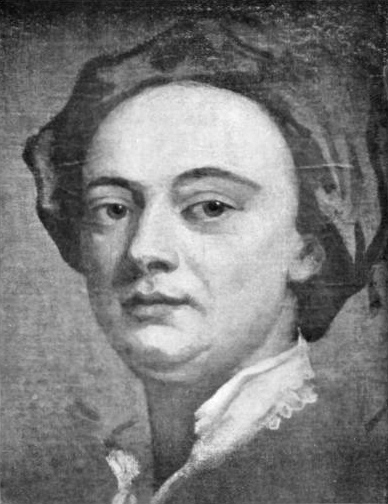
John Gay, né le 30 juin 1685 à Barnstaple, dans le Devon, et mort le 4 décembre 1732 à Londres, est un poète et dramaturge anglais.
Il est surtout connu pour avoir écrit le livret de L'Opéra des gueux , sur une musique de Johann Christoph Pepusch. Ce dernier a, en fait, dans un esprit nationaliste et anti-italien, collecté et mis bout à bout des airs traditionnels britanniques pour créer le premier anti-opéra. Figurent aussi quelques airs d'opéra italien tournés en ridicule, interprétés qu'ils sont par des mendiants et bandits des bas-fonds londoniens, censés mimer la haute société d'alors. Les personnages de cet anti-opéra, dont le capitaine Macheath et Polly Peachum, ont inspiré Bertolt Brecht et Kurt Weill pour leur Opéra de quat'sous. Cette œuvre injustement oubliée n'est plus guère représentée. La dernière adaptation française, par Bernard Turle, a été donnée sous la direction de David Roblou au Week-End Musical. On se reportera à la version cinématographique de Peter Brook avec Laurence Olivier. Wikipedia
“A man is always afraid of a woman that loves him too much”
Source: The Beggar's Opera
“Whence thy learning? Hath thy toil
O'er books consumed the midnight oil?”
Introduction, "The Shepherd and the Philosopher"; "Midnight oil" was a common phrase, used by Quarles, Shenstone, Cowper, Lloyd, and others.
Fables (1727)
“That raven on yon left-hand oak
(Curse on his ill-betiding croak!)
Bodes me no good.”
Fable, The Farmer's Wife and the Raven. Comparable to: "It wasn't for nothing that the raven was just now croaking on my left hand", Plautus, Aulularia, act iv. sc. 3
Fables (1727)
“Lest men suspect your tale untrue,
Keep probability in view.”
Fable, The Painter who pleased Nobody and Everybody
Fables (1727)
“Sure men were born to lie, and women to believe them!”
Lucy, Act II, sc. xiii
The Beggar's Opera (1728)
Act I, sc. xxxiii, air 16
The Beggar's Opera (1728)
“How happy could I be with either,
Were t' other dear charmer away!”
Act II, scene ii
The Beggar's Opera (1728)
Variante: How happy could I be with either,
Were t' other dear charmer away!
Matt, Act II, sc. i, air 19
The Beggar's Opera (1728)
“The fly that sips treacle is lost in the sweets.”
Act II, scene ii
The Beggar's Opera (1728)
"Beggar", Introduction
The Beggar's Opera (1728)
“Adieu, she cried, and waved her lily hand.”
Sweet William's Farewell to Black-eyed Susan, reported in Bartlett's Familiar Quotations, 10th ed. (1919)
“While there is life there 's hope, he cried.”
Fable, The Sick Man and the Angel
Comparable to: "For the living there is hope, but for the dead there is none", Theocritus (3rd century BC), Idyl iv, 42; "Ægroto, dum anima est, spes est" ("While the sick man has life, there is hope", Cicero (1st century BC), Epistolarum ad Atticum, ix, 10
Fables (1727)
“So comes a reckoning when the banquet's o'er,—
The dreadful reckoning, and men smile no more.”
The What d' ye call it (1715). Comparable to: "The time of paying a shot in a tavern among good fellows, or Pantagruelists, is still called in France a 'quart d'heure de Rabelais,'—that is, Rabelais's quarter of an hour, when a man is uneasy or melancholy", Life of Rabelais (Bohn's edition), p. 13
“And when a lady's in the case,
You know all other things give place.”
Fable L, "The Hare and many Friends"
Fables (1727)
Peachum, Act I, sc. viii
The Beggar's Opera (1728)
“Over the hills and far away.”
Act I, scene i; comparable to: "O'er the hills and far away", D'Urfey, Pills to purge Melancholy (1628–1723).
The Beggar's Opera (1728)
“The charge is prepar'd, the lawyers are met,
The judges all ranged,—a terrible show!”
Act III, scene ii
The Beggar's Opera (1728)
“O Polly, you might have toyed and kissed,
By keeping men off, you keep them on.”
Act I, sc. viii, air 9
The Beggar's Opera (1728)
“Is there no hope? the sick man said;
The silent doctor shook his head.”
Fable, The Sick Man and the Angel
Fables (1727)
“From wine what sudden friendship springs!”
VI, "The Squire and His Cur"
Fables (1727), Fables, Part the Second (1738)
“No author ever spar'd a brother.”
Fable X, "The Elephant and the Bookseller"
Fables (1727)
“In every age and clime we see
Two of a trade can never agree.”
Fable XXI, "The Rat-catcher and Cats". Comparable to: "Potter is jealous of potter, and craftsman of craftsman; and poor man has a grudge against poor man, and poet against poet", Hesiod, Works and Days, 24; "Le potier au potier porte envie" (translated: "The potter envies the potter"), Bohn, Handbook of Proverbs; also in Arthur Murphy, The Apprentice, act iii
Fables (1727)
“No retreat. No retreat. They must conquer or die who’ve no retreat.”
"We’ve Cheated the Parson" (song), Polly: an Opera (1729), Air 46, Act II, sc. x
Fable LXIII, "Plutus, Cupid, and Time"
Fables (1727)
"Player", Introduction
The Beggar's Opera (1728)
The Vulture, the Sparrow, and other Birds. Comparable to: "When vice prevails, and impious men bear sway, The post of honour is a private station", Joseph Addison, Cato, Act iv, scene 4
Fables (1727), Fables, Part the Second (1738)
“If love be not his Guide,
He never will come back!”
Lucy, Act II, sc. xv, air 40
The Beggar's Opera (1728)
Lucy, Act II, sc. ix
The Beggar's Opera (1728)
Act I, sc. xxxiii, air 16
The Beggar's Opera (1728)


