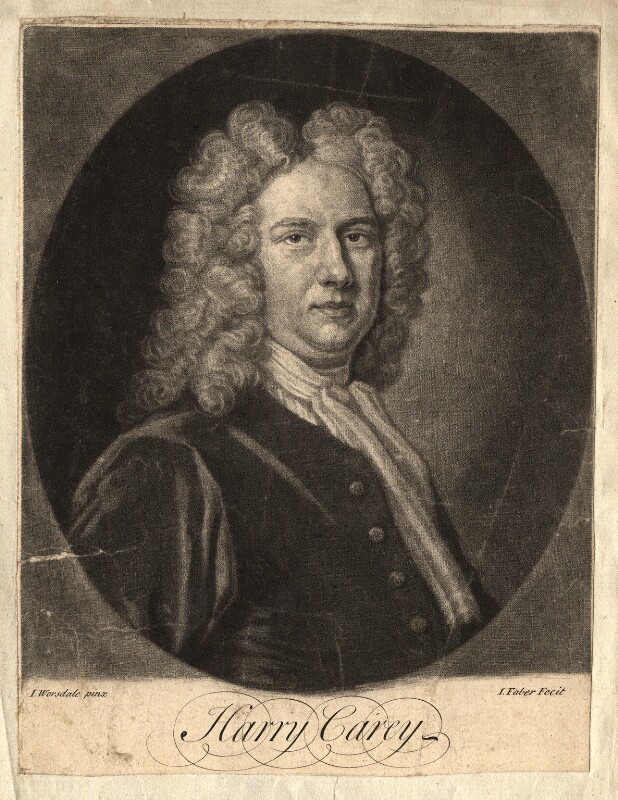
Henry Carey:
11
citations
0
J'aime
Henry Carey: Citations en anglais
“The king shall eat, though all mankind be starved.”
Henry Carey
Chrononhotonthologos
Act ii. Sc. 4.
Chrononhotonthologos (1734)
“God save our gracious king!
Long live our noble king!
God save the king!”
"God Save the King" (1730).
“Of all the girls that are so smart,
There's none like pretty Sally.”
Sally in our Alley (c. 1725). Compare: "Of all the girls that e’er was seen, There's none so fine as Nelly", Jonathan Swift, Ballad on Miss Nelly Bennet.
“His cogitative faculties immersed
In cogibundity of cogitation.”
Henry Carey
Chrononhotonthologos
Act i. Sc. 1.
Chrononhotonthologos (1734)
“To thee, and gentle Rigdom Funnidos,
Our gratulations flow in streams unbounded.”
Henry Carey
Chrononhotonthologos
Act i. Sc. 3.
Chrononhotonthologos (1734)
“Genteel in personage,
Conduct, and equipage;
Noble by heritage,
Generous and free.”
The Contrivances (1715), Act i. Sc. 2.
“Aldeborontiphoscophornio!
Where left you Chrononhotonthologos?”
Henry Carey
Chrononhotonthologos
Act i. Sc. 1.
Chrononhotonthologos (1734)


