Harriet Beecher Stowe livre Old Town Folks
Old Town Folks (1869) Ch. 25.
Elizabeth Harriet Beecher Stowe, née le 14 juin 1811 à Litchfield et morte le 1er juillet 1896 à Hartford, est une femme de lettres américaine, abolitionniste. Son roman d'inspiration chrétienne, humaniste et féministe, La Case de l'oncle Tom , vendu à des millions d'exemplaires et reçu comme un électrochoc pour la conscience publique américaine, dénonçait le commerce et l'institution de l'esclavage au moment où les tensions légales et sociales entre esclavagistes et abolitionnistes devenaient de plus en plus tendues. Elizabeth Harriet Beecher Stowe a écrit plus de vingt livres, dont des romans, trois mémoires de voyage et des collections d'articles et de lettres. Wikipedia
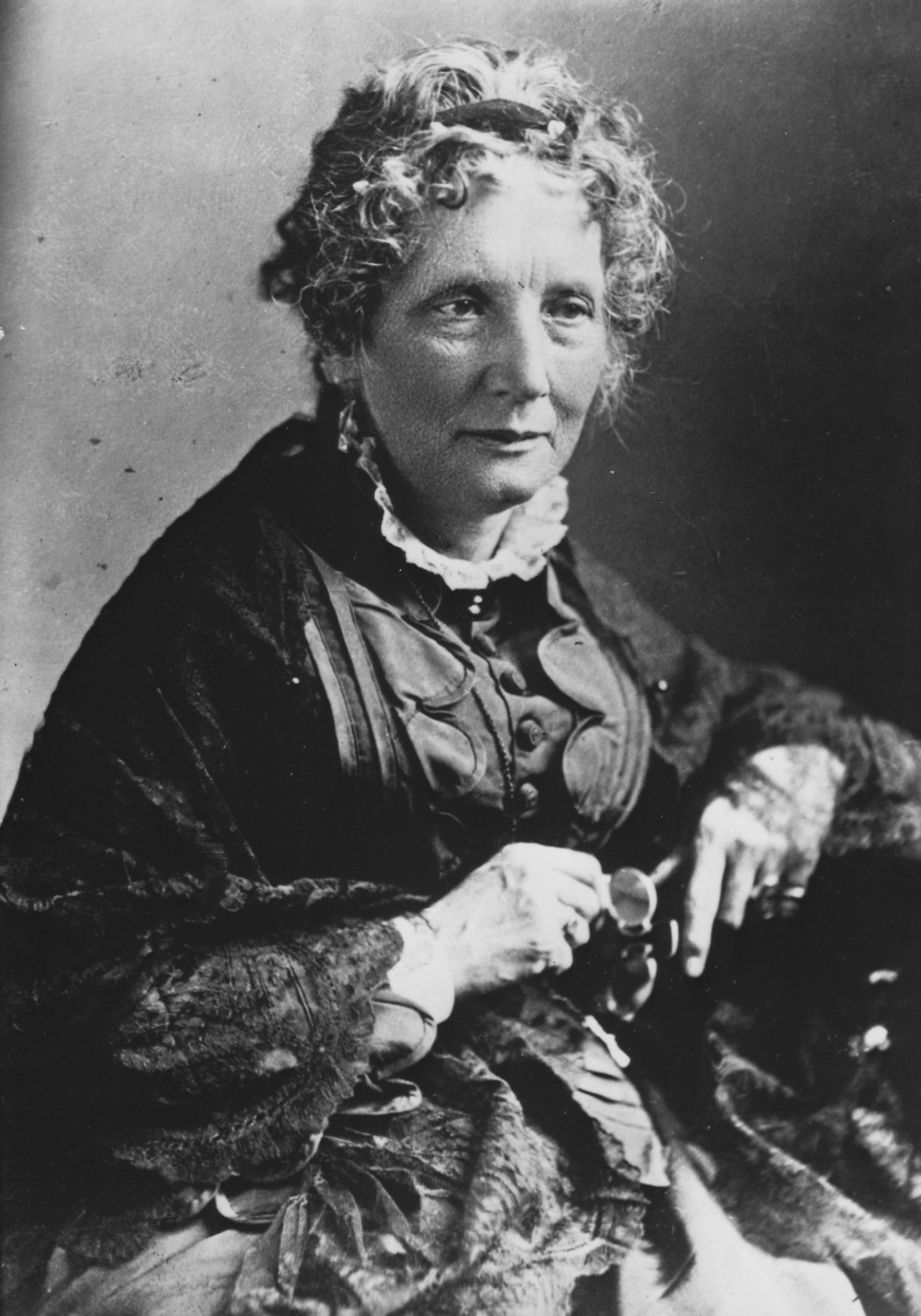
Harriet Beecher Stowe livre Old Town Folks
Old Town Folks (1869) Ch. 25.
Source: Little Foxes (1865), Ch. 5.
“Let my soul calm itself, O Christ, in Thee. This is true”
"Life's Mystery", reported in Charlotte Fiske Rogé, The Cambridge Book of Poetry and Song (1832), p. 544.
"Life's Mystery", reported in Charlotte Fiske Rogé, The Cambridge Book of Poetry and Song (1832), p. 544.
“Human nature is above all things — lazy.”
Source: Household Papers and Stories (1864), Ch. 6.
Harriet Beecher Stowe livre Uncle Tom's Cabin
Source: Uncle Tom's Cabin (1852), Ch. 38.
Reported in James Freeman Clarke, Book of Worship for the Congregation and the Home (1852), p. 431.
“There is more done with pens than with swords.”
This is very similar in theme to "Beneath the rule of men entirely great, The pen is mightier than the sword." by Edward Bulwer-Lytton.
Attributed
Little Foxes (1865)
Harriet Beecher Stowe livre Uncle Tom's Cabin
And the trader leaned back in his chair, and folded his arm, with an air of virtuous decision, apparently considering himself a second Wilberforce.
Source: Uncle Tom's Cabin (1852), Ch. 1 In Which the Reader Is Introduced to a Man of Humanity
Harriet Beecher Stowe livre Uncle Tom's Cabin
Source: Uncle Tom's Cabin (1852), Ch. 38 The Victory
“I did not write it. God wrote it. I merely did his dictation.”
Harriet Beecher Stowe livre Uncle Tom's Cabin
Introduction to an 1879 edition.
Uncle Tom's Cabin (1852)
"The Lady Who Does Her Own Work" in The Atlantic Monthly (1864).
Part 2, Ch. 4.
Household Papers and Stories (1864)
Source: Household Papers and Stories (1864), Ch. 10.
The Pearl of Orr's Island : A Story of the Coast of Maine (1862).
Harriet Beecher Stowe livre Uncle Tom's Cabin
Source: Uncle Tom's Cabin (1852), Ch. 7.
Harriet Beecher Stowe livre Uncle Tom's Cabin
Source: Uncle Tom's Cabin (1852), Ch. 1.
“Women are the real architects of society.”
Source: Kabir, Hajara Muhammad (2010). Northern women development. [Nigeria]. ISBN 978-978-906-469-4. OCLC 890820657.
Harriet Beecher Stowe livre Uncle Tom's Cabin
Source: Uncle Tom's Cabin (1852), Ch. 22 "The Grass Withereth — the Flower Fadeth".
Harriet Beecher Stowe livre Uncle Tom's Cabin
Uncle Tom's Cabin (1852), Concluding Remarks
Harriet Beecher Stowe livre Uncle Tom's Cabin
Uncle Tom's Cabin (1852), Concluding Remarks
Harriet Beecher Stowe livre Old Town Folks
Old Town Folks (1869) Ch. 39 Last Days In Cloud-Land
Harriet Beecher Stowe livre Uncle Tom's Cabin
Source: Uncle Tom's Cabin (1852), Ch. 40 The Martyr
Harriet Beecher Stowe livre Uncle Tom's Cabin
So long as the law considers all these human beings, with beating hearts and living affections, only as so many things belonging to a master — so long as the failure, or misfortune, or imprudence, or death of the kindest owner, may cause them any day to exchange a life of kind protection and indulgence for one of hopeless misery and toil — so long it is impossible to make anything beautiful or desirable in the best regulated administration of slavery.
Source: Uncle Tom's Cabin (1852), Ch. 1.


