William Gibson Quotes

William Ford Gibson is an American-Canadian speculative fiction writer and essayist widely credited with pioneering the science fiction subgenre known as cyberpunk. Beginning his writing career in the late 1970s, his early works were noir, near-future stories that explored the effects of technology, cybernetics, and computer networks on humans—a "combination of lowlife and high tech"—and helped to create an iconography for the information age before the ubiquity of the Internet in the 1990s. Gibson notably coined the term "cyberspace" for "widespread, interconnected digital technology" in his short story "Burning Chrome" , and later popularized the concept in his acclaimed debut novel Neuromancer . These early works of Gibson's have been credited with "renovating" science fiction literature in the 1980s.

After expanding on the story in Neuromancer with two more novels, thus completing the dystopic Sprawl trilogy, Gibson collaborated with Bruce Sterling on the alternate history novel The Difference Engine , which became an important work of the science fiction subgenre known as steampunk. In the 1990s, Gibson composed the Bridge trilogy of novels, which explored the sociological developments of near-future urban environments, postindustrial society, and late capitalism. Following the turn of the century and the events of 9/11, Gibson emerged with a string of increasingly realist novels—Pattern Recognition , Spook Country , and Zero History —set in a roughly contemporary world. These works saw his name reach mainstream bestseller lists for the first time. His most recent novels, The Peripheral and Agency , returned to a more overt engagement with technology and recognizable science fiction themes.

In 1999, The Guardian described Gibson as "probably the most important novelist of the past two decades," while the Sydney Morning Herald called him the "noir prophet" of cyberpunk. Throughout his career, Gibson has written more than 20 short stories and 10 critically acclaimed novels , contributed articles to several major publications, and collaborated extensively with performance artists, filmmakers, and musicians. His work has been cited as influencing a variety of disciplines: academia, design, film, literature, music, cyberculture, and technology. Wikipedia  

✵ 17. March 1948  •  Other names উইলিয়াম গিবসন
William Gibson photo

Works

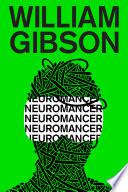
Neuromancer
Neuromancer
William Gibson
Count Zero
Count Zero
William Gibson
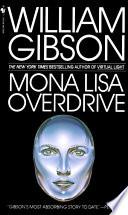
Mona Lisa Overdrive
Mona Lisa Overdrive
William Gibson
Neuromancer
Neuromancer
William Gibson
Count Zero
Count Zero
William Gibson
Mona Lisa Overdrive
Mona Lisa Overdrive
William Gibson
William Gibson: 117 quotes5 likes

Famous William Gibson Quotes

“The future is already here — it's just not very evenly distributed.”

William Gibson

He is reported to have first said this in an interview on Fresh Air, NPR (31 August 1993) { unverified http://www.npr.org/templates/story/story.php?storyId=1107153}, he repeated it, prefacing it with "As I've said many times…" in "The Science in Science Fiction" on Talk of the Nation, NPR (30 November 1999, Timecode 11:55) http://www.npr.org/templates/story/story.php?storyId=1067220. See also The future has arrived... - Quote Investigator http://quoteinvestigator.com/2012/01/24/future-has-arrived/.

“They used their money to keep themselves out of the news.”

William Gibson book Mona Lisa Overdrive

Source: Mona Lisa Overdrive (1988), Ch. 12
Context: That’s interesting in itself, because it shows you how adept they were at obscurity. They used their money to keep themselves out of the news.

William Gibson Quotes about time

“The NET is a waste of time, and that's exactly what's right about it.”

William Gibson

Name of an article http://www.voidspace.org.uk/cyberpunk/gibson_wasteoftime.shtml he wrote for New York Times Magazine (14 July 1996)

“Time is money, but also money is money.”

William Gibson book Pattern Recognition

Source: Pattern Recognition

“Time moves in one direction, memory another. We are that strange species that constructs artifacts intended to counter the natural flow of forgetting.”

William Gibson book Distrust That Particular Flavor

"Dead Man Sings," published in Forbes ASAP, November 30, 1998.
Source: Distrust That Particular Flavor

William Gibson Quotes about the world

“Wintermute was hive mind, decision maker, effecting change in the world outside. Neuromancer was personality. Neuromancer was immortality.”

William Gibson book Neuromancer

Neuromancer (1984)
Context: Wintermute was hive mind, decision maker, effecting change in the world outside. Neuromancer was personality. Neuromancer was immortality. Marie-France must have built something into Wintermute, the compulsion that had driven the thing to free itself, to unite with Neuromancer.

William Gibson: Trending quotes

“I think of religions as franchise operations. Like chicken franchise operations. But that doesn't mean there's no chicken, right?”

William Gibson

Referring to his belief that it's possible for religions to help people.
No Maps for These Territories (2000)

William Gibson Quotes

“The lane to the land of the dead.”

William Gibson book Neuromancer

Neuromancer (1984)
Context: The lane to the land of the dead. Where you are, my friend. Marie-France, my lady, she prepared this road, but her lord choked her off before I could read the book of her days. Neuro from the nerves, the silver paths. Romancer. Necromancer. I call up the dead. But no, my friend," and the boy did a little dance, brown feet printing the sand, "I am the dead, and their land." He laughed. A gull cried, "Stay. If your woman is a ghost, she doesn't know it. Neither will you."

“If not for our excessive vanity and our over-active imaginations, novelists might be unusually difficult to deceive.”

William Gibson

Twitter tweet (31 May 2009) http://twitter.com/GreatDismal/status/1986617191&lt;!-- also (1 June 2009) http://twitter.com/GreatDismal/status/1986630272 --&gt; <br class="br">Context: The most common human act that writing a novel resembles is lying. The working novelist lies daily, very complexly, and at great length. If not for our excessive vanity and our over-active imaginations, novelists might be unusually difficult to deceive.

“They were a traumatized lot, those boys. And I just felt frivolous.”

William Gibson

No Maps for These Territories (2000)
Context: Consequently, when I got to Toronto, much to my chagrin, I really, really couldn't handle hanging out with the American draft dodgers. There was too much clinical depression. Too much suicide. Too much hardcore substance abuse. They were a traumatized lot, those boys. And I just felt frivolous.

“Acceptance. Acceptance of the impermanence of being.”

William Gibson

When asked what will save humanity.
No Maps for These Territories (2000)
Context: Acceptance. Acceptance of the impermanence of being. And acceptance of the imperfect nature of being, or possibly the perfect nature of being, depending on how one looks at it. Acceptance that this is not a rehearsal. That this is it.

“They damaged his nervous system with a wartime Russian mycotoxin.”

William Gibson book Neuromancer

Neuromancer (1984)
Context: They damaged his nervous system with a wartime Russian mycotoxin. Strapped to a bed in a Memphis hotel, his talent burning out micron by micron, he hallucinated for thirty hours. The damage was minute, subtle, and utterly effective. For Case, who'd lived for the bodiless exultation of cyberspace, it was the Fall.

“If your woman is a ghost, she doesn't know it. Neither will you.”

William Gibson book Neuromancer

Neuromancer (1984)
Context: The lane to the land of the dead. Where you are, my friend. Marie-France, my lady, she prepared this road, but her lord choked her off before I could read the book of her days. Neuro from the nerves, the silver paths. Romancer. Necromancer. I call up the dead. But no, my friend," and the boy did a little dance, brown feet printing the sand, "I am the dead, and their land." He laughed. A gull cried, "Stay. If your woman is a ghost, she doesn't know it. Neither will you."

“There is always a point at which the terrorist ceases to manipulate the media gestalt.”

William Gibson

Official blog at williamgibsonbooks.com (31 October 2004) http://www.williamgibsonbooks.com/blog/2004_10_01_archive.asp <br class="br">Context: There is always a point at which the terrorist ceases to manipulate the media gestalt. A point at which the violence may well escalate, but beyond which the terrorist has become symptomatic of the media gestalt itself. Terrorism as we ordinarily understand it is innately media-related.

“On the most basic level, computers in my books are simply a metaphor for human memory: I'm interested in the hows and whys of memory, the ways it defines who and what we are, in how easily memory is subject to revision.”

William Gibson

Interview with Larry McCaffery in Storming the Reality Studio : A Casebook of Cyberpunk and Postmodern Science Fiction, Duke University Press (December 1991)
Context: On the most basic level, computers in my books are simply a metaphor for human memory: I'm interested in the hows and whys of memory, the ways it defines who and what we are, in how easily memory is subject to revision. When I was writing Neuromancer, it was wonderful to be able to tie a lot of these interests into the computer metaphor. It wasn't until I could finally afford a computer of my own that I found out there's a drive mechanism inside — this little thing that spins around. I'd been expecting an exotic crystalline thing, a cyberspace deck or something, and what I got was a little piece of a Victorian engine that made noises like a scratchy old record player. That noise took away some of the mystique for me; it made computers less sexy. My ignorance had allowed me to romanticize them.

“Beyond ego, beyond personality, beyond awareness, he moved”

William Gibson book Neuromancer

Neuromancer (1984)
Context: He came in steep, fueled by self-loathing. When the Kuang program met the first of the defenders, scattering the leaves of light, he felt the shark thing lose a degree of substantiality, the fabric of information loosening. And then — old alchemy of the brain and its vast pharmacy — his hate flowed into his hands. In the instant before he drove Kuang's sting through the base of the first tower, he attained a level of proficiency exceeding anything he'd known or imagined. Beyond ego, beyond personality, beyond awareness, he moved, Kuang moving with him, evading his attackers with an ancient dance, Hideo's dance, grace of the mind-body interface granted him, in that second, by the clarity and singleness of his wish to die.

“Everything is different from now on. Something, something very fundamental has changed, here.”

William Gibson

No Maps for These Territories (2000)
Context: I think the last time... the last time I had one of those "CNN moments," where I was slammed right up against the windshield of — of the present — would have been flipping on the television one day, and seeing that Federal Building in Oklahoma City lying there in its own … crater, and listening to a little bit of the audio, and … and getting the idea that something, something bad had happened in Middle America. And I had … some … very, very deep within me, something seemed to say, "Everything is different from now on. Something, something very fundamental has changed, here." … Whenever something like this happens, and I have one of these moments, it ups the ante on being a science-fiction writer. It changes … it changes the nature of the game.

“All I knew about the word "cyberspace" when I coined it, was that it seemed like an effective buzzword.”

William Gibson

No Maps for These Territories (2000)
Context: All I knew about the word "cyberspace" when I coined it, was that it seemed like an effective buzzword. It seemed evocative and essentially meaningless. It was suggestive of something, but had no real semantic meaning, even for me, as I saw it emerge on the page.

“Acceptance that this is not a rehearsal. That this is it.”

William Gibson

When asked what will save humanity.
No Maps for These Territories (2000)
Context: Acceptance. Acceptance of the impermanence of being. And acceptance of the imperfect nature of being, or possibly the perfect nature of being, depending on how one looks at it. Acceptance that this is not a rehearsal. That this is it.

“Terrorism as we ordinarily understand it is innately media-related.”

William Gibson

Official blog at williamgibsonbooks.com (31 October 2004) http://www.williamgibsonbooks.com/blog/2004_10_01_archive.asp <br class="br">Context: There is always a point at which the terrorist ceases to manipulate the media gestalt. A point at which the violence may well escalate, but beyond which the terrorist has become symptomatic of the media gestalt itself. Terrorism as we ordinarily understand it is innately media-related.

“Neuro from the nerves, the silver paths. Romancer. Necromancer.”

William Gibson book Neuromancer

Neuromancer (1984)
Context: The lane to the land of the dead. Where you are, my friend. Marie-France, my lady, she prepared this road, but her lord choked her off before I could read the book of her days. Neuro from the nerves, the silver paths. Romancer. Necromancer. I call up the dead. But no, my friend," and the boy did a little dance, brown feet printing the sand, "I am the dead, and their land." He laughed. A gull cried, "Stay. If your woman is a ghost, she doesn't know it. Neither will you."

“Everything to Fontaine, had a story.”

William Gibson book All Tomorrow's Parties

Source: All Tomorrow's Parties‎ (2003), Ch. 38 : Vincent Black Lightning, p. 191
Context: If Skinner couldn't tell Fontaine a story about something, Fontaine would make up his own story, read function in the shape of something, read use in the way it was worn down. It seemed to comfort him.
Everything to Fontaine, had a story. Each object, each fragment comprising the built world. A chorus of voices, the past alive in everything, that sea upon which the present tossed and rode. When he'd built Skinner's funicular, the elevator that crawled like a small cable car up the angled iron of the tower, when they old man's hip had gotten too bad to allow him to easily climb, Fontaine had a story about the derivation of each piece. He wove their stories together, applied electricity: the thing rose, clicking, to the hatch in the floor of Skinner's room.

“A chorus of voices, the past alive in everything, that sea upon which the present tossed and rode.”

William Gibson book All Tomorrow's Parties

Source: All Tomorrow's Parties‎ (2003), Ch. 38 : Vincent Black Lightning, p. 191
Context: If Skinner couldn't tell Fontaine a story about something, Fontaine would make up his own story, read function in the shape of something, read use in the way it was worn down. It seemed to comfort him.
Everything to Fontaine, had a story. Each object, each fragment comprising the built world. A chorus of voices, the past alive in everything, that sea upon which the present tossed and rode. When he'd built Skinner's funicular, the elevator that crawled like a small cable car up the angled iron of the tower, when they old man's hip had gotten too bad to allow him to easily climb, Fontaine had a story about the derivation of each piece. He wove their stories together, applied electricity: the thing rose, clicking, to the hatch in the floor of Skinner's room.

“The damage was minute, subtle, and utterly effective.”

William Gibson book Neuromancer

Neuromancer (1984)
Context: They damaged his nervous system with a wartime Russian mycotoxin. Strapped to a bed in a Memphis hotel, his talent burning out micron by micron, he hallucinated for thirty hours. The damage was minute, subtle, and utterly effective. For Case, who'd lived for the bodiless exultation of cyberspace, it was the Fall.

“Before you diagnose yourself with depression or low self-esteem, first make sure that you are not, in fact, just surrounded by assholes.”

William Gibson

Misattributed <br class="br">Source: thought to be Gibson&#x27;s words as a result of Twitter attribution decay, despite repeated disavowals. https://twitter.com/#!/GreatDismal/status/144940064990961664 https://twitter.com/#!/GreatDismal/status/144941061578559488 https://twitter.com/#!/GreatDismal/status/144941447936884736 https://twitter.com/#!/GreatDismal/status/171091202161131520. The source, according to Gibson, is Steven Winterburn https://twitter.com/greatdismal/status/119133581598666752 https://twitter.com/5tevenw/status/73091190475595776. However, Steven Winterburn is NOT the original creator of that quote. The original quote is the creation of Twitter account holder &quot;@debihope&quot; https://twitter.com/debihope?lang=en. See research by quoteinvestigator http://quoteinvestigator.com/2014/10/25/diagnose/.

“The street finds its own uses for things.”

William Gibson Burning Chrome

Burning Chrome (1982)

“Secrets… are the very root of cool.”

William Gibson book Spook Country

Source: Spook Country

“He took a duck in the face at 250 knots.”

William Gibson book Pattern Recognition

Source: Pattern Recognition

“A year here and he still dreamed of cyberspace, hope fading nightly. All the speed he took, all the turns he'd taken and the corners he'd cut in Night City, and he'd still see the matrix in his sleep, bright lattices of logic unfolding across that colorless void…”

William Gibson book Neuromancer

Source: Neuromancer (1984)
Context: A year here and he still dreamed of cyberspace, hope fading nightly. All the speed he took, all the turns he'd taken and the corners he'd cut in Night City, and he'd still see the matrix in his sleep, bright lattices of logic unfolding across that colorless void… The Sprawl was a long strange way home over the Pacific now, and he was no console man, no cyberspace cowboy. Just another hustler, trying to make it through. But the dreams came on in the Japanese night like livewire voodoo, and he'd cry for it, cry in his sleep, and wake alone in the dark, curled in his capsule in some coffin hotel, his hands clawed into the bedslab, temperfoam bunched between his fingers, trying to reach the console that wasn't there.

“Things aren't different. Things are things.”

William Gibson book Neuromancer

Source: Neuromancer

“The present tense made him nervous.”

William Gibson

Source: Sprawl trilogy, Neuromancer (1984), Chapter 3 (Case)

“Cyberspace. A consensual hallucination experienced daily by billions of legitimate operators, in every nation, by children being taught mathematical concepts…”

William Gibson book Neuromancer

Source: Neuromancer (1984)
Context: Cyberspace. A consensual hallucination experienced daily by billions of legitimate operators, in every nation, by children being taught mathematical concepts… A graphic representation of data abstracted from banks of every computer in the human system. Unthinkable complexity. Lines of light ranged in the nonspace of the mind, clusters and constellations of data. Like city lights, receding...

“I took Punk to be the detonation of some slow-fused projectile buried deep in society's flank a decade earlier, and I took it to be, somehow, a sign.”

William Gibson

&quot;Since 1948&quot; (6 November 2002) http://www.williamgibsonbooks.com/source/source.asp <br class="br">Context: I took Punk to be the detonation of some slow-fused projectile buried deep in society&#x27;s flank a decade earlier, and I took it to be, somehow, a sign. And I began, then, to write.<br>And have been, ever since. <br class="br">Context: In 1977, facing first-time parenthood and an absolute lack of enthusiasm for anything like &quot;career,&quot; I found myself dusting off my twelve-year-old&#x27;s interest in science fiction. Simultaneously, weird noises were being heard from New York and London. I took Punk to be the detonation of some slow-fused projectile buried deep in society&#x27;s flank a decade earlier, and I took it to be, somehow, a sign. And I began, then, to write.<br>And have been, ever since.

“I'd buy him a drink, but I don't know if I'd loan him any money.”

William Gibson

When asked what he would say about the man who wrote Neuromancer.
No Maps for These Territories (2000)

“Seated each afternoon in the darkened screening room, Halliday came to recognize the targeted numerals of the Academy leader as sigils preceding the dream state of a film.”

William Gibson

A sentence that he worked on for years earlier in his career, which eventually went nowhere. Troubled by inexperience in "actually getting the characters to move," he spent so much time on it that he can still remember every word more than 20 years later.
No Maps for These Territories (2000)

“They sat around accessing media all day and talking about it, and nothing ever seemed to get done.”

William Gibson book All Tomorrow's Parties

Source: All Tomorrow's Parties‎ (2003), Ch. 7 : Sharehouse, p. 33

“The future is not google-able.”

William Gibson

Comments at A Clean Well-Lighted Place for Books, San Francisco, California (5 February 2004)

“Naps are essential to my process. Not dreams, but that state adjacent to sleep, the mind on waking.”

William Gibson

Interview in Paris Review Summer 2011 http://www.theparisreview.org/interviews/6089/the-art-of-fiction-no-211-william-gibson

Similar authors

Robert A. Heinlein photo
Robert A. Heinlein557
American science fiction author None
Alice Munro photo
Alice Munro38
Canadian novelist None
Margaret Atwood photo
Margaret Atwood348
Canadian writer None
Elias Canetti photo
Elias Canetti43
Bulgarian-born Swiss and British jewish modernist novelist,… None
Saul Bellow photo
Saul Bellow103
Canadian-born American writer None
Vladimir Nabokov photo
Vladimir Nabokov193
Russian-American novelist, lepidopterist, professor None
Umberto Eco photo
Umberto Eco120
Italian semiotician, essayist, philosopher, literary critic… None
L. Ron Hubbard photo
L. Ron Hubbard85
American science fiction author, philosopher, cult leader, … None
Haruki Murakami photo
Haruki Murakami655
Japanese author, novelist None
Morihei Ueshiba photo
Morihei Ueshiba50
founder of aikido None