Robert Gascoyne-Cecil, 3rd Marquess of Salisbury
Letter to Lady John Manners (14 June 1884), from Paul Smith (ed.), Lord Salisbury on politics: a selection from his articles in the Quarterly Review, 1860–83 (1972), p. 18, footnote
1880s
Robert Arthur Talbot Gascoyne-Cecil, 3rd Marquess of Salisbury, , styled Lord Robert Cecil before the death of his elder brother in 1865, Viscount Cranborne from June 1865 until his father died in April 1868, and then the Marquess of Salisbury, was a British statesman, serving as prime minister three times for a total of over thirteen years. A member of the Conservative Party, he was the last prime minister to serve his term while a member of the House of Lords .Lord Robert Cecil was first elected to the House of Commons in 1854 and served as Secretary of State for India in Lord Derby's Conservative government from 1866 until his resignation in 1867 over its introduction of Benjamin Disraeli's Reform Bill that extended the suffrage to working-class men. In 1868 upon the death of his father, Cecil was elevated to the House of Lords. In 1874, when Disraeli formed an administration, Salisbury returned as Secretary of State for India, and, in 1878, was appointed foreign secretary, and played a leading part in the Congress of Berlin, despite his doubts over Disraeli's pro-Ottoman policy.
After the Conservatives lost the 1880 general election and Disraeli's death the year after, Salisbury emerged as Conservative leader in the House of Lords, with Sir Stafford Northcote leading the party in the Commons. He became Prime Minister in June 1885 when the Liberal leader William Ewart Gladstone resigned, and held the office until January 1886. When Gladstone came out in favour of Home Rule for Ireland, Salisbury opposed him and formed an alliance with the breakaway Liberal Unionists, winning the subsequent general election. He remained as Prime Minister until Gladstone's Liberals formed a government with the support of the Irish Nationalists, despite the Unionists gaining the largest number of votes and seats at the 1892 general election. The Liberals, however, lost the 1895 general election, and Salisbury once again became prime minister, leading Britain to war against the Boers, and the Unionists to another electoral victory in 1900 before relinquishing the premiership to his nephew Arthur Balfour. He died a year later, in 1903.
Historians agree that Salisbury was a strong and effective leader in foreign affairs, with a strong grasp of the issues. Paul Smith characterises his personality as "deeply neurotic, depressive, agitated, introverted, fearful of change and loss of control, and self-effacing but capable of extraordinary competitiveness." A representative of the landed aristocracy, he held the reactionary credo, "Whatever happens will be for the worse, and therefore it is in our interest that as little should happen as possible." Searle says that instead of seeing his party's victory in 1886 as a harbinger of a new and more popular Conservatism, he longed to return to the stability of the past, when his party's main function was to restrain demagogic liberalism and democratic excess. Wikipedia
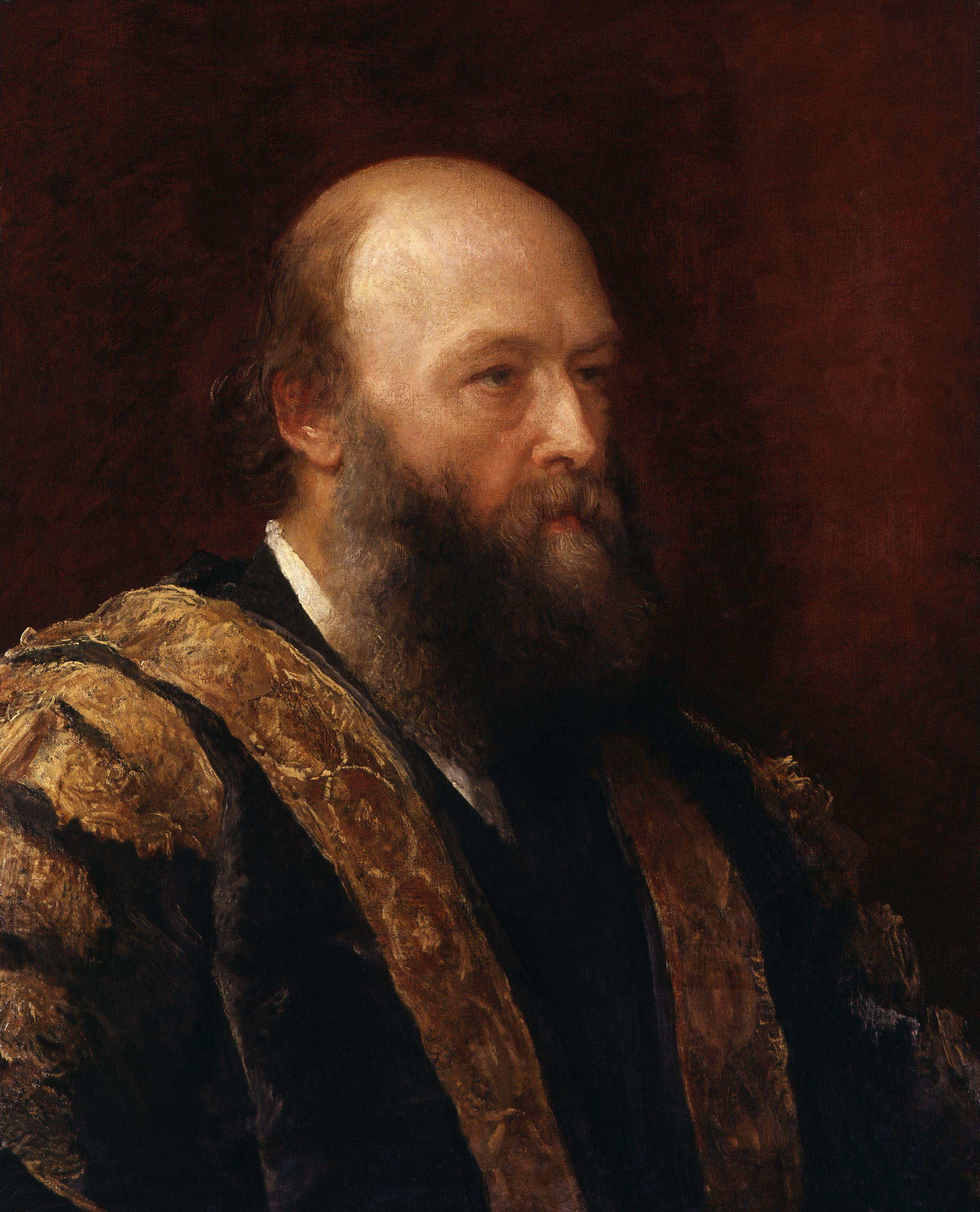
Robert Gascoyne-Cecil, 3rd Marquess of Salisbury
Letter to Lady John Manners (14 June 1884), from Paul Smith (ed.), Lord Salisbury on politics: a selection from his articles in the Quarterly Review, 1860–83 (1972), p. 18, footnote
1880s
Robert Gascoyne-Cecil, 3rd Marquess of Salisbury
Quarterly Review, 156, 1883, p. 570
1880s
Robert Gascoyne-Cecil, 3rd Marquess of Salisbury
Speech https://api.parliament.uk/historic-hansard/lords/1882/jun/05/motion-for-papers in the House of Lords (5 June 1882) <br class="br">1880s
Robert Gascoyne-Cecil, 3rd Marquess of Salisbury
Source: Letter to Lord Northbrook (28 May 1874) on British rule in India, quoted in S. Gopal, British Policy in India, 1858-1905 (Cambridge University Press, 1965), p. 65
Robert Gascoyne-Cecil, 3rd Marquess of Salisbury
Source: Letter to Lord Northbrook (25 August 1875), quoted in S. Gopal, British Policy in India, 1858-1905 (Cambridge University Press, 1965), p. 65
Robert Gascoyne-Cecil, 3rd Marquess of Salisbury
Statement to the Associated Chambers of Commerce (March 1891)
1890s
Robert Gascoyne-Cecil, 3rd Marquess of Salisbury
Quarterly Review, 116, 1864, p. 266, pp. 269-270
1860s
Robert Gascoyne-Cecil, 3rd Marquess of Salisbury
On Lord Castlereagh's use of bribery to pass the Irish Act of Union. Quarterly Review, 111, 1862, p. 204
1860s
Robert Gascoyne-Cecil, 3rd Marquess of Salisbury
Source: 'English Politics and Parties', Bentley's Quarterly Review, 1, (1859), p. 23
Robert Gascoyne-Cecil, 3rd Marquess of Salisbury
Speech http://hansard.millbanksystems.com/lords/1868/jun/26/debate-resumed-second-night in the House of Lords (26 June 1868) <br class="br">1860s
Robert Gascoyne-Cecil, 3rd Marquess of Salisbury
Quarterly Review, 131, 1873, p. 578
1870s
Robert Gascoyne-Cecil, 3rd Marquess of Salisbury
Speech http://hansard.millbanksystems.com/commons/1867/aug/02/motion-for-an-address in the House of Commons (2 August 1867) on the Orissa famine of 1866 <br class="br">1860s
Robert Gascoyne-Cecil, 3rd Marquess of Salisbury
Speech to the United Club (15 July, 1891), published in "Lord Salisbury On Home Politics" in The Times (16 July 1891), p. 10
1890s
Context: There is no danger which we have to contend with which is so serious as an exaggeration of the power, the useful power, of the interference of the State. It is not that the State may not or ought not to interfere when it can do so with advantage, but that the occasions on which it can so interfere are so lamentably few and the difficulties that lie in its way are so great. But I think that some of us are in danger of an opposite error. What we have to struggle against is the unnecessary interference of the State, and still more when that interference involves any injustice to any people, especially to any minority. All those who defend freedom are bound as their first duty to be the champions of minorities, and the danger of allowing the majority, which holds the power of the State, to interfere at its will is that the interests of the minority will be disregarded and crushed out under the omnipotent force of a popular vote. But that fear ought not to lead us to carry our doctrine further than is just. I have heard it stated — and I confess with some surprise — as an article of Conservative opinion that paternal Government — that is to say, the use of the machinery of Government for the benefit of the people — is a thing in itself detestable and wicked. I am unable to subscribe to that doctrine, either politically or historically. I do not believe it to have been a doctrine of the Conservative party at any time. On the contrary, if you look back, even to the earlier years of the present century, you will find the opposite state of things; you will find the Conservative party struggling to confer benefits — perhaps ignorantly and unwisely, but still sincerely — through the instrumentality of the State, and resisted by a severe doctrinaire resistance from the professors of Liberal opinions. When I am told that it is an essential part of Conservative opinion to resist any such benevolent action on the part of the State, I should expect Bentham to turn in his grave; it was he who first taught the doctrine that the State should never interfere, and any one less like a Conservative than Bentham it would be impossible to conceive... The Conservative party has always leaned — perhaps unduly leaned — to the use of the State, as far as it can properly be used, for the improvement of the physical, moral, and intellectual condition of our people, and I hope that that mission the Conservative party will never renounce, or allow any extravagance on the other side to frighten them from their just assertion of what has always been its true and inherent principles.
Robert Gascoyne-Cecil, 3rd Marquess of Salisbury
Letter to Robert Bulwer-Lytton, 1st Earl of Lytton (15 June 1877), as quoted in The Oxford Dictionary of Quotations (1999) Elizabeth M. Knowles, p. 642; this has also been published without the word "insipid".
1870s
Context: No lesson seems to be so deeply inculcated by the experience of life as that you should never trust experts. If you believe doctors, nothing is wholesome: if you believe the theologians, nothing is innocent: if you believe the soldiers, nothing is safe. They all require their strong wine diluted by a very large admixture of insipid common sense.
Robert Gascoyne-Cecil, 3rd Marquess of Salisbury
Speech to the United Club (15 July, 1891), published in "Lord Salisbury On Home Politics" in The Times (16 July 1891), p. 10
1890s
Context: There is no danger which we have to contend with which is so serious as an exaggeration of the power, the useful power, of the interference of the State. It is not that the State may not or ought not to interfere when it can do so with advantage, but that the occasions on which it can so interfere are so lamentably few and the difficulties that lie in its way are so great. But I think that some of us are in danger of an opposite error. What we have to struggle against is the unnecessary interference of the State, and still more when that interference involves any injustice to any people, especially to any minority. All those who defend freedom are bound as their first duty to be the champions of minorities, and the danger of allowing the majority, which holds the power of the State, to interfere at its will is that the interests of the minority will be disregarded and crushed out under the omnipotent force of a popular vote. But that fear ought not to lead us to carry our doctrine further than is just. I have heard it stated — and I confess with some surprise — as an article of Conservative opinion that paternal Government — that is to say, the use of the machinery of Government for the benefit of the people — is a thing in itself detestable and wicked. I am unable to subscribe to that doctrine, either politically or historically. I do not believe it to have been a doctrine of the Conservative party at any time. On the contrary, if you look back, even to the earlier years of the present century, you will find the opposite state of things; you will find the Conservative party struggling to confer benefits — perhaps ignorantly and unwisely, but still sincerely — through the instrumentality of the State, and resisted by a severe doctrinaire resistance from the professors of Liberal opinions. When I am told that it is an essential part of Conservative opinion to resist any such benevolent action on the part of the State, I should expect Bentham to turn in his grave; it was he who first taught the doctrine that the State should never interfere, and any one less like a Conservative than Bentham it would be impossible to conceive... The Conservative party has always leaned — perhaps unduly leaned — to the use of the State, as far as it can properly be used, for the improvement of the physical, moral, and intellectual condition of our people, and I hope that that mission the Conservative party will never renounce, or allow any extravagance on the other side to frighten them from their just assertion of what has always been its true and inherent principles.
Robert Gascoyne-Cecil, 3rd Marquess of Salisbury
Speech to Devonshire Conservatives (January 1892), as quoted in The Marquis of Salisbury (1892), by James J. Ellis, p. 185
Variant: The only true lasting benefit which the statesman can give to the poor man is so to shape matters that the greatest possible liberty for the exercise of his own moral and intellectual qualities should be offered to him by law.
As quoted in Salisbury — Victorian Titan (1999) by Andrew Roberts
1890s
Context: We must learn this rule, which is true alike of rich and poor — that no man and no class of men ever rise to any permanent improvement in their condition of body or of mind except by relying upon their own personal efforts. The wealth with which the rich man is surrounded is constantly tempting him to forget the truth, ad you see in family after family men degenerating from the position of their fathers because they live sluggishly and enjoy what has been placed before them without appealing to their own exertions. The poor man, especially in these days, may have a similar temptation offered to him by legislation, but this same inexorable rule will work. The only true lasting benefit which the statesman can give to the poor man is so to shape matters that the greatest possible opportunity for the exercise of his own moral and intellectual qualities shall be offered to him by the law; and therefore it is that in my opinion nothing that we can do this year, and nothing that we did before, will equal in the benefit that it will confer upon the physical condition, and with the physical will follow the moral too, of the labouring classes in the rural districts, that measure for free education which we passed last year. It will have the effect of bringing education home to many a family which hitherto has not been able to enjoy it, and in that way, by developing the faculties which nature has given to them, it will be a far surer and a far more valuable aid to extricate them from any of the sufferings or hardships to which they may be exposed than the most lavish gifts of mere sustenance that the State could offer.
Robert Gascoyne-Cecil, 3rd Marquess of Salisbury
Speech to Devonshire Conservatives (January 1892), as quoted in The Marquis of Salisbury (1892), by James J. Ellis, p. 185
Variant: The only true lasting benefit which the statesman can give to the poor man is so to shape matters that the greatest possible liberty for the exercise of his own moral and intellectual qualities should be offered to him by law.
As quoted in Salisbury — Victorian Titan (1999) by Andrew Roberts
1890s
Context: We must learn this rule, which is true alike of rich and poor — that no man and no class of men ever rise to any permanent improvement in their condition of body or of mind except by relying upon their own personal efforts. The wealth with which the rich man is surrounded is constantly tempting him to forget the truth, ad you see in family after family men degenerating from the position of their fathers because they live sluggishly and enjoy what has been placed before them without appealing to their own exertions. The poor man, especially in these days, may have a similar temptation offered to him by legislation, but this same inexorable rule will work. The only true lasting benefit which the statesman can give to the poor man is so to shape matters that the greatest possible opportunity for the exercise of his own moral and intellectual qualities shall be offered to him by the law; and therefore it is that in my opinion nothing that we can do this year, and nothing that we did before, will equal in the benefit that it will confer upon the physical condition, and with the physical will follow the moral too, of the labouring classes in the rural districts, that measure for free education which we passed last year. It will have the effect of bringing education home to many a family which hitherto has not been able to enjoy it, and in that way, by developing the faculties which nature has given to them, it will be a far surer and a far more valuable aid to extricate them from any of the sufferings or hardships to which they may be exposed than the most lavish gifts of mere sustenance that the State could offer.
Robert Gascoyne-Cecil, 3rd Marquess of Salisbury
Speech http://hansard.millbanksystems.com/lords/1897/mar/19/speech-by-lord-kimberley-at-norwich in the House of Lords (19 March 1897) <br class="br">1890s
Robert Gascoyne-Cecil, 3rd Marquess of Salisbury
Source: On canvassing for election, quoted in 'The Faction-Fights', Bentley's Quarterly Review, 1, (1859), p. 355
Robert Gascoyne-Cecil, 3rd Marquess of Salisbury
Quarterly Review, 127, 1869, pp. 551-552
1860s
Robert Gascoyne-Cecil, 3rd Marquess of Salisbury
Speech to the National Union of Conservative and Constitutional Associations in St. James's Hall, London (15 May 1886), quoted in The Times (17 May 1886), p. 6. The Liberal MP John Morley responded https://api.parliament.uk/historic-hansard/commons/1886/jun/03/tenth-night#S3V0306P0_18860603_HOC_120 by claiming that Salisbury was in favour of "20 years of coercion" for Ireland, which Salisbury contested https://api.parliament.uk/historic-hansard/lords/1886/jun/04/personal-explanation#S3V0306P0_18860604_HOL_10. <br class="br">1880s
Robert Gascoyne-Cecil, 3rd Marquess of Salisbury
Quarterly Review, 120, 1866, p. 273
1860s
Robert Gascoyne-Cecil, 3rd Marquess of Salisbury
Source: Letter to Lord Northbrook (12 June 1874), quoted in S. Gopal, British Policy in India, 1858-1905 (Cambridge University Press, 1965), p. 104.
Robert Gascoyne-Cecil, 3rd Marquess of Salisbury
Source: Speech at Newcastle-upon-Tyne (11 October 1881), from The Times (12 October 1881), p. 7
Robert Gascoyne-Cecil, 3rd Marquess of Salisbury
Letter to Alfred Austin (29 April 1888), from Paul Smith (ed.), Lord Salisbury on politics: a selection from his articles in the Quarterly Review, 1860–83 (1972), p. 39, footnote
1880s
Robert Gascoyne-Cecil, 3rd Marquess of Salisbury
Source: Letter to the Viceroy of India Lord Lytton (7 July 1876), quoted in S. Gopal, British Policy in India, 1858-1905 (Cambridge University Press, 1965), p. 115
Robert Gascoyne-Cecil, 3rd Marquess of Salisbury
Quarterly Review, 151, 1881, pp. 542-544
1880s
Robert Gascoyne-Cecil, 3rd Marquess of Salisbury
Letter to Sir Henry Peek http://wist.info/salisbury-lord/5899/ (1888) <br class="br">1880s
Robert Gascoyne-Cecil, 3rd Marquess of Salisbury
Salisbury to the Cabinet (8 March 1878), from John Vincent (ed.), The Diaries of Edward Henry Stanley, Fifteenth Earl of Derby (London: The Royal Historical Society, 1994), p. 523
1870s
Robert Gascoyne-Cecil, 3rd Marquess of Salisbury
Source: Letter to H. W. Acland (4 February 1867), from G. Cecil, The Life of Robert, Marquis of Salisbury. Volume I, p. 211
Robert Gascoyne-Cecil, 3rd Marquess of Salisbury
Source: Speech to the National Union of Conservative and Constitutional Associations in St. James's Hall, London (15 May 1886), quoted in The Times (17 May 1886), p. 6
Robert Gascoyne-Cecil, 3rd Marquess of Salisbury
Quarterly Review, 113, 1863, p. 266
1860s
“A gram of experience is worth a ton of theory.”
Robert Gascoyne-Cecil, 3rd Marquess of Salisbury
Saturday Review (1859)
1850s
Robert Gascoyne-Cecil, 3rd Marquess of Salisbury
Source: Letter to Robert Bulwer-Lytton, 1st Earl of Lytton (15 June 1877), from G. Cecil, The Life of Robert, Marquis of Salisbury. Volume II, pp. 145-146
Robert Gascoyne-Cecil, 3rd Marquess of Salisbury
Source: Speech to the Colonial Conference, London (4 April 1887), quoted in The Times (5 April 1887), p. 11
Robert Gascoyne-Cecil, 3rd Marquess of Salisbury
Source: 'Parliamentary Reform', Quarterly Review, 117, 1865, p. 550
Robert Gascoyne-Cecil, 3rd Marquess of Salisbury
But the two camps together will not nearly include the nation: for the vast mass of every nation is unpolitical.
Quarterly Review, 133, 1872, pp. 583-584
1870s
Robert Gascoyne-Cecil, 3rd Marquess of Salisbury
Speech at Edinburgh (24 November 1882), from in G. Cecil, The Life of Robert, Marquis of Salisbury. Volume III, p. 65
1880s
Robert Gascoyne-Cecil, 3rd Marquess of Salisbury
On resistance to the Reform Act 1832. Quarterly Review, 123, 1867, p. 557
1860s
Robert Gascoyne-Cecil, 3rd Marquess of Salisbury
Saturday Review, 29, 1865, p. 532
1860s
Robert Gascoyne-Cecil, 3rd Marquess of Salisbury
Salisbury to Disraeli (September 1876), from G. Cecil, The Life of Robert, Marquis of Salisbury. Volume II, p. 85
1870s
Robert Gascoyne-Cecil, 3rd Marquess of Salisbury
Statement to the Associated Chambers of Commerce (March 1891)
1890s
Robert Gascoyne-Cecil, 3rd Marquess of Salisbury
Speech at the Guildhall (9 November 1897), quoted in The Times (10 November 1897), p. 6
1890s
Robert Gascoyne-Cecil, 3rd Marquess of Salisbury
Source: 'English Politics and Parties', Bentley's Quarterly Review, 1, (1859), p. 22
Robert Gascoyne-Cecil, 3rd Marquess of Salisbury
Source: 'Parliamentary Reform', Quarterly Review, 117, 1865, p. 550
Robert Gascoyne-Cecil, 3rd Marquess of Salisbury
Speech http://hansard.millbanksystems.com/commons/1867/aug/02/motion-for-an-address in the House of Commons (2 August 1867) on the Orissa famine of 1866 <br class="br">1860s
Robert Gascoyne-Cecil, 3rd Marquess of Salisbury
Quarterly Review, 130, 1871, pp. 279-280
1870s
Robert Gascoyne-Cecil, 3rd Marquess of Salisbury
‘Disintegration’, Quarterly Review, no. 312; October 1883, reprinted in Paul Smith (ed.), Lord Salisbury on Politics. A selection from his articles in the Quaterly Review, 1860-1883 (Cambridge University Press, 1972), pp. 342-343
1880s
Robert Gascoyne-Cecil, 3rd Marquess of Salisbury
Quarterly Review, 107, 1860, p. 516
1860s
Robert Gascoyne-Cecil, 3rd Marquess of Salisbury
Salisbury to the Cabinet (16 June 1877), from John Vincent (ed.), The Diaries of Edward Henry Stanley, Fifteenth Earl of Derby (London: The Royal Historical Society, 1994), p. 410
1870s
Robert Gascoyne-Cecil, 3rd Marquess of Salisbury
Letter to Robert Bulwer-Lytton, 1st Earl of Lytton (9 March 1877), as quoted in G. Cecil, The Life of Robert, Marquis of Salisbury. Volume II, p. 130
1870s
Robert Gascoyne-Cecil, 3rd Marquess of Salisbury
Statement of an uncredited reviewer in The Quarterly Review [London] (January 1866), p. 277
Misattributed
Robert Gascoyne-Cecil, 3rd Marquess of Salisbury
Source: Quarterly Review, 116, 1864, p. 263
Robert Gascoyne-Cecil, 3rd Marquess of Salisbury
Source: Quarterly Review, 116, 1864, pp. 265-266
Robert Gascoyne-Cecil, 3rd Marquess of Salisbury
Speech http://hansard.millbanksystems.com/lords/1868/jun/26/debate-resumed-second-night in the House of Lords (26 June 1868) <br class="br">1860s
Robert Gascoyne-Cecil, 3rd Marquess of Salisbury
Source: Quarterly Review, 127, 1869, p. 560
Robert Gascoyne-Cecil, 3rd Marquess of Salisbury
Speech http://hansard.millbanksystems.com/commons/1867/may/30/committee-progress-may-28 in the House of Commons (30 May 1867) against John Stuart Mill's proposal for electing MPs by proportional representation <br class="br">1860s
“Conflict in free states is the law of life.”
Robert Gascoyne-Cecil, 3rd Marquess of Salisbury
Quarterly Review, 118, 1865, p. 198
1860s
Robert Gascoyne-Cecil, 3rd Marquess of Salisbury
Quarterly Review, 112, 1862, pp. 547-548
1860s
Robert Gascoyne-Cecil, 3rd Marquess of Salisbury
‘The Conservative Reaction’, The Quarterly Review, vol. 108 (July & October 1860), p. 276
1860s
Robert Gascoyne-Cecil, 3rd Marquess of Salisbury
Speech at Edinburgh (24 November 1882), from in G. Cecil, The Life of Robert, Marquis of Salisbury. Volume III, p. 65
1880s


