“How these curiosities would be quite forgott, did not such idle fellowes as I am putt them downe.”
John Aubrey book Brief Lives
"Venetia Digby"
Brief Lives
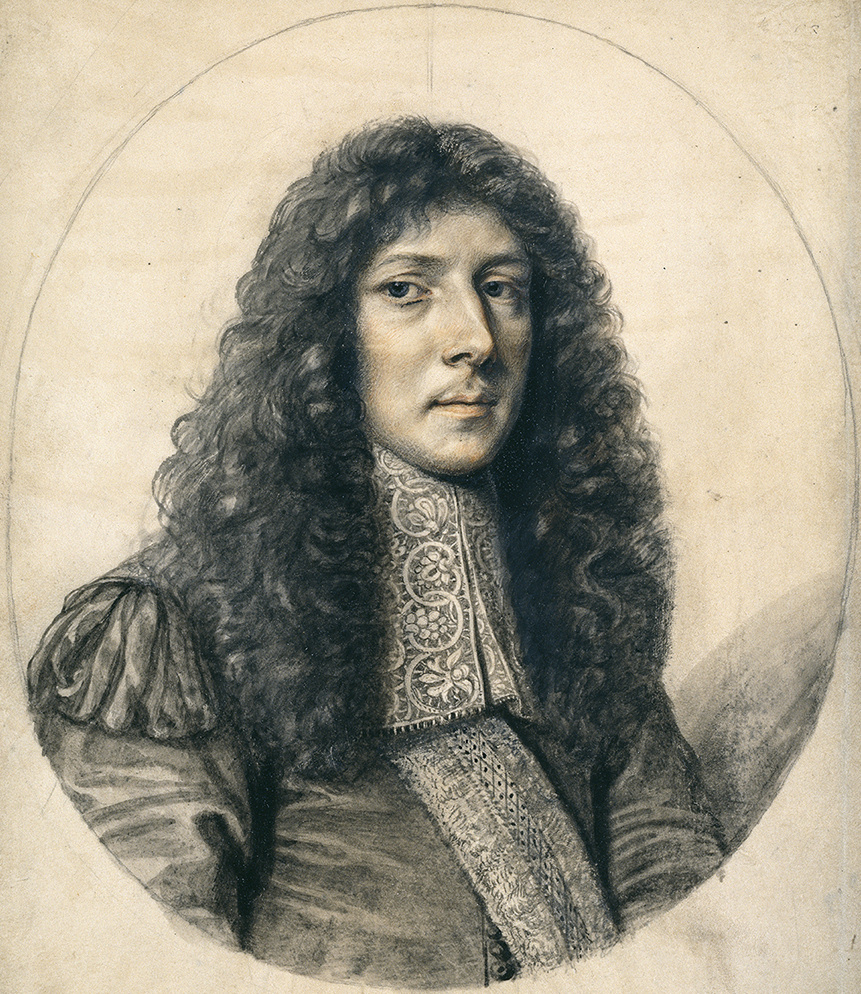
John Aubrey was an English antiquary, natural philosopher and writer. He is perhaps best known as the author of the Brief Lives, his collection of short biographical pieces. He was a pioneer archaeologist, who recorded numerous megalithic and other field monuments in southern England, and who is particularly noted as the discoverer of the Avebury henge monument. The Aubrey holes at Stonehenge are named after him, although there is considerable doubt as to whether the holes that he observed are those that currently bear the name. He was also a pioneer folklorist, collecting together a miscellany of material on customs, traditions and beliefs under the title "Remaines of Gentilisme and Judaisme". He set out to compile county histories of both Wiltshire and Surrey, although both projects remained unfinished. His "Interpretation of Villare Anglicanum" was the first attempt to compile a full-length study of English place-names. He had wider interests in applied mathematics and astronomy, and was friendly with many of the greatest scientists of the day.
For much of the 19th and 20th centuries, thanks largely to the popularity of Brief Lives, Aubrey was regarded as little more than an entertaining but quirky, eccentric and credulous gossip. Only in the 1970s did the full breadth and innovation of his scholarship begin to be more widely appreciated. He published little in his lifetime, and many of his most important manuscripts remain unpublished, or published only in partial form. Wikipedia
“How these curiosities would be quite forgott, did not such idle fellowes as I am putt them downe.”
John Aubrey book Brief Lives
"Venetia Digby"
Brief Lives
Miscellanies Upon Various Subjects (London: J. R. Smith, 1857) p. 128. (1696)
John Aubrey book Brief Lives
"John Milton"
Brief Lives
John Aubrey book Brief Lives
"William Prynne"
Brief Lives
“Sciatica: he cured it, by boyling his buttock.”
John Aubrey book Brief Lives
"Sir Jonas Moore"
Brief Lives
“Dr. Kettle was wont to say that Seneca writes as a Boare does pisse, scilicet by jirkes.”
John Aubrey book Brief Lives
"Ralph Kettell"
Brief Lives
John Aubrey book Brief Lives
"Thomas Allen"
Brief Lives
John Aubrey book Brief Lives
"William Shakespeare"
Brief Lives
John Aubrey book Brief Lives
"Sir Edward Coke"
Brief Lives
Lytton Strachey Portraits in Miniature and Other Essays (London: Chatto & Windus, 1931) p. 24.
Criticism
“He was a learned man, of immense reading, but is much blamed for his unfaithfull quotations.”
John Aubrey book Brief Lives
"William Prynne"
Brief Lives
“He was a shiftless person, roving and magotie-headed, and sometimes little better than crased.”
Anthony Wood (1667), Life (from 1632 to 1672, written by himself; continued till 1695 a 1695, 1772, 1848, O.H.S. 1891–1900 http://www.archive.org/stream/lifeandtimesant00clargoog#page/n150/mode/2up); as quoted in the Oxford English Dictionary, Draft Revision June 2009, maggoty, adj. http://dictionary.oed.com/cgi/entry/00299405 <br class="br">Criticism
“He pronounced the letter R (littera canina) very hard – a certaine signe of a Satyricall Witt.”
John Aubrey book Brief Lives
"John Milton"
Brief Lives
John Aubrey book Brief Lives
'Tis now a common used Proverb.
"Sir Walter Raleigh"
Brief Lives
John Aubrey book Brief Lives
"Edward de Vere, Earl of Oxford"
Brief Lives
John Aubrey book Brief Lives
"Sir William Petty"
Brief Lives


