“The only true wisdom is in knowing you know nothing.”
Variant: True knowledge exists in knowing that you know nothing.
Isocrates , an ancient Greek rhetorician, was one of the ten Attic orators. Among the most influential Greek rhetoricians of his time, Isocrates made many contributions to rhetoric and education through his teaching and written works.
Greek rhetoric is commonly traced to Corax of Syracuse, who first formulated a set of rhetorical rules in the fifth century BC. His pupil Tisias was influential in the development of the rhetoric of the courtroom, and by some accounts was the teacher of Isocrates. Within two generations, rhetoric had become an important art, its growth driven by social and political changes such as democracy and courts of law. Wikipedia
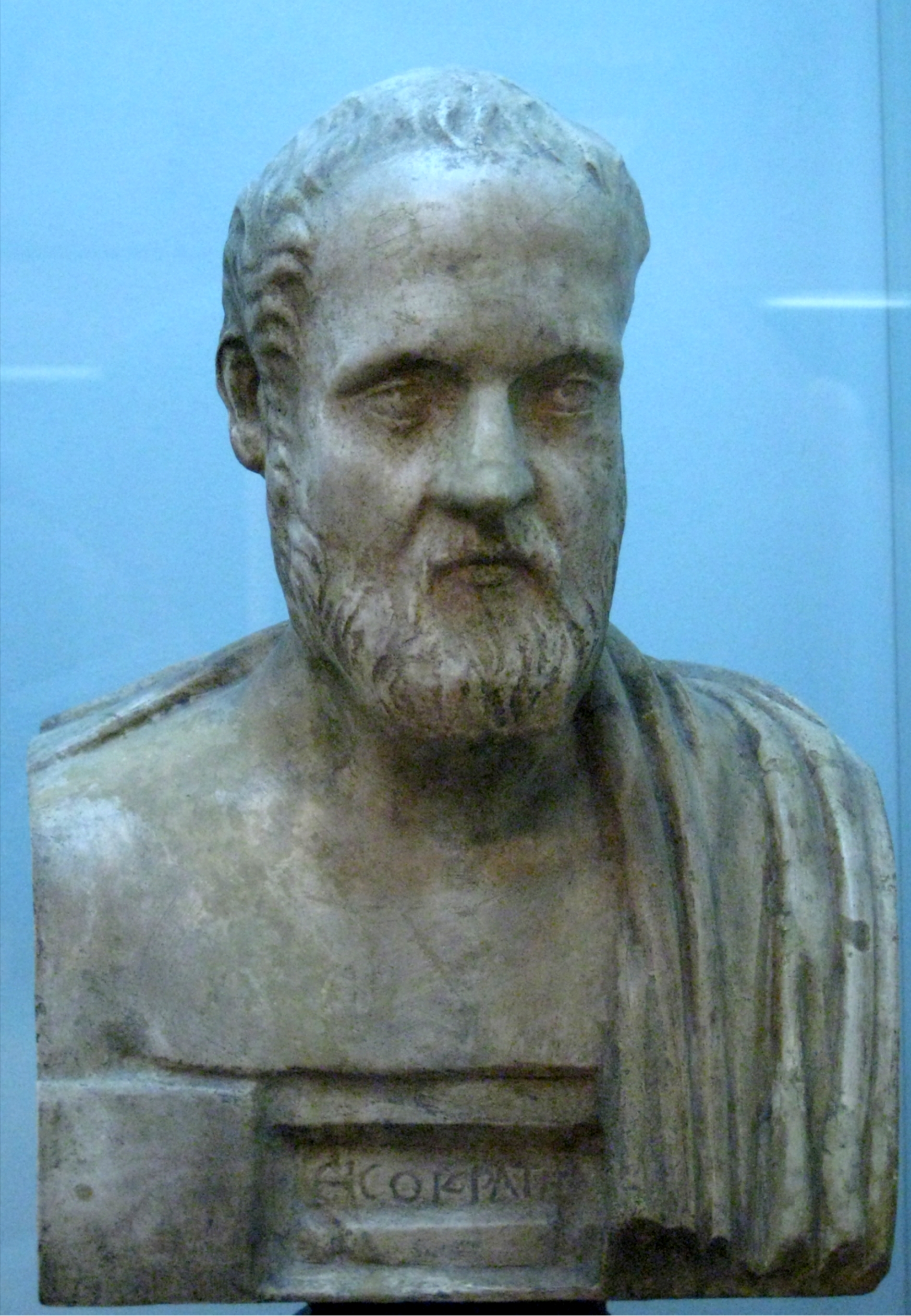
“The only true wisdom is in knowing you know nothing.”
Variant: True knowledge exists in knowing that you know nothing.
Verse 43.
To Demonicus
Verse 42.
To Demonicus
Context: Consider that nothing in human life is stable; for then you will not exult overmuch in prosperity, nor grieve overmuch in adversity. Rejoice over the good things which come to you, but grieve in moderation over the evils which befall you, and in either case do not expose your heart to others; for it were strange to hide away one's treasure in the house, and yet walk about laying bare one's feelings to the world.
Verses 45-46.
To Demonicus
Verse 44.
To Demonicus
Verses 51-52.
To Demonicus
To Philip, 5.127 (Loeb).
Verse 16.
To Demonicus
Context: Never hope to conceal any shameful thing which you have done; for even if you do conceal it from others, your own heart will know. … Pursue the enjoyments which are of good repute; for pleasure attended by honor is the best thing in the world, but pleasure without honor is the worst.
Verse 18.
To Demonicus
Context: If you love knowledge, you will be a master of knowledge. What you have come to know, preserve by exercise; what you have not learned, seek to add to your knowledge; for it is as reprehensible to hear a profitable saying and not grasp it as to be offered a good gift by one's friends and not accept it. Spend your leisure time in cultivating an ear attentive to discourse, for in this way you will find that you learn with ease what others have found out with difficulty.
“The greatest thing in the small compass is a sound mind in a human body.”
Verse 40.
To Demonicus
Context: The greatest thing in the small compass is a sound mind in a human body. Strive with all your body to be a lover of toil, and with your soul to be a lover of wisdom, in order that with the one you may have the strength to carry out your resolves, and with the other the intelligence to foresee what is for your good.
Verse 17.
To Demonicus
Context: Guard yourself against accusations, even if they are false; for the multitude are ignorant of the truth and look only to reputation. In all things resolve to act as though the whole world would see what you do; for even if you conceal your deeds for the moment, later you will be found out. But most of all will you have the respect of men, if you are seen to avoid doing things which you would blame others for doing.
Verse 41.
To Demonicus
Context: Always when you are about to say anything, first weigh it in your mind; for with many the tongue outruns the thought. Let there be but two occasions for speech — when the subject is one which you thoroughly know and when it one on which you are compelled to speak. On these occasions alone is speech better than silence; on all others, it is better to be silent than to speak.
A falsified quote invented during the 2010 financial crisis. http://www.perseus.tufts.edu/hopper/text?doc=Isoc.+7+20&fromdoc=Perseus%3Atext%3A1999.01.0144 Isocrates' actual, more nuanced, quote runs as follows: <br class="br">Those who directed the state in the time of Solon and Cleisthenes did not establish a polity which … trained the citizens in such fashion that they looked upon insolence as democracy, lawlessness as liberty, impudence of speech as equality, and licence to do what they pleased as happiness, but rather a polity which detested and punished such men and by so doing made all the citizens better and wiser. <br class="br">Areopagiticus, 7.20 (Norlin) <br class="br">Misattributed
Panegyricus, 50.
Verse 19; variant translation: Of all our possessions, wisdom alone is immortal.
As quoted in Dictionary of Quotations (Classical) (1906), edited by Thomas Benfield Harbottle, p. 495.
To Demonicus


