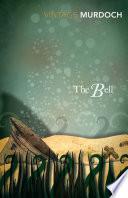

“We can only learn to love by loving.”
Iris Murdoch book The Bell
The Bell (1958), ch. 19; 2001, p. 219.
Dame Jean Iris Murdoch was an Irish and British novelist and philosopher. Murdoch is best known for her novels about good and evil, sexual relationships, morality, and the power of the unconscious. Her first published novel, Under the Net, was selected in 1998 as one of Modern Library's 100 best English-language novels of the 20th century. Her 1978 novel The Sea, the Sea won the Booker Prize. In 1987, she was made a Dame by Queen Elizabeth II for services to literature. In 2008, The Times ranked Murdoch twelfth on a list of "The 50 greatest British writers since 1945".Her other books include The Bell , A Severed Head , The Red and the Green , The Nice and the Good , The Black Prince , Henry and Cato , The Philosopher's Pupil , The Good Apprentice , The Book and the Brotherhood , The Message to the Planet , and The Green Knight . Wikipedia
“We can only learn to love by loving.”
Iris Murdoch book The Bell
The Bell (1958), ch. 19; 2001, p. 219.
“Almost anything that consoles us is a fake.”
Iris Murdoch book The Sovereignty of Good
The Sovereignty of Good (1970) p. 59.
Iris Murdoch book The Black Prince
The Black Prince (1973); 2003, p. 10.
“Every artist is an unhappy lover. And unhappy lovers want to tell their story.”
Iris Murdoch book The Black Prince
Source: The Black Prince
Iris Murdoch book The Philosopher's Pupil
The Philosopher's Pupil (1983) p. 76.
Context: The sin of pride may be a small or a great thing in someone's life, and hurt vanity a passing pinprick or a self-destroying or even murderous obsession. Possibly, more people kill themselves and others out of hurt vanity than out of envy, jealousy, malice or desire for revenge.
“The chief requirement of the good life… is to live without any image of oneself.”
Iris Murdoch book The Bell
The Bell (1958), ch. 9; 2001, p. 119.
Iris Murdoch book The Bell
The Bell (1958) p. 91
Iris Murdoch book A Fairly Honourable Defeat
A Fairly Honourable Defeat (1970); 2001, p. 170.
Iris Murdoch book The Message to the Planet
The Message to the Planet (1989) p. 509.
“Only lies and evil come from letting people off.”
Iris Murdoch book A Severed Head
A Severed Head (1961); 1976, p. 61.
Iris Murdoch Sartre: Romantic Rationalist
Source: Sartre: Romantic Rationalist (1953), Ch. 10, p. 138
“Of course reading and thinking are important but, my God, food is important too.”
Iris Murdoch book The Sea, the Sea
Source: The Sea, the Sea
Iris Murdoch book The Nice and the Good
The Nice and the Good (1968), ch. 22.
"The Sublime and the Good", in the Chicago Review, Vol. 13 Issue 3 (Autumn 1959) p. 51.
Source: Existentialists and Mystics Writings on Philosophy and Literature
Iris Murdoch book The Red and the Green
The Red and the Green (1965), ch. 2, p. 30.
“We defend ourselves with descriptions and tame the world by generalizing.”
Iris Murdoch book The Black Prince
Source: The Black Prince
“I feel half faded away like some figure in the background of an old picture.”
Iris Murdoch book A Severed Head
Source: A Severed Head
“But fantasy kills imagination, pornography is death to art.”
Iris Murdoch book The Message to the Planet
The Message to the Planet (1989) p. 43.
“Stuart was not dismayed by his sexual feelings about the boy.”
Iris Murdoch book The Good Apprentice
The Good Apprentice (1985), p. 247.
Iris Murdoch book The Philosopher's Pupil
The Philosopher's Pupil (1983) p. 165.
“All art is the struggle to be, in a particular sort of way, virtuous.”
Iris Murdoch book The Black Prince
The Black Prince (1973); 2003, p. 181.
“Being good is just a matter of temperament in the end.”
Iris Murdoch book The Nice and the Good
The Nice and the Good (1968), ch. 14, p. 127.
Murdoch attributed this opinion to her character Kate Gray. It was not her own.
“There is no substitute for the comfort supplied by the utterly taken-for-granted relationship.”
Iris Murdoch book A Severed Head
A Severed Head (1961); 1976, p. 181.
Iris Murdoch Sartre: Romantic Rationalist
Source: Sartre: Romantic Rationalist (1953), Ch. 10, p. 148 (the concluding sentence of the book)
“Art is the final cunning of the human soul which would rather do anything than face the gods.”
"Art and Eros: A Dialogue about Art", Acastos: Two Platonic Dialogues (1986).
“I see myself as Rhoda, not Mary Tyler Moore.”
Not Iris Murdoch, but the actress and comedian Rosie O'Donnell. See George Mair Rosie O'Donnell: Her True Story (1997) p. 81.
Misattributed
“I daresay anything can be made holy by being sincerely worshipped.”
Iris Murdoch book The Message to the Planet
The Message to the Planet (1989) p. 322.
“The role of philosophy might be said to be to extend and deepen the self-awareness of mankind.”
Iris Murdoch Sartre: Romantic Rationalist
Source: Sartre: Romantic Rationalist (1953), Ch. 9, p. 137
“All metaphysical theories are inconclusively vulnerable to positivist attack.”
Iris Murdoch Sartre: Romantic Rationalist
Source: Sartre: Romantic Rationalist (1953), Ch. 9, p. 127
“Perhaps misguided moral passion is better than confused indifference.”
Iris Murdoch book The Book and the Brotherhood
The Book and the Brotherhood (1987) p. 248.
“A bad review is even less important than whether it is raining in Patagonia.”
Quoted in The Times (6 July 1989).
“The only satisfied rationalists today are blinkered scientists or Marxists.”
Iris Murdoch Sartre: Romantic Rationalist
Source: Sartre: Romantic Rationalist (1953), Ch. 7, p. 113
Iris Murdoch Sartre: Romantic Rationalist
Source: Sartre: Romantic Rationalist (1953), Ch. 8, p. 119
“Bereavement is a darkness impenetrable to the imagination of the unbereaved.”
Iris Murdoch book The Sacred and Profane Love Machine
The Sacred and Profane Love Machine (1974) p. 37.
Iris Murdoch book The Sacred and Profane Love Machine
The Sacred and Profane Love Machine (1974), p. 66.


