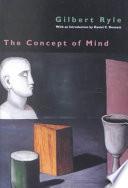
Gilbert Ryle book The Concept of Mind
Source: The Concept of Mind (1949), Ch. II: Knowing How and Knowing That, (10) Solipsism
Gilbert Ryle was a British philosopher. He was a representative of the generation of British ordinary language philosophers who shared Ludwig Wittgenstein's approach to philosophical problems, and is principally known for his critique of Cartesian dualism, for which he coined the phrase "the ghost in the machine". Some of his ideas in the philosophy of mind have been called "behaviourist". Ryle's best-known book is The Concept of Mind , in which he writes that the "general trend of this book will undoubtedly, and harmlessly, be stigmatised as 'behaviourist'." Having engaged in detailed study of the works of the philosophers Bernard Bolzano, Franz Brentano, Alexius Meinong, Edmund Husserl, and Martin Heidegger, Ryle suggested that the book instead "could be described as a sustained essay in phenomenology, if you are at home with that label." Wikipedia
Gilbert Ryle book The Concept of Mind
Source: The Concept of Mind (1949), Ch. II: Knowing How and Knowing That, (10) Solipsism
Gilbert Ryle book The Concept of Mind
Source: The Concept of Mind (1949), Ch. II: Knowing How and Knowing That, (2) Intelligence and Intellect
Gilbert Ryle book The Concept of Mind
Source: The Concept of Mind (1949), Ch. I: Descartes' Myth, (1) The Official Doctrine
Gilbert Ryle book The Concept of Mind
Source: The Concept of Mind (1949), Ch. I: Descartes' Myth, (2) The Absurdity of the Official Doctrine
“Myths often do a lot of theoretical good, while they are still new.”
Gilbert Ryle book The Concept of Mind
Source: The Concept of Mind (1949), Ch. I: Descartes' Myth, (4) Historical Note
Gilbert Ryle book The Concept of Mind
Source: The Concept of Mind (1949), Ch. I: Descartes' Myth, (1) The Official Doctrine
Gilbert Ryle book The Concept of Mind
Source: The Concept of Mind (1949), Ch. VIII: Imagination, (2) Picturing and Seeing


