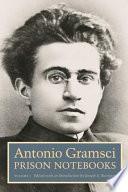
“History is at once freedom and necessity.”
Selections from the Prison Notebooks (1971).
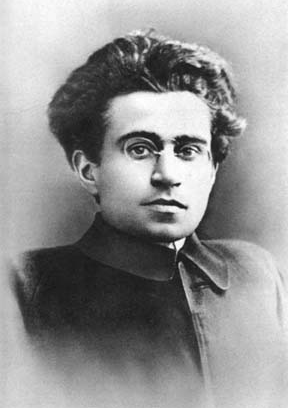
Antonio Francesco Gramsci was an Italian Marxist philosopher and communist politician. He wrote on political theory, sociology and linguistics. He attempted to break from the economic determinism of traditional Marxist thought and so is considered a key neo-Marxist. He was a founding member and one-time leader of the Communist Party of Italy and was imprisoned by Benito Mussolini's Fascist regime.
Gramsci wrote more than 30 notebooks and 3,000 pages of history and analysis during his imprisonment. His Prison Notebooks are considered a highly original contribution to 20th century political theory. Gramsci drew insights from varying sources – not only other Marxists but also thinkers such as Niccolò Machiavelli, Vilfredo Pareto, Georges Sorel and Benedetto Croce. The notebooks cover a wide range of topics, including Italian history and nationalism, the French Revolution, fascism, Fordism, civil society, folklore, religion and high and popular culture.
Gramsci is best known for his theory of cultural hegemony, which describes how the state and ruling capitalist class – the bourgeoisie – use cultural institutions to maintain power in capitalist societies. The bourgeoisie, in Gramsci's view, develops a hegemonic culture using ideology rather than violence, economic force, or coercion. Hegemonic culture propagates its own values and norms so that they become the "common sense" values of all and thus maintain the status quo. Hegemonic power is therefore used to maintain consent to the capitalist order, rather than coercive power using force to maintain order. This cultural hegemony is produced and reproduced by the dominant class through the institutions that form the superstructure.
Wikipedia
“History is at once freedom and necessity.”
Selections from the Prison Notebooks (1971).
“I’m a pessimist because of intelligence, but an optimist because of will.”
Letter from Prison (19 December 1929); also attributed to Romain Rolland.
Source: Gramsci's Prison Letters
“To tell the truth, to arrive together at the truth, is a communist and revolutionary act.”
Letter from Prison (21 June 1919), translated by Hamish Henderson, Edinburgh University Student Publications.
Antonio Gramsci Prison Notebooks
Source: :s:Pagina:Gramsci - Quaderni del carcere, Einaudi, I.djvu/318 § (34). Passato e presente.
English translation Selections from the Prison Notebooks, “Wave of Materialism” and “Crisis of Authority” (NY: International Publishers), (1971), pp. 275-276.
Prison Notebooks Volume II, Notebook 3, 1930, (2011 edition) SS-34, Past and Present 32-33,
“History teaches, but it has no pupils.”
Letter from Prison (21 June 1919), translated by Hamish Henderson, Edinburgh University Student Publications.
revolution
Selections from the Prison Notebooks (1971).
Cited in Davidson's (1977) Antonio Gramsci: Towards an Intellectual Biography. London: Merlin Press., p. 77.
Selections from the Prison Notebooks (1971).
Gramsci, 1965, p. 737 cited in Davidson, 1977, p. 35.
Gramsci cited in Davidson, 1977, p. 70.
“All men are intellectuals: but not all men have in society the function of intellectuals.”
Source: Selections from the Prison Notebooks (1971).
“Pessimism of the intellect, optimism of the will.”
Variant: Pessimism of the spirit; optimism of the will.
“To tell the truth is revolutionary.”
The first number of L'Ordine Nuovo, edited by Gramsci, appeared in 1921 with this motto of Ferdinand Lassalle on the first page. It is often misattributed to Gramsci.
Misattributed
Selections from the Prison Notebooks (1971).
“The old world is dying, and the new world struggles to be born: now is the time of monsters.”
Loose translation, commonly attributed to Gramsci by Slavoj Žižek, presumably formulation by Žižek (see below). <br class="br">Presumably a translation from a loose French translation by Gustave Massiah; strict English with cognate terms and glosses: <br class="br">Le vieux monde se meurt, le nouveau monde tarde à apparaître et dans ce clair-obscur surgissent les monstres <br class="br">The old world is dying, the new world tardy (slow) to appear and in this chiaroscuro (light-dark) surge (emerge) monsters. <br class="br">“ Mongo Beti, une conscience noire, africaine, universelle http://www.liberationafrique.org/imprimersans.php3?id_article=16&nom_site=Lib%C3%A9ration”, Gustave Massiah, CEDETIM, août 2002 ( archive https://web.archive.org/web/20160304061734/http://www.liberationafrique.org/imprimersans.php3?id_article=16&nom_site=Lib%C3%A9ration, 2016-03-04) <br class="br">“Mongo Beti, a Black, African, Universal Conscience”, Gustave Massiah, CEDETIM, August 2002 <br class="br">Collected in: Remember Mongo Beti, Ambroise Kom, 2003, p. 149 https://books.google.com/books?id=6YgdAQAAIAAJ&q=%22Le+vieux+monde+se+meurt,+le+nouveau+monde+tarde+%C3%A0+appara%C3%AEtre+et+dans+ce+clair-obscur+surgissent+les+monstres%22. <br class="br">Original, with literal English translation (see above): <br class="br">La crisi consiste appunto nel fatto che il vecchio muore e il nuovo non può nascere: in questo interregno si verificano i fenomeni morbosi piú svariati. <br class="br">The crisis consists precisely in the fact that the old is dying and the new cannot be born; in this interregnum a great variety of morbid symptoms appear. <br class="br">Similar sentiments are widespread in revolutionary rhetoric; see: No, Žižek did not attribute a Goebbels quote to Gramsci http://thecharnelhouse.org/2015/07/03/no-zizek-did-not-attribute-a-goebbels-quote-to-gramsci/, Ross Wolfe, 2015-07-03 <br class="br">Misattributed <br class="br">Source: Selections from the Prison Notebooks
The Modern Prince and other Writings, quoting a letter to his sister
“The long march through the institutions.”
Due to German student movement leader Rudi Dutschke, who coined it in 1967 as „Der lange Marsch durch die Institutionen“. <br class="br">See Strategy, Hegemony & ‘The Long March’: Gramsci’s Lessons for the Antiwar Movement http://carldavidson.blogspot.com/2006/04/strategy-hegemony-long-march.html, by Carl Davidson, April 06, 2006. <br class="br">It was popularized in the protests of 1968, and Dutschke’s posthumous 1980 work is titled Mein langer Marsch (My long March). <br class="br">See Marsch durch die Institutionen at German Wikipedia for extensive discussion. <br class="br">A reference to the Long March of the Chinese Communist Red Army in 1934 & 1935; note that Gramsci died in 1937. <br class="br">Various corruptions include “through the culture” or “slow march”. <br class="br">Widely attributed to Gramsci, Joseph A. Buttigieg http://english.nd.edu/faculty/profiles/joseph-a-buttigieg/, the editor of the English critical edition of Gramsci’s Prison Notebooks asserts that the phrase does not originate with Gramsci. <br class="br">Footnote 21, page 50, reads: [“long march through the institutions”<sup>21</sup>] “This phrase is not Gramsci’s, even though it is ubiquitously attributed to him.” <br class="br">[10.1215/01903659-32-1-33, 0190-3659, 32, 1, 33-52, Buttigieg, Joseph A., The Contemporary Discourse on Civil Society: A Gramscian Critique, boundary 2, 2010-06-30, 2005, http://boundary2.dukejournals.org/cgi/pdf_extract/32/1/33] <br class="br">The idea is connected with Gramsci's theory of cultural hegemony, but does not originate with him – he called the concept a “war of position”. <br class="br">Misattributed
Gramsci cited in Garuglieri's Garuglieri, 'Ricordo di Gramsci.' Societa, 691-701., 1946, p. 700.
Gramsci cited in Fiori, 1970, pp. 22-23.


