Anaximander Quotes

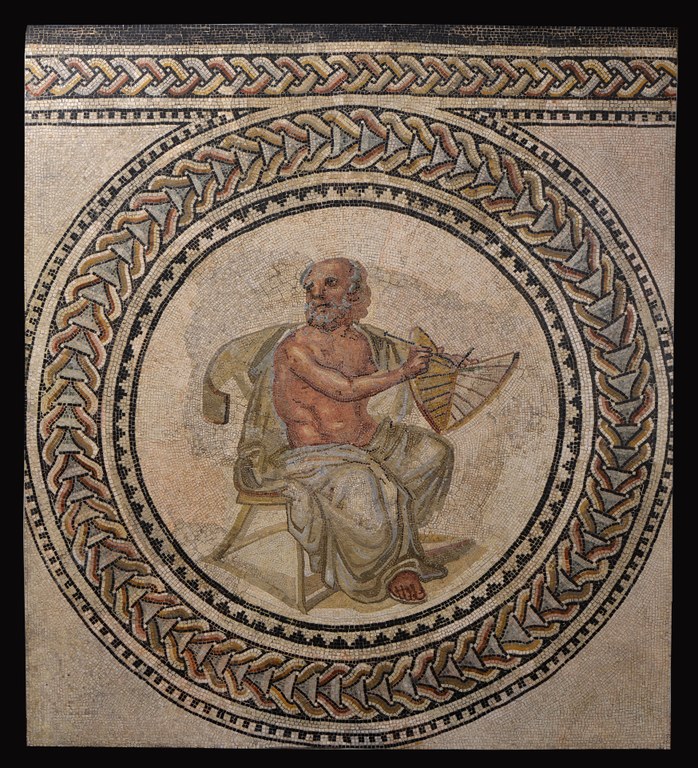
Anaximander , was a pre-Socratic Greek philosopher who lived in Miletus, a city of Ionia . He belonged to the Milesian school and learned the teachings of his master Thales. He succeeded Thales and became the second master of that school where he counted Anaximenes and, arguably, Pythagoras amongst his pupils.Little of his life and work is known today. According to available historical documents, he is the first philosopher known to have written down his studies, although only one fragment of his work remains. Fragmentary testimonies found in documents after his death provide a portrait of the man.

Anaximander was an early proponent of science and tried to observe and explain different aspects of the universe, with a particular interest in its origins, claiming that nature is ruled by laws, just like human societies, and anything that disturbs the balance of nature does not last long. Like many thinkers of his time, Anaximander's philosophy included contributions to many disciplines. In astronomy, he attempted to describe the mechanics of celestial bodies in relation to the Earth. In physics, his postulation that the indefinite was the source of all things led Greek philosophy to a new level of conceptual abstraction. His knowledge of geometry allowed him to introduce the gnomon in Greece. He created a map of the world that contributed greatly to the advancement of geography. He was also involved in the politics of Miletus and was sent as a leader to one of its colonies. Wikipedia  

✵ 610 BC – 547 BC
Anaximander photo

Works

On Nature
Anaximander
On Nature
Anaximander
Anaximander: 3 quotes2 likes

Famous Anaximander Quotes

“All things must in equity again decline into that whence they have their origin for they must give satisfaction and atonement for injustice each in the order of time.”

Anaximander book On Nature

On Nature, as quoted by Friedrich Ueberweg, History of Philosophy, from Thales to the Present Time (1885) Vol. 1, p. 35. https://books.google.com/books?id=BW5YAAAAMAAJ&pg=PA35

“There cannot be a single, simple body which is infinite, either, as some hold, one distinct from the elements, which they then derive from it, nor without this qualification.”

Anaximander

As quoted in Physics by Aristotle, as translated by John Burnet http://www.classicpersuasion.org/pw/burnet/egp.htm?pleaseget=14 <br class="br">Context: There cannot be a single, simple body which is infinite, either, as some hold, one distinct from the elements, which they then derive from it, nor without this qualification. For there are some who make this (i. e. a body distinct from the elements) the infinite, and not air or water, in order that the other things may not be destroyed by their infinity. They are in opposition one to another — air is cold, water moist, and fire hot—and therefore, if any one of them were infinite, the rest would have ceased to be by this time. Accordingly they say that what is infinite is something other than the elements, and from it the elements arise.

Similar authors

Protagoras photo
Protagoras6
pre-Socratic Greek philosopher None
Heraclitus photo
Heraclitus46
pre-Socratic Greek philosopher None
Antisthenes photo
Antisthenes24
Greek philosopher None
Thales photo
Thales9
ancient Greek philosopher and mathematician None
Socrates photo
Socrates168
classical Greek Athenian philosopher None
Xenophon photo
Xenophon21
ancient Greek historian and philosopher None
Diogenes of Sinope photo
Diogenes of Sinope33
ancient Greek philosopher, one of the founders of the Cynic… None
Plato photo
Plato80
Classical Greek philosopher None
Pythagoras photo
Pythagoras121
ancient Greek mathematician and philosopher None
Plutarch photo
Plutarch251
ancient Greek historian and philosopher None