Alain Finkielkraut Quotes

Alain Finkielkraut is a French philosopher and public intellectual. He has written books and essays on a wide range of topics, many on the ideas of tradition and identitary nonviolence, including Jewish identity and antisemitism, French colonialism, the mission of the French education system in immigrant assimilation, and the Yugoslav Wars.

He joined the Department of French Literature in the University of California, Berkeley as an assistant professor in 1976, and from 1989 to 2014 he was professor of History of Ideas in the École Polytechnique department of humanities and social sciences.

He was elected member of the Académie française on 10 April 2014. He often appears in France on talk shows.

As a thinker, Finkielkraut defines himself as being "at the same time classical and romantic". Finkielkraut deplores what he sees as the deterioration of Western tradition through multiculturalism and relativism.

In 2010, he was involved in founding JCall, a left-wing Zionist advocacy group based in Europe to lobby the European Parliament on foreign policy issues concerning the Middle East. He is a strong supporter of Israel and the two-state solution. Wikipedia  
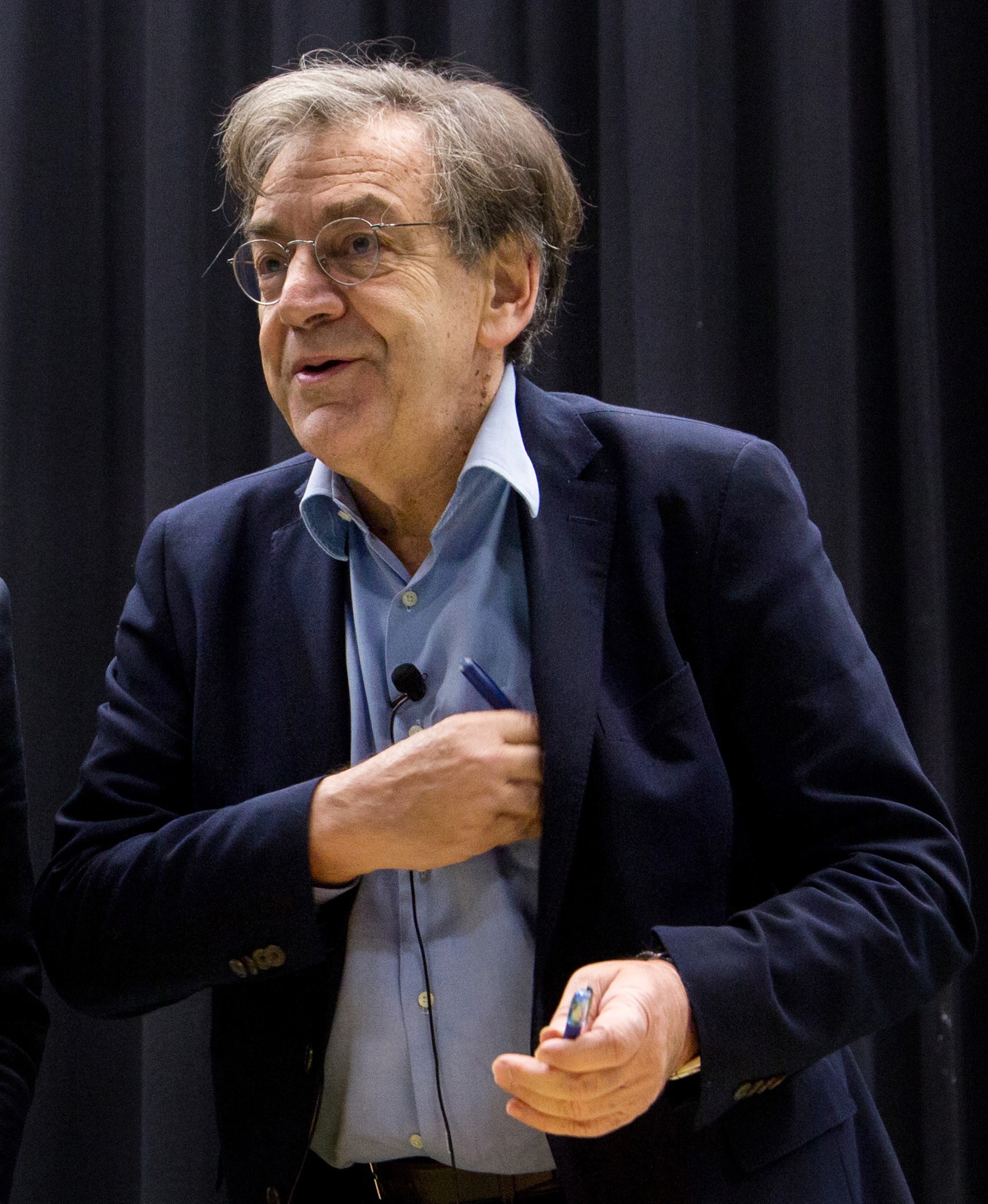
✵ 30. June 1949
Alain Finkielkraut photo
Alain Finkielkraut: 4 quotes0 likes

Famous Alain Finkielkraut Quotes

“According to … the French counterrevolutionaries and German Romantics, … the corpus of prejudices was a country’s cultural treasure, its ancient and tested intelligence, present as the consciousness and guardian of its thought. Prejudices were the “we” of every “I”, the past in the present, the revered vessels of the nation’s memory, its judgements carried from age to age. Pretending to spread enlightenment, the philosophes had set out to extirpate these precious residua. … The result was that they had uprooted men from their culture at the very moment when they bragged of how they would cultivate them. … Convinced that they were emancipating souls, they succeeded only in deracinating them. These calumniators of the commonplace had not freed understanding from its chains, but cut it off from its sources. The individual who, thanks to them, must now cast off childish things, had really abandoned his own nature. … The promises of the cogito were illusory: free from prejudice, cut off from the influence of national idiom, the subject was not free but shrivelled and devitalised. … Everyday opinion should therefore be regarded as the soil where thought was nourished, its hearth and sanctuary, … and not, as the philosophes would have it, as some alien authority which overwhelmed and crushed it. … The cogito needed to be steeped in the profundities of the collective mind; the broken links with the past needed repairing; the quest for independence should yield to that for authenticity. Men should abandon their scepticism and give themselves over to the comforting warmth of majoritarian ideas, bowing down before their infallible authority.”

Alain Finkielkraut

Source: The Undoing of Thought (1988), pp. 25-26.

Similar authors

Paul Valéry photo
Paul Valéry89
French poet, essayist, and philosopher None
Marcel Proust photo
Marcel Proust41
French novelist, critic, and essayist None
Emil M. Cioran photo
Emil M. Cioran531
Romanian philosopher and essayist None
Romain Rolland photo
Romain Rolland43
French author None
Maurice Maeterlinck photo
Maurice Maeterlinck21
Belgian playwright, poet, and essayist None
André Gide photo
André Gide74
French novelist and essayist None
Christopher Morley photo
Christopher Morley30
American journalist, novelist, essayist and poet None
 Romain Gary photo
Romain Gary16
French writer and diplomat None
Herta Müller photo
Herta Müller28
German-Romanian novelist, poet and essayist None
 Edward Abbey photo
Edward Abbey146
American author and essayist None