The Second World War, Volume I : The Gathering Storm (1948) Chapter 17 (The Tragedy of Munich), p .287 http://books.google.de/books?id=HzlT3t05OHoC&pg=PA287&dq=churchill+the+gathering+storm+have+been+averted+by+patience+and+persisting+good+will!&hl=de&sa=X&ei=1355T-39C4jHsgb0t-mWBA&ved=0CDIQ6AEwAA#v=onepage&q&f=false
Post-war years (1945–1955)
Context: Those who are prone, by temperament and character, to seek sharp and clear-cut solutions of difficult and obscure problems, who are ready to fight whenever some challenge comes from a foreign power, have not always been right. On the other hand, those whose inclination is to bow their heads, to seek patiently and faithfully for peaceful compromise, are not always wrong. On the contrary, in the majority of instances they may be right, not only morally, but from a practical standpoint. How many wars have been averted by patience and persisting good will! Religion and virtue alike lend their sanctions to meekness and humility, not only between men but between nations. How many wars have been precipitated by firebrands! How many misunderstandings which led to wars could have been removed by temporizing! How often have countries fought cruel wars and then after a few years found themselves not only friends but allies!
Quotes from book
The Second World War
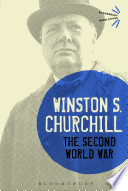
The Second World War is a history of the period from the end of the First World War to July 1945, written by Winston Churchill. Churchill labelled the "moral of the work" as follows: "In War: Resolution, In Defeat: Defiance, In Victory: Magnanimity, In Peace: Goodwill".Churchill wrote the book, with a team of assistants, using both his own notes and privileged access to official documents while still working as a politician; the text was vetted by the Cabinet Secretary. Churchill was largely fair in his treatment, but wrote the history from his personal point of view. He was unable to reveal all the facts, as some, such as the use of Ultra electronic intelligence, had to remain secret. From a historical point of view the book is therefore an incomplete memoir by a leading participant in the direction of the war.
BBC broadcast (“The Russian Enigma”), London, October 1, 1939 ( partial text http://www.churchill-society-london.org.uk/RusnEnig.html, transcript of the "First Month of War" speech https://ww2memories.wordpress.com/2011/09/24/churchills-ww2-speech-to-the-nation-october-1939/).
The Second World War (1939–1945)
We have before us an ordeal of the most grievous kind. We have before us many, many long months of struggle and of suffering. You ask, what is our policy? I will say: It is to wage war, by sea, land and air, with all our might and with all the strength that God can give us: to wage war against a monstrous tyranny, never surpassed in the dark, lamentable catalogue of human crime. That is our policy. You ask, what is our aim? I can answer in one word: It is victory, victory at all costs, victory in spite of all terror, victory, however long and hard the road may be; for without victory, there is no survival.
Speech in the House of Commons, after taking office as Prime Minister (13 May 1940) This has often been misquoted in the form: "I have nothing to offer but blood, sweat and tears ..."
The Official Report, House of Commons (5th Series), 13 May 1940, vol. 360, c. 1502. Audio records of the speech do spare out the "It is" before the in the beginning of the "Victory"-Part.
The Second World War (1939–1945)
“By noon it was clear that the Socialists would have a majority.”
The Second World War (1948–1953)
Source: On the (July 26, 1945) landslide electoral defeat that turned him out of office near the end of WWII, in The Second World War, Volume VI: Triumph and Tragedy (1953), Chapter 40 (The End of My Account), p. 583.
Context: At luncheon my wife said to me, 'It may well be a blessing in disguise. 'I replied, 'At the moment it seems quite effectively disguised.'