
John Maynard Keynes book The Economic Consequences of the Peace
Source: The Economic Consequences of the Peace
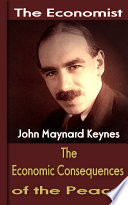
The Economic Consequences of the Peace is a book written and published by the British economist John Maynard Keynes. After the First World War, Keynes attended the Paris Peace Conference of 1919 as a delegate of the British Treasury. In his book, he argued for a much more generous peace, not out of a desire for justice or fairness – these are aspects of the peace that Keynes does not deal with – but for the sake of the economic well-being of all of Europe, including the Allied Powers, which the Treaty of Versailles and its associated treaties would prevent.
John Maynard Keynes book The Economic Consequences of the Peace
Source: The Economic Consequences of the Peace
John Maynard Keynes book The Economic Consequences of the Peace
Source: The Economic Consequences of the Peace (1919), Chapter IV, Section I, p. 77
John Maynard Keynes book The Economic Consequences of the Peace
Source: The Economic Consequences of the Peace (1919), Chapter III, p. 33
John Maynard Keynes book The Economic Consequences of the Peace
Source: The Economic Consequences of the Peace (1919), Chapter II, Section III, p. 21
John Maynard Keynes book The Economic Consequences of the Peace
Source: The Economic Consequences of the Peace (1919), Chapter VI, p. 250
“The power to become habituated to his surroundings is a marked characteristic of mankind.”
John Maynard Keynes book The Economic Consequences of the Peace
Source: The Economic Consequences of the Peace (1919), Chapter I, p. 3
John Maynard Keynes book The Economic Consequences of the Peace
Source: The Economic Consequences of the Peace (1919), Chapter VII, Section 1, p. 268
John Maynard Keynes book The Economic Consequences of the Peace
On Georges Clemenceau, in Chapter III, p. 32
The Economic Consequences of the Peace (1919)
John Maynard Keynes book The Economic Consequences of the Peace
Source: The Economic Consequences of the Peace (1919), Chapter II, Section III, p. 19
John Maynard Keynes book The Economic Consequences of the Peace
Source: The Economic Consequences of the Peace (1919), Chapter IV, p. 56
John Maynard Keynes book The Economic Consequences of the Peace
Source: The Economic Consequences of the Peace (1919), Chapter II, Section III, p. 20
John Maynard Keynes book The Economic Consequences of the Peace
On David Lloyd George and Woodrow Wilson, in Chapter III, p. 41
The Economic Consequences of the Peace (1919)
John Maynard Keynes book The Economic Consequences of the Peace
Source: The Economic Consequences of the Peace (1919), Chapter II, Section I, p. 15
“But the dreams of designing diplomats do not always prosper, and we must trust the future.”
John Maynard Keynes book The Economic Consequences of the Peace
Source: The Economic Consequences of the Peace (1919), Chapter IV, Section III, p. 105
“Perhaps it is historically true that no order of society ever perishes save by its own hand.”
John Maynard Keynes book The Economic Consequences of the Peace
Source: The Economic Consequences of the Peace (1919), Chapter VI, p. 238
John Maynard Keynes book The Economic Consequences of the Peace
Source: The Economic Consequences of the Peace (1919), Chapter II, Section I, pp. 14-15
“The forces of the nineteenth century have run their course and are exhausted.”
John Maynard Keynes book The Economic Consequences of the Peace
Source: The Economic Consequences of the Peace (1919), Chapter VII, p. 254
“Men will not always die quietly.”
John Maynard Keynes book The Economic Consequences of the Peace
Source: The Economic Consequences of the Peace (1919), Chapter VI, p. 228
John Maynard Keynes book The Economic Consequences of the Peace
Source: The Economic Consequences of the Peace (1919), Chapter VI, pp. 235-236
Context: Lenin is said to have declared that the best way to destroy the capitalist system was to debauch the currency. By a continuing process of inflation, governments can confiscate, secretly and unobserved, an important part of the wealth of their citizens. By this method they not only confiscate, but they confiscate arbitrarily; and, while the process impoverishes many, it actually enriches some. The sight of this arbitrary rearrangement of riches strikes not only at security, but at confidence in the equity of the existing distribution of wealth. Those to whom the system brings windfalls, beyond their deserts and even beyond their expectations or desires, become 'profiteers,' who are the object of the hatred of the bourgeoisie, whom the inflationism has impoverished, not less than of the proletariat. As the inflation proceeds and the real value of the currency fluctuates wildly from month to month, all permanent relations between debtors and creditors, which form the ultimate foundation of capitalism, become so utterly disordered as to be almost meaningless; and the process of wealth-getting degenerates into a gamble and a lottery.
Lenin was certainly right. There is no subtler, no surer means of overturning the existing basis of society than to debauch the currency. The process engages all the hidden forces of economic law on the side of destruction, and does it in a manner which not one man in a million is able to diagnose.
John Maynard Keynes book The Economic Consequences of the Peace
Source: The Economic Consequences of the Peace (1919), Chapter VI, pp. 235-236
Context: Lenin is said to have declared that the best way to destroy the capitalist system was to debauch the currency. By a continuing process of inflation, governments can confiscate, secretly and unobserved, an important part of the wealth of their citizens. By this method they not only confiscate, but they confiscate arbitrarily; and, while the process impoverishes many, it actually enriches some. The sight of this arbitrary rearrangement of riches strikes not only at security, but at confidence in the equity of the existing distribution of wealth. Those to whom the system brings windfalls, beyond their deserts and even beyond their expectations or desires, become 'profiteers,' who are the object of the hatred of the bourgeoisie, whom the inflationism has impoverished, not less than of the proletariat. As the inflation proceeds and the real value of the currency fluctuates wildly from month to month, all permanent relations between debtors and creditors, which form the ultimate foundation of capitalism, become so utterly disordered as to be almost meaningless; and the process of wealth-getting degenerates into a gamble and a lottery.
Lenin was certainly right. There is no subtler, no surer means of overturning the existing basis of society than to debauch the currency. The process engages all the hidden forces of economic law on the side of destruction, and does it in a manner which not one man in a million is able to diagnose.


