Quotes from book
The Cunning Man

The Cunning Man

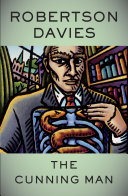
The Cunning Man, published by McClelland and Stewart in 1994, is the last novel written by Canadian novelist Robertson Davies.


“This is the Great Theatre of Life. Admission is free, but the taxation is mortal. You come when you can, and leave when you must. The show is continuous. Goodnight.”

Robertson Davies book The Cunning Man

Part 4, section 28. The last lines of the novel.
The Cunning Man (1994)
Context: "Can you tell me the time of the last complete show?"
"You have the wrong number."
"Eh? Isn't this the Odeon?"
I decide to give a Burtonian answer.
"No, this is the Great Theatre of Life. Admission is free but the taxation is mortal. You come when you can, and leave when you must. The show is continuous. Good-night."

“Clarity is not a characteristic of the human spirit.”

Robertson Davies book The Cunning Man

Part 1, section 4.
The Cunning Man (1994)

“A Library goes on as far as thought can reach.”

Robertson Davies book The Cunning Man

Part 4, section 4.
The Cunning Man (1994)

“Whoever declares a child to be "delicate" thereby crowns and anoints a tyrant.”

Robertson Davies book The Cunning Man

Part 1, section 6.
The Cunning Man (1994)

“The ironist is not bitter, he does not seek to undercut everything that seems worthy or serious, he scorns the cheap scoring-off of the wisecracker.”

Robertson Davies book The Cunning Man

Part 2, section 6.
The Cunning Man (1994)
Context: The ironist is not bitter, he does not seek to undercut everything that seems worthy or serious, he scorns the cheap scoring-off of the wisecracker. He stands, so to speak, somewhat at one side, observes and speaks with a moderation which is occasionally embellished with a flash of controlled exaggeration. He speaks from a certain depth, and thus he is not of the same nature as the wit, who so often speaks from the tongue and no deeper. The wit's desire is to be funny; the ironist is only funny as a secondary achievement.

“The wit's desire is to be funny; the ironist is only funny as a secondary achievement.”

Robertson Davies book The Cunning Man

Part 2, section 6.
The Cunning Man (1994)
Context: The ironist is not bitter, he does not seek to undercut everything that seems worthy or serious, he scorns the cheap scoring-off of the wisecracker. He stands, so to speak, somewhat at one side, observes and speaks with a moderation which is occasionally embellished with a flash of controlled exaggeration. He speaks from a certain depth, and thus he is not of the same nature as the wit, who so often speaks from the tongue and no deeper. The wit's desire is to be funny; the ironist is only funny as a secondary achievement.

Similar authors

 Robertson Davies photo
Robertson Davies282
Canadian journalist, playwright, professor, critic, and nov… 1913–1995
John Galsworthy photo
John Galsworthy48
English novelist and playwright None
Sinclair Lewis photo
Sinclair Lewis136
American novelist, short-story writer, and playwright None
Marcel Proust photo
Marcel Proust41
French novelist, critic, and essayist None
Marcel Pagnol photo
Marcel Pagnol9
novelist, playwright and filmmaker from France None
Christopher Morley photo
Christopher Morley30
American journalist, novelist, essayist and poet None
Amos Oz photo
Amos Oz12
Israeli writer, novelist, journalist and intellectual None
Stefan Zweig photo
Stefan Zweig106
Austrian writer None
Olavo de Carvalho photo
Olavo de Carvalho6
Brazilian journalist, essayist and professor of philosophy None
Samuel Beckett photo
Samuel Beckett122
Irish novelist, playwright, and poet None