
“Few bipeds, from Adam's time down, have been worthy of the name of man.”
Marguerite Yourcenar book The Abyss
Peu de bipèdes depuis Adam ont mérité le nom d'homme.
"A Conversation in Innsbruck", p. 114
The Abyss (1968)
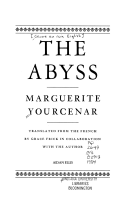
The Abyss is a 1968 novel by the Belgian-French writer Marguerite Yourcenar. Its narrative centers on the life and death of Zeno, a physician, philosopher, scientist and alchemist born in Bruges during the Renaissance era. The book was published in France in 1968 and was met with immediate popular interest as well as critical acclaim, obtaining the Prix Femina with unanimous votes the year of its publication. The English translation by Grace Frick has been published under the title The Abyss or alternatively Zeno of Bruges. Belgian filmmaker André Delvaux adapted it into a film in 1988.
“Few bipeds, from Adam's time down, have been worthy of the name of man.”
Marguerite Yourcenar book The Abyss
Peu de bipèdes depuis Adam ont mérité le nom d'homme.
"A Conversation in Innsbruck", p. 114
The Abyss (1968)
Marguerite Yourcenar book The Abyss
The Highroad, p. 11<!-- Le Grand Chemin p. 564 -->
The Abyss (1968)
Marguerite Yourcenar book The Abyss
il [Zénon] savait fort bien qu'il n'existe aucun accommodement durable entre ceux qui cherchent, pèsent, dissèquent, et s'honorent d'être capables de penser demain autrement qu'aujourd'hui, et ceux qui croient ou affirment croire, et obligent sous peine de mort leurs semblables à en faire autant.
The Indictment, p. 317
The Abyss (1968)
“Who would be so besotted as to die without having made at least the round of this, his prison?”
Marguerite Yourcenar book The Abyss
Qui serait assez insensé pour mourir sans avoir fait au moins le tour de sa prison?
The Highroad, p. 11
The Abyss (1968)
“Doubtless it signified one or the other meaning alternately, or perhaps both at the same time.”
Marguerite Yourcenar book The Abyss
Author's note, p. 367
The Abyss (1968)
Context: In alchemical treatises, the formula L'Oeuvre au Noir … designates what is said to be the most difficult phase of the alchemist's process, the separation and dissolution of substance. It is still not clear whether the term applied to daring experiments on matter itself, or whether it was understood to symbolize trials of the mind in discarding all forms of routine and prejudice. Doubtless it signified one or the other meaning alternately, or perhaps both at the same time.
Marguerite Yourcenar book The Abyss
Author's note, p. 367
The Abyss (1968)
Context: In alchemical treatises, the formula L'Oeuvre au Noir … designates what is said to be the most difficult phase of the alchemist's process, the separation and dissolution of substance. It is still not clear whether the term applied to daring experiments on matter itself, or whether it was understood to symbolize trials of the mind in discarding all forms of routine and prejudice. Doubtless it signified one or the other meaning alternately, or perhaps both at the same time.


