
James Baldwin book Nobody Knows My Name
"In Search of a Majority: An Address" (Feb 1960); reprinted in Baldwin, "Nobody Knows My Name: More Notes of a Native Son" https://en.wikipedia.org/wiki/Nobody_Knows_My_Name (1961)
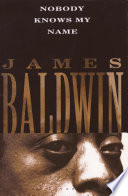
Nobody Knows My Name: More Notes of a Native Son is a collection of essays by the American author James Baldwin. The collection was published by Dial Press in July 1961, and like Notes of a Native Son, Baldwin's first collection published 1955, it includes revised versions of several of his previously published essays, as well as new material.
James Baldwin book Nobody Knows My Name
"In Search of a Majority: An Address" (Feb 1960); reprinted in Baldwin, "Nobody Knows My Name: More Notes of a Native Son" https://en.wikipedia.org/wiki/Nobody_Knows_My_Name (1961)
James Baldwin book Nobody Knows My Name
"The Black Boy Looks at the White Boy" in Esquire (May 1961)
Variant: Nobody is more dangerous than he who imagines himself pure in heart; for his purity, by definition, is unassailable.
Source: Nobody Knows My Name
James Baldwin book Nobody Knows My Name
Source: "Faulkner and Desegregation" in Partisan Review (Fall 1956); republished in Nobody Knows My Name: More Notes of a Native Son (1961)
Context: Any real change implies the breakup of the world as one has always known it, the loss of all that gave one an identity, the end of safety. And at such a moment, unable to see and not daring to imagine what the future will now bring forth, one clings to what one knew, or dreamed that one possessed. Yet, it is only when a man is able, without bitterness or self-pity, to surrender a dream he has long cherished or a privilege he has long possessed that he is set free — he has set himself free — for higher dreams, for greater privileges.


