Quotes from bookMemoirs of Hadrian
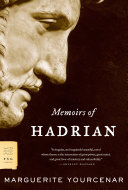
Memoirs of Hadrian is a novel by the Belgian-born French writer Marguerite Yourcenar about the life and death of Roman Emperor Hadrian. First published in France in French in 1951 as Mémoires d'Hadrien, the book was an immediate success, meeting with enormous critical acclaim. Although the historical Hadrian wrote an autobiography, it has been lost.

“Of all our games, love's play is the only one which threatens to unsettle the soul…”
Marguerite Yourcenar book Memoirs of Hadrian
Source: Memoirs of Hadrian
Marguerite Yourcenar book Memoirs of Hadrian
Le véritable lieu de naissance est celui où l'on a porté pour la première fois un coup d'oeil intelligent sur soi-même: mes premières patries ont été des livres.
Source: Memoirs of Hadrian (1951), p. 33
“Nothing is slower than the true birth of a man.”
Marguerite Yourcenar book Memoirs of Hadrian
Rien n'est plus lent que la véritable naissance d'un homme.
Source: Memoirs of Hadrian (1951), p. 258
“There are books which one should not attempt before having passed the age of forty.”
Marguerite Yourcenar book Memoirs of Hadrian
Source: Memoirs of Hadrian
Marguerite Yourcenar book Memoirs of Hadrian
Je savais que le bien comme le mal est affaire de routine, que le temporaire se prolonge, que l'extérieur s'infiltre au dedans, et que le masque, à la longue, devient visage.
Source: Memoirs of Hadrian (1951), p. 97
Marguerite Yourcenar book Memoirs of Hadrian
La mémoire de la plupart des hommes est un cimetière abandonné, où gisent sans honneurs des morts qu'ils ont cessé de chérir.
Source: Memoirs of Hadrian (1951), p. 209
Marguerite Yourcenar book Memoirs of Hadrian
Les êtres humains avouent leurs pires faiblesses quand ils s'étonnent qu'un maître du monde ne soit pas sottement indolent, présomptueux, ou cruel.
Source: Memoirs of Hadrian (1951), p. 103
“Passion satisfied has its innocence, almost as fragile as any other.”
Marguerite Yourcenar book Memoirs of Hadrian
La passion comblée a son innocence, presque aussi fragile que toute autre.
Source: Memoirs of Hadrian (1951), p. 156
Marguerite Yourcenar book Memoirs of Hadrian
Toute loi trop souvent transgressée est mauvaise: c'est au législateur à l'abroger ou à la changer.
Source: Memoirs of Hadrian (1951), p. 113
Marguerite Yourcenar book Memoirs of Hadrian
Tout bonheur est un chef-d'oeuvre: la moindre erreur le fausse, la moindre hésitation l'altère, la moindre lourdeur le dépare, la moindre sottise l'abêtit.
Source: Memoirs of Hadrian (1951), p. 164
Marguerite Yourcenar book Memoirs of Hadrian
Nos lois civiles ne seront jamais assez souples pour s'adapter à l'immense et fluide variété des faits. Elles changent moins vite que les moeurs; dangereuses quand elles retardent sur celles-ci, elles le sont davantage quand elles se mêlent de les précéder.
Source: Memoirs of Hadrian (1951), p. 113
Marguerite Yourcenar book Memoirs of Hadrian
Des moments libres. Toute vie bien réglée a les siens, et qui ne sait pas les provoquer ne sait pas vivre.
Source: Memoirs of Hadrian (1951), p. 43
Marguerite Yourcenar book Memoirs of Hadrian
La lettre écrite m'a enseigné à écouter la voix humaine, tout comme les grandes attitudes immobiles des statues m'ont appris à apprécier les gestes.
Source: Memoirs of Hadrian (1951), p. 21
Marguerite Yourcenar book Memoirs of Hadrian
Il y a plus d'une sagesse, et toutes sont nécessaires au monde; il n'est pas mauvais qu'elles alternent.
Source: Memoirs of Hadrian (1951), p. 270


