Quotes from workLorenzaccio
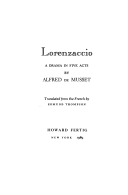
Lorenzaccio is a French play of the Romantic period written by Alfred de Musset in 1834, set in 16th-century Florence, and depicting Lorenzino de' Medici, who killed Florence's tyrant, Alessandro de' Medici, his cousin. Having engaged in debaucheries to gain the Duke's confidence, he loses the trust of Florence's citizens, thus earning the insulting surname "Lorenzaccio". Though he kills Alessandro, he knows he will never return to his former state. Since opponents to the tyrant's regime fail to use Alessandro's death as a way to overthrow the dukedom and establish a republic, Lorenzo's action does not appear to aid the people's welfare. Written soon after the July revolution of 1830, at the start of the July Monarchy, when King Louis Philippe I overthrew King Charles X of France, the play contains many cynical comments on the lack of true republican sentiments in the face of violent overthrow. The play was inspired by George Sand's Une conspiration en 1537, in turn inspired by Varchi's chronicles. As much of Romantic tragedy, including plays by Victor Hugo, it was influenced by William Shakespeare's Hamlet.


