
“Spare your breath to cool your porridge.”
Francois Rabelais book Gargantua and Pantagruel
Source: Gargantua and Pantagruel (1532–1564), Fifth Book (1564), Chapter 28.
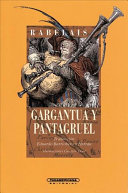
The Life of Gargantua and of Pantagruel is a pentalogy of novels written in the 16th century by François Rabelais, which tells of the adventures of two giants, Gargantua and his son Pantagruel . The text is written in an amusing, extravagant, and satirical vein, and features much crudity, scatological humor, and violence .
“Spare your breath to cool your porridge.”
Francois Rabelais book Gargantua and Pantagruel
Source: Gargantua and Pantagruel (1532–1564), Fifth Book (1564), Chapter 28.
“I never follow the clock: hours were made for man, not man for hours.”
Francois Rabelais book Gargantua and Pantagruel
Les heures sont faictez pour l'homme, & non l'homme pour les heures.
Source: Gargantua and Pantagruel (1532–1564), Gargantua (1534), Chapter 39 (frère Iean des Entommeures).
“We will take the good-will for the deed.”
Francois Rabelais book Gargantua and Pantagruel
Source: Gargantua and Pantagruel (1532–1564), Fourth Book (1548, 1552), Chapter 49.
Francois Rabelais book Gargantua and Pantagruel
Queen Whims, or Queen Quintessence, in Ch. 20 : How the Quintessence cured the sick with a song
Gargantua and Pantagruel (1532–1564), Fifth Book (1564)
Context: The probity that scintillizes in the superfices of your persons informs my ratiocinating faculty, in a most stupendous manner, of the radiant virtues latent within the precious caskets and ventricles of your minds. For, contemplating the mellifluous suavity of your thrice discreet reverences, it is impossible not to be persuaded with facility that neither your affections nor your intellects are vitiated with any defect or privation of liberal and exalted sciences. Far from it, all must judge that in you are lodged a cornucopia and encyclopaedia, an unmeasurable profundity of knowledge in the most peregrine and sublime disciplines, so frequently the admiration, and so rarely the concomitants of the imperite vulgar. This gently compels me, who in preceding times indefatigably kept my private affections absolutely subjugated, to condescend to make my application to you in the trivial phrase of the plebeian world, and assure you that you are well, more than most heartily welcome.
“Science without conscience is the soul's perdition.”
Francois Rabelais book Gargantua and Pantagruel
Source: Pantagruel
“Come, pluck up a good heart; speak the truth and shame the devil.”
Francois Rabelais book Gargantua and Pantagruel
Author's prologue.
Gargantua and Pantagruel (1532–1564), Fifth Book (1564)
Francois Rabelais book Gargantua and Pantagruel
Source: Gargantua and Pantagruel (1532–1564)
Context: Readers, friends, if you turn these pages
Put your prejudice aside,
For, really, there's nothing here that's outrageous,
Nothing sick, or bad — or contagious.
Not that I sit here glowing with pride
For my book: all you'll find is laughter:
That's all the glory my heart is after,
Seeing how sorrow eats you, defeats you.
I'd rather write about laughing than crying,
For laughter makes men human, and courageous.
“the wise may be instructed by a fool”
Francois Rabelais book Gargantua and Pantagruel
Source: Gargantua and Pantagruel
“We have here other fish to fry.”
Francois Rabelais book Gargantua and Pantagruel
Source: Gargantua and Pantagruel (1532–1564), Fifth Book (1564), Chapter 12.
Francois Rabelais book Gargantua and Pantagruel
Source: Gargantua and Pantagruel (1532–1564), Gargantua (1534), Chapter 50 : Gargantua's speech to the vanquished -->
“It is enough to fright you out of your seven senses.”
Francois Rabelais book Gargantua and Pantagruel
Source: Gargantua and Pantagruel (1532–1564), Fifth Book (1564), Chapter 15.
“He always looked a given horse in the mouth.”
Francois Rabelais book Gargantua and Pantagruel
Source: Gargantua and Pantagruel (1532–1564), Gargantua (1534), Chapter 11.
“So much is a man worth as he esteems himself.”
Francois Rabelais book Gargantua and Pantagruel
Source: Gargantua and Pantagruel (1532–1564), Pantagruel (1532), Chapter 29 : How Pantagruel discomfited the three hundred Giants armed with free-stone, and Loupgarou their Captain (Loup-garou is the french term for werewolf).
“Panurge had no sooner heard this, but he was upon the high-rope.”
Francois Rabelais book Gargantua and Pantagruel
Source: Gargantua and Pantagruel (1532–1564), Fifth Book (1564), Chapter 18.
“He freshly and cheerfully asked him how a man should kill time.”
Francois Rabelais book Gargantua and Pantagruel
Source: Gargantua and Pantagruel (1532–1564), Fourth Book (1548, 1552), Chapter 62.
“Others made a virtue of necessity.”
Francois Rabelais book Gargantua and Pantagruel
Source: Gargantua and Pantagruel (1532–1564), Fifth Book (1564), Chapter 22.
Francois Rabelais book Gargantua and Pantagruel
Source: Gargantua and Pantagruel (1532–1564), Gargantua (1534), Chapter 50 : Gargantua's speech to the vanquished.
Francois Rabelais book Gargantua and Pantagruel
Source: Gargantua and Pantagruel (1532–1564), Fourth Book (1548, 1552), Chapter 41.
“It is meat, drink, and cloth to us.”
Francois Rabelais book Gargantua and Pantagruel
Source: Gargantua and Pantagruel (1532–1564), Fifth Book (1564), Chapter 7.
“And so on to the end of the chapter.”
Francois Rabelais book Gargantua and Pantagruel
Source: Gargantua and Pantagruel (1532–1564), Fifth Book (1564), Chapter 10.


