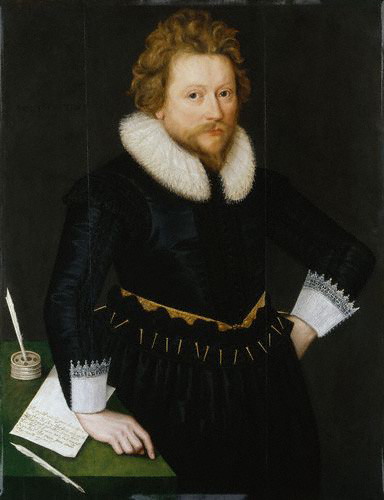
John Fletcher idézetek
John Fletcher: Idézetek angolul
John Fletcher Valentinian
Valentinian (1610–14; published 1647), Act IV, scene 4.
“Charity and treating begin at home.”
John Fletcher Wit Without Money
Scene 2.
Wit Without Money (c. 1614; published 1639)
“That soul that can
Be honest is the only perfect man.”
John Fletcher The Honest Man's Fortune
Epilogue. Compare: "An honest man's the noblest work of God", Alexander Pope, Essay on Man, epistle iv. line 248.
The Honest Man's Fortune, (1613; published 1647)
“From the crown of our head to the sole of our foot.”
John Fletcher The Honest Man's Fortune
Act II, scene 2. Compare Thomas Middleton, A Mad World, My Masters, Act I, scene 3. Pliny, Natural History, Book VII, Chapter XVII. William Shakespeare, Much Ado About Nothing, Act III, scene 2.
The Honest Man's Fortune, (1613; published 1647)
“Great things thro' greatest hazards are achiev'd,
And then they shine.”
John Fletcher The Loyal Subject
Act I, scene 5.
The Loyal Subject (c. 1616–19; published 1647, 1679)
“Though I say't that should not say't.”
Wit at Several Weapons (with Thomas Middleton and William Rowley; c. 1610–20; published 1647), Act II, scene 2.
“Fountain heads and pathless groves,
Places which pale passion loves.”
The Nice Valour (c. 1615–25; publsihed 1647), Act iii, scene 3.
“There is no jesting with edge tools.”
John Fletcher The Little French Lawyer
Act IV, scene vii.
The Little French Lawyer (c. 1619–23; published 1647)
The Lover's Progress (licensed 6 December 1623; revised 1634; published 1647), Act iii. Sc. 4. Compare: "Deeds, not words", Samuel Butler, Hudibras, part i, canto i, line 867.
“This is a gimcrack
That can get nothing but new fashions on you.”
John Fletcher The Elder Brother
Act III, scene 3.
The Elder Brother (c. 1625; published 1637)
“Twas when young Eustace wore his heart in's breeches.”
John Fletcher The Elder Brother
Act V.
The Elder Brother (c. 1625; published 1637)
John Fletcher The Honest Man's Fortune
Epilogue. Compare: "Every man hath a good and a bad angel attending on him in particular all his life long", Robert Burton, Anatomy of Melancholy, part i. sect. 2, memb. 1, subsect. 2.
The Honest Man's Fortune, (1613; published 1647)
The Nice Valor (1647), Melancholy. Compare: "Naught so sweet as melancholy", Robert Burton, Anatomy of Melancholy.
John Fletcher The Woman's Prize
The Woman's Prize, or The Tamer Tamed (c. 1611; published 1647), Act IV, scene 5, line 199.
The Two Noble Kinsmen (with William Shakespeare; c. 1613; published 1634), Act V, scene 1.
“Tis a word that's quickly spoken,
Which being restrained, a heart is broken.”
John Fletcher The Spanish Curate
The Spanish Curate (licensed 24 October 1622; 1647), Act II, scene 5, Song.
The Queen of Corinth (1647), Act III, sc. ii. Compare: "Weep no more, Lady! weep no more, Thy sorrow is in vain; For violets plucked, the sweetest showers Will ne'er make grow again", Thomas Percy, Reliques of Ancient English Poetry, "The Friar of Orders Gray".
“I'll put that in my considering cap.”
John Fletcher The Loyal Subject
Act II, scene 1.
The Loyal Subject (c. 1616–19; published 1647, 1679)
“Come, sing now, sing; for I know you sing well;
I see you have a singing face.”
John Fletcher The Wild Goose Chase
The Wild Goose Chase (c. 1621; published 1652), Act II. 2.
“Drink today, and drown all sorrow;
You shall perhaps not do't tomorrow.”
Act II, scene ii.
Rollo, Duke of Normandy, or The Bloody Brother, (c. 1617; revised c. 1627–30; published 1639)
“Let no man fear to die: We love to sleep all,
And death is but the sounder sleep.”
John Fletcher The Humorous Lieutenant
Act III, scene 6.
The Humorous Lieutenant (c. 1619; published 1647)
“Thy clothes are all the soul thou hast.”
John Fletcher The Honest Man's Fortune
Act V, scene 3, line 170.
The Honest Man's Fortune, (1613; published 1647)
“I'll put a spoke among your wheels.”
John Fletcher The Mad Lover
The Mad Lover, (acted 5 January 1617; 1647), Act III, scene 5.
John Fletcher The Honest Man's Fortune
Act III, scene 3.
The Honest Man's Fortune, (1613; published 1647)
“Then, everlasting Love, restrain thy will;
'Tis god-like to have power, but not to kill.”
John Fletcher The Chances
The Chances (c. 1613–25; 1647), Act II, scene 2. Song.
“Let them learn first to show pity at home.”
John Fletcher Wit Without Money
Scene 2.
Wit Without Money (c. 1614; published 1639)
“Speak boldly, and speak truly, shame the devil.”
John Fletcher Wit Without Money
Act IV, scene 4.
Wit Without Money (c. 1614; published 1639)
“Look babies in your eyes, my pretty sweet one.”
John Fletcher The Loyal Subject
The Loyal Subject (c. 1616–19; published 1647, 1679)
John Fletcher The Elder Brother
Act I, scene 2.
The Elder Brother (c. 1625; published 1637)
“One good turn deserves another.”
John Fletcher The Little French Lawyer
Act III, scene 2.
The Little French Lawyer (c. 1619–23; published 1647)