Walter Savage Landor Imaginary Conversations
"Aesop and Rhodopè", I.
Imaginary Conversations (1824-1829)
Walter Savage Landor est un écrivain et poète anglais. Ses œuvres les plus connues sont les conversations imaginaires , et le poème Rose Aylmer, mais le succès qu'il a obtenu auprès de poètes, critiques et chroniqueurs de son temps n'allait pas de pair avec le succès public. Travailleur remarquable, Landor se distinguait encore par son caractère exubérant et son tempérament vif. Wikipedia
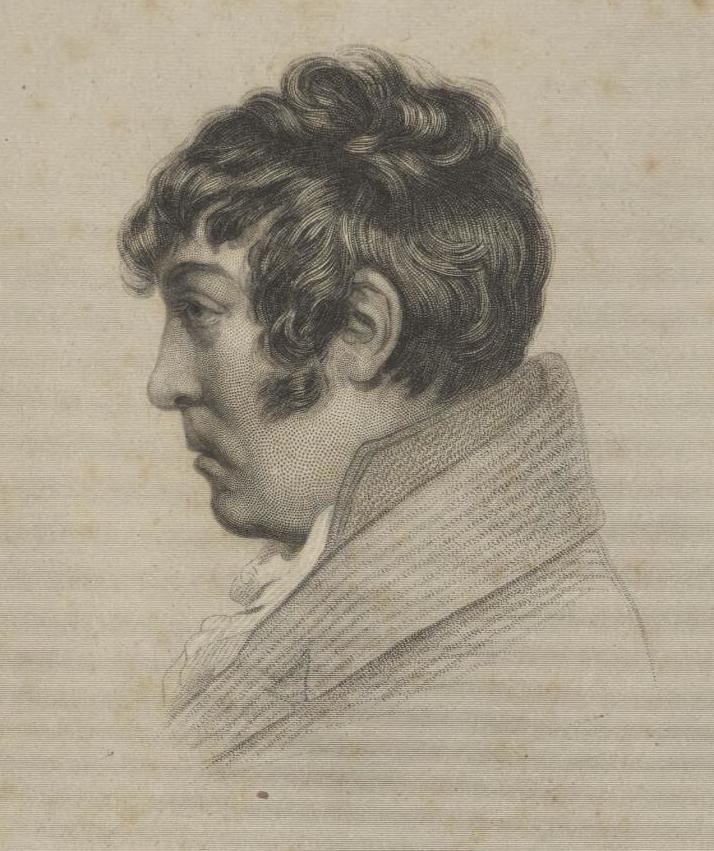
Walter Savage Landor Imaginary Conversations
"Aesop and Rhodopè", I.
Imaginary Conversations (1824-1829)
Walter Savage Landor Imaginary Conversations
"Barrow and Newton".
Imaginary Conversations (1824-1829)
“Nothing is pleasanter to me than exploring in a library.”
Source: Pericles and Aspasia
“What is reading but silent conversation.”
Walter Savage Landor Imaginary Conversations
Source: Imaginary Conversations
“When a cat flatters… he is not insincere: you may safely take it for real kindness.”
Walter Savage Landor Imaginary Conversations
Source: Imaginary Conversations
Reported in Josiah Hotchkiss Gilbert, Dictionary of Burning Words of Brilliant Writers (1895), p. 8.
Gebir, Book I (1798). Compare: "Murmurings, whereby the monitor expressed/ Mysterious union with his native sea", William Wordsworth, The Excursion (1814), Book iv. Wordsworth's prompted Landor to comment, "Poor shell! that Wordsworth so pounded and flattened in his marsh it no longer had the hoarseness of a sea, but of a hospital", Walter Savage Landor, Letter to John Forster.
Epitaph on Dirce - George Orwell called it 'one of the best epitaphs in English - If I were a woman it would be my favourite epitaph-it would be the one I should like to have for myself." - quoted in Orwell:Collected Works, It is What I Think, p. 45.
To Robert Browning (1846). Compare: "Nor sequent centuries could hit/ Orbit and sum of Shakespeare's wit", Ralph Waldo Emerson, May-Day and Other Pieces, Solution.
Reported in Josiah Hotchkiss Gilbert, Dictionary of Burning Words of Brilliant Writers (1895), p. 33.
Walter Savage Landor Imaginary Conversations
"Cromwell and Noble".
Imaginary Conversations (1824-1829)
Walter Savage Landor Imaginary Conversations
"Chesterfield and Chatham".
Imaginary Conversations (1824-1829)
“Ah what avails the sceptered race,
Ah what the form divine!”
Walter Savage Landor Rose Aylmer
Rose Aylmer (1806).
I Strove with None (1853). The work is identified in Bartlett's Quotations, 10th edition (1919) as Dying Speech of an old Philosopher.
Quoted in W. Somerset Maugham: The Razor's Edge, The Blakiston Company, Philadelphia, 1944, p. 161.
“Ambition is but Avarice on stilts and masked.”
Walter Savage Landor Imaginary Conversations
"Lord Brooke and Sir Philip Sidney".
Imaginary Conversations (1824-1829)
“The Siren waits thee, singing song for song.”
To Robert Browning (1846).
The last Fruit of an old Tree, Epigram cvi, reported in Bartlett's Familiar Quotations, 10th ed. (1919).
Gebir, Book I (1798). It is reported that "these lines were specially singled out for admiration by Shelley, Humphrey Davy, Scott, and many remarkable men"; Bartlett's Familiar Quotations, 10th ed. (1919), citing Forster, Life of Landor, vol. i. p. 95.


