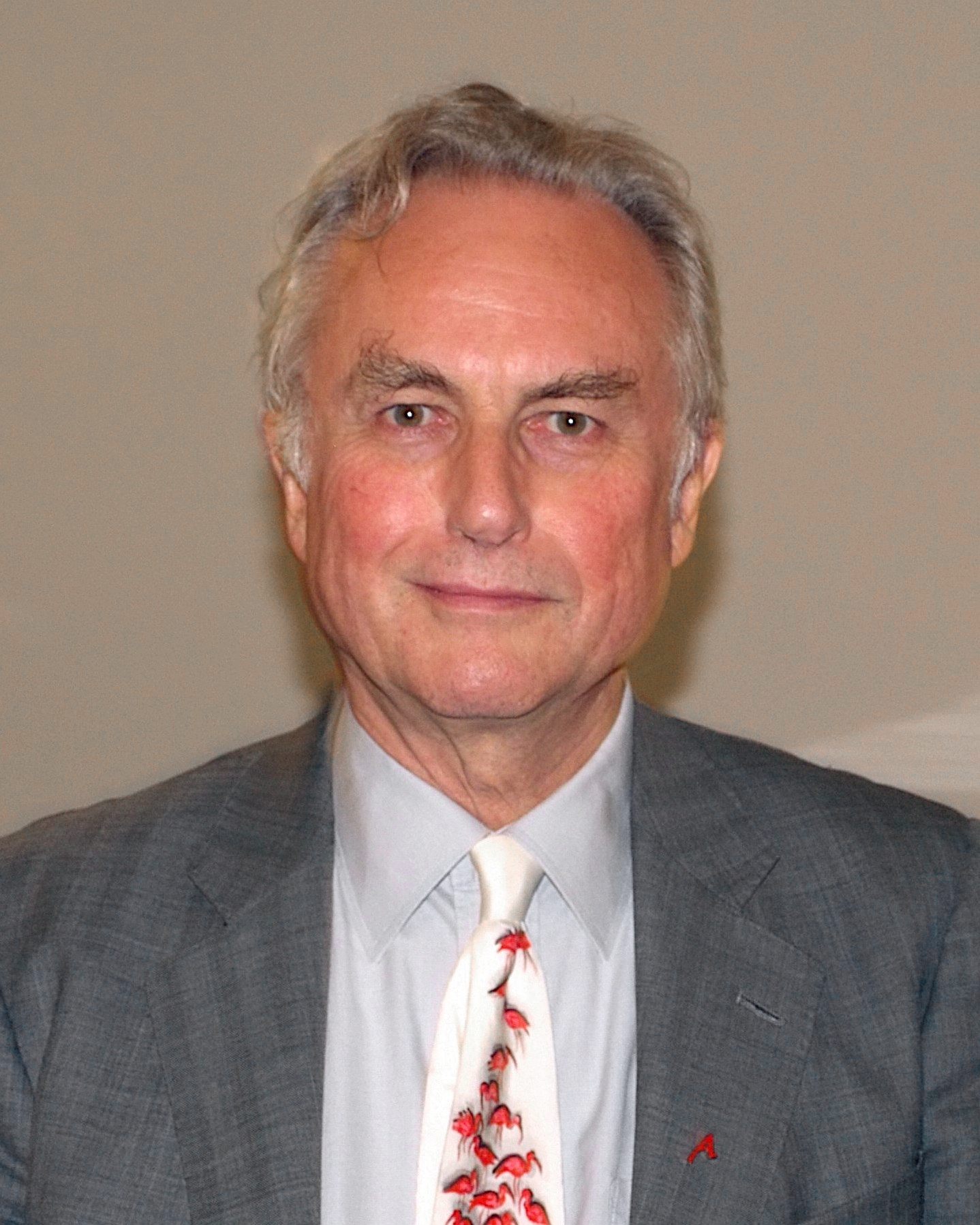
Richard Dawkins citations célèbres
Richard Dawkins livre Pour en finir avec Dieu
Pour en finir avec Dieu (The God Delusion), 2006
Richard Dawkins livre Pour en finir avec Dieu
S'ils ne sont pas extrémistes en soi, les enseignements de la religion « modérée » sont une invitation ouverte à l'extrémisme.
Pour en finir avec Dieu (The God Delusion), 2006
), 2006
Richard Dawkins livre Pour en finir avec Dieu
Pour en finir avec Dieu (The God Delusion), 2006
), 2006
en
We are going to die, and that makes us the lucky ones. Most people are never going to die because they are never going to be born. The potential people who could have been here in my place but who will in fact never see the light of day outnumber the sand grains of Sahara. Certainly those unborn ghosts include greater poets than Keats, scientists greater than Newton. We know this because the set of possible people allowed by our DNA so massively outnumbers the set of actual people. In the teeth of these stupefying odds it is you and I, in our ordinariness, that are here. We privileged few, who won the lottery of birth against all odds, how dare we whine at our inevitable return to that prior state from which the vast majority have never stirred?
Les Mystères de l'arc-en-ciel (Unweaving the Rainbow), 1998
Richard Dawkins: Citations en anglais
Richard Dawkins livre A Devil's Chaplain
"Time to Stand Up"
A Devil's Chaplain (2003)
The Richard Dimbleby Lecture: Science, Delusion and the Appetite for Wonder (1996)
“evidence is the only good reason to believe anything”
interview shown in AlJazeera https://www.youtube.com/watch?v=U0jA6VsivBE&t=0h26m04s, https://www.youtube.com/watch?v=U0jA6VsivBE&t=0h28m37s
Darwin's Dangerous Disciple: An Interview by Frank Miele (1995)
Blog comment, , to PZ Myers, " Always Name Names https://web.archive.org/web/20110706204901/http://scienceblogs.com/pharyngula/2011/07/always_name_names.php" (), Pharyngula, quoted in Rebecca Watson, " The Privilege Delusion http://skepchick.org/2011/07/the-privilege-delusion/", Skepchick. <br class="br">Regarding the Rebecca Watson elevator incident.
“Who (apart from the pig) is damaged by bacon?”
https://twitter.com/RichardDawkins/status/480273220659339264 (21 June 2014) <br class="br">Twitter
Richard Dawkins livre Pour en finir avec Dieu
Source: The God Delusion (2006), p. 120
“Mitochondrial DNA is blessedly celibate. (p.53)”
River out of Eden (1995)
Banishing the Green-Eyed Monster http://newsweek.washingtonpost.com/onfaith/panelists/richard_dawkins/2007/11/banishing_the_greeneyed_monste.html, November 2007.
Richard Dawkins livre The Blind Watchmaker
Source: The Blind Watchmaker (1986), Chapter 8 “Explosions and Spirals” (pp. 195–196)
Lecture at UC Berkeley about The God Delusion, 08/03/2008 http://www.youtube.com/watch?v=PaJelU29jeI&t=49s <br class="br">Lecture at UC Berkeley (2008)
As quoted in "Richard Dawkins: religious education is crucial for British schoolchildren" http://www.telegraph.co.uk/science/2017/06/11/richard-dawkins-religious-education-crucial-british-schoolchildren/ by Sarah Knapton, The Telegraph (11 June 2017)
"</p>
Peter Singer - The Genius of Darwin: The Uncut Interviews (2009)
“The argument of this book is that we, and all other animals, are machines created by our genes.”
Richard Dawkins livre The Selfish Gene
Source: The Selfish Gene (1976, 1989), Ch. 1. Why Are People?
Richard Dawkins livre The Selfish Gene
Source: The Selfish Gene (1976, 1989), Ch. 6. Genesmanship
An Interview by Sheena McDonald (1995)
[Human gullibility beyond belief,— the “paranormal” in the media, The Sunday Times, 1996-08-25]
Giles Whittell, " The world according to Richard Dawkins http://www.thetimes.co.uk/tto/science/article4191347.ece" (), The Times, quoted in Trevor Grundy, " Richard Dawkins Pedophilia Remarks Provoke Outrage http://www.huffingtonpost.com/2013/09/09/richard-dawkins-pedophilia_n_3895514.html" (), The Huffington Post.
Part 1, 00:13:32
The Root of All Evil? (January 2006)
At Randolph-Macon Woman's College in Lynchburg, Virginia, Broadcasted by C-SPAN2 http://richarddawkins.net/home
“Pantheism is sexed-up atheism. Deism is watered-down theism.”
Richard Dawkins livre Pour en finir avec Dieu
Source: The God Delusion (2006), p. 40
“[If] there is mercy in nature, it is accidental. Nature is neither kind nor cruel but indifferent.”
Richard Dawkins livre A Devil's Chaplain
"A Devil's Chaplain"
A Devil's Chaplain (2003)
" Is Science a Religion? http://www.thehumanist.org/humanist/articles/dawkins.html", The Humanist (January 1997)
Richard Dawkins livre The Selfish Gene
Source: The Selfish Gene (1976, 1989), Ch. 4. The Gene machine
“Abort it and try again. It would be immoral to bring it into the world if you have the choice.”
On a hypothetical fetus with Down syndrome https://twitter.com/RichardDawkins/statuses/502106262088466432 (20 August 2014) <br class="br">Twitter
Richard Dawkins livre Pour en finir avec Dieu
Source: The God Delusion (2006), p. 118
Richard Dawkins livre The Selfish Gene
Source: The Selfish Gene (1976, 1989), Ch. 7. Family planning


