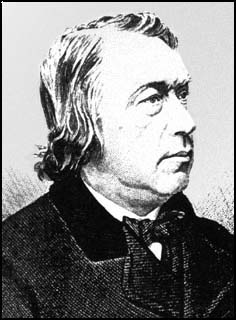
Charles Mackay citations

Charles Mackay, né le 27 mars 1814 à Perth, Écosse et mort le 24 décembre 1889 à Londres, est un écrivain et journaliste britannique. Wikipedia  

✵ 27. mars 1814 – 24. décembre 1889
Charles Mackay photo
Charles Mackay: 22 citations0 J'aime

Charles Mackay: Citations en anglais

“They may veil their eyes, but they cannot hide
The sun’s meridian glow”

Charles Mackay

"Eternal Justice", Stanza 4
Legends of the Isles and Other Poems (1851)
Contexte: They may veil their eyes, but they cannot hide
The sun’s meridian glow;
The heel of a priest may tread thee down,
And a tyrant work thee woe:
But never a truth has been destroyed;
They may curse it, and call it crime;
Pervert and betray, or slander and slay
Its teachers for a time.
But the sunshine aye shall light the sky,
As round and round we run;
And the truth shall ever come uppermost,
And justice shall be done.

“But the sunshine aye shall light the sky,
As round and round we run;
And the truth shall ever come uppermost,
And justice shall be done.”

Charles Mackay

"Eternal Justice", Stanza 4
Legends of the Isles and Other Poems (1851)
Contexte: They may veil their eyes, but they cannot hide
The sun’s meridian glow;
The heel of a priest may tread thee down,
And a tyrant work thee woe:
But never a truth has been destroyed;
They may curse it, and call it crime;
Pervert and betray, or slander and slay
Its teachers for a time.
But the sunshine aye shall light the sky,
As round and round we run;
And the truth shall ever come uppermost,
And justice shall be done.

“Cannon-balls may aid the truth
But thought’s a weapon stronger;
We’ll win our battles by its aid,
Wait a little longer.”

Charles Mackay

"The Good Time Coming".
Voices from the Crowd, and Town Lyrics (1857)
Contexte: There’s a good time coming, boys!
A good time coming.
We may not live to see the day,
But earth shall glisten in the ray
Of the good time coming.
Cannon-balls may aid the truth
But thought’s a weapon stronger;
We’ll win our battles by its aid,
Wait a little longer.

“Men, it has been well said, think in herds; it will be seen that they go mad in herds, while they only recover their senses slowly, and one by one.”

Charles Mackay livre Extraordinary Popular Delusions and the Madness of Crowds

Source: Extraordinary Popular Delusions and the Madness of Crowds (1841)

“There’s a good time coming, boys!
A good time coming.”

Charles Mackay

"The Good Time Coming".
Voices from the Crowd, and Town Lyrics (1857)
Contexte: There’s a good time coming, boys!
A good time coming.
We may not live to see the day,
But earth shall glisten in the ray
Of the good time coming.
Cannon-balls may aid the truth
But thought’s a weapon stronger;
We’ll win our battles by its aid,
Wait a little longer.

“If happy I and wretched he,
Perhaps the king would change with me.”

Charles Mackay

"Differences" in The Collected Songs of Charles Mackay (1859).

“Old Tubal Cain was a man of might
In the days when earth was young.”

Charles Mackay

"Tubal Cain".
Legends of the Isles and Other Poems (1851)

“Aid the dawning, tongue and pen;
Aid it, hopes of honest men!”

Charles Mackay

"Clear the Way".
Legends of the Isles and Other Poems (1851)

“Every age has its peculiar folly: Some scheme, project, or fantasy into which it plunges, spurred on by the love of gain, the necessity of excitement, or the force of imitation.”

Charles Mackay livre Extraordinary Popular Delusions and the Madness of Crowds

Extraordinary Popular Delusions and the Madness of Crowds (1841)

“Some love to roam o’er the dark sea’s foam,
Where the shrill winds whistle free.”

Charles Mackay

"Some Love to Roam".
Legends of the Isles and Other Poems (1851)

“During seasons of great pestilence, men have often believed the prophecies of crazed fanatics, that the end of the world was come.”

Charles Mackay livre Extraordinary Popular Delusions and the Madness of Crowds

Extraordinary Popular Delusions and the Madness of Crowds (1841)

“Credulity is always greatest in times of calamity.”

Charles Mackay livre Extraordinary Popular Delusions and the Madness of Crowds

Extraordinary Popular Delusions and the Madness of Crowds (1841)

“Nations, like individuals, cannot become desperate gamblers with impunity. Punishment is sure to overtake them sooner or later.”

Charles Mackay livre Extraordinary Popular Delusions and the Madness of Crowds

Extraordinary Popular Delusions and the Madness of Crowds (1841)

Auteurs similaires

Emily Brontë photo
Emily Brontë18
écrivaine britannique None
Thomas Carlyle photo
Thomas Carlyle1
Romancier, historien et essayiste écossais None
Lewis Carroll photo
Lewis Carroll4
romancier, essayiste, photographe et mathématicien britanni… None
Jules Renard photo
Jules Renard24
écrivain français None
Fedor Dostoïevski photo
Fedor Dostoïevski13
écrivain russe None
John Ruskin photo
John Ruskin3
auteur, poète, artiste et critique d’art britannique None
Alexandre Dumas photo
Alexandre Dumas133
écrivain et dramaturge français, père de l'écrivain et dram… None
Victor Hugo photo
Victor Hugo322
écrivain français None
Guy de Maupassant photo
Guy de Maupassant79
écrivain français None