
Thomas à Kempis book The Imitation of Christ
Book I, ch. 16.
Source: The Imitation of Christ (c. 1418)
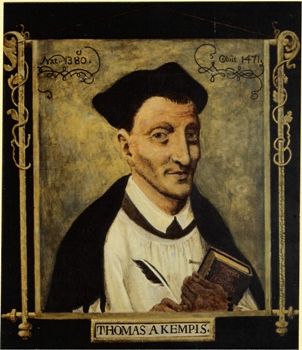
Thomas à Kempis, CRSA was a German who became a canon regular in the Netherlands and authored The Imitation of Christ, one of the most popular and best known Christian books on devotion. His name means Thomas "of Kempen", his hometown, and in German he is known as Thomas von Kempen .
Thomas à Kempis book The Imitation of Christ
Book I, ch. 16.
Source: The Imitation of Christ (c. 1418)
“A wise lover values not so much the gift of the lover as the love of the giver.”
Thomas à Kempis book The Imitation of Christ
Source: The Imitation of Christ
“Jesus has now many lovers of the heavenly kingdom but few bearers of His cross.”
Source: Imitation Of Christ
Source: Dictionary of Burning Words of Brilliant Writers (1895), P. 124.
“There is no creature so small and abject, that it representeth not the goodness of God.”
Source: Dictionary of Burning Words of Brilliant Writers (1895), P. 261.
“Man proposes, but God disposes.”
Homo proponit, sed Deus disponit.
Thomas à Kempis book The Imitation of Christ
Book I, ch. 19.
The Imitation of Christ (c. 1418)
Source: Dictionary of Burning Words of Brilliant Writers (1895), P. 365.
Source: Dictionary of Burning Words of Brilliant Writers (1895), P. 62.
Thomas à Kempis book The Imitation of Christ
Book III. ch. 56.
The Imitation of Christ (c. 1418)
Source: Dictionary of Burning Words of Brilliant Writers (1895), P. 515.
“At the Day of Judgement we shall not be asked what we have read but what we have done; not how well we have spoken, but how holily we have lived.”
Certe adveniente die judicii, non quæretur a nobis quid legimus, sed quid fecimus; nec quam bene diximus, sed quam religiose viximus.
Thomas à Kempis book The Imitation of Christ
Book I, ch. 3; this is part of a longer passage:
A humble knowledge of oneself is a surer road to God than a deep searching of the sciences. Yet learning itself is not to be blamed, or is the simple knowledge of anything whatsoever to be despised, for true learning is good in itself and ordained by God; but a good conscience and a holy life are always to be preferred. But because many are more eager to acquire much learning than to live well, they often go astray, and bear little or no fruit. If only such people were as diligent in the uprooting of vices and the panting of virtues as they are in the debating of problems, there would not be so many evils and scandals among the people, nor such laxity in communities. At the Day of Judgement, we shall not be asked what we have read, but what we have done; not how eloquently we have spoken, but how holily we have lived. Tell me, where are now all those Masters and Doctors whom you knew so well in their lifetime in the full flower of their learning? Other men now sit in their seats, and they are hardly ever called to mind. In their lifetime they seemed of great account, but now no one speaks of them.
[Humili tui cognitio, certior viam est ad Deum, quam profunda scientiae inquisitio. Non est culpanda scientia, aut quelibet simplex rei notitia, quae bona est in se considerata, et a Deo ordinat: sed preferenda est semper bona conscientia, et virtuosa vita. Quia vero plures magis student scire, quam bene vivere: ideo saepe errant, et pene nullum, vel modicum fructum ferunt. O si tanta adhiberent diligentiam ad extirpanda vitia, et virtute inferendas, sicuti ad movenda questiones: non fierent tanta mala et scandala in populo nec tanta dissolutio in cenobiis ! Certe, adveniente die judicii, non quaeretur a nobis: quid legimus, sed quid fecimus: nec quam bene diximus, sed quam religiose viximus. Dic mihi: Ubi sunt modo omnes illi Domini et Magistri, quos bene novisti, dum adhuc viverent et studiis florerent? Iam eorum praebendas alii possident: et nescio, utrum de eis recogitent. In vita sua aliquid esse videbantur, et modo de illis tacetur.]
Book I, ch. 3.
Source: The Imitation of Christ (c. 1418)
“Wherever you go, there you are.”
Thomas à Kempis book The Imitation of Christ
Source: The Imitation of Christ
“All men desire peace, but very few desire those things that make for peace.”
Thomas à Kempis book The Imitation of Christ
Source: The Imitation of Christ
Thomas à Kempis book The Imitation of Christ
Source: Dictionary of Burning Words of Brilliant Writers (1895), P. 545.
Source: The Imitation of Christ
Context: Simplicity and purity are the two wings by which a man is lifted above all earthly things. Simplicity is in the intention — purity in the affection. Simplicity tends to God,— purity apprehends and tastes Him.
“Fight like a man. Habit is overcome by habit.”
Thomas à Kempis book The Imitation of Christ
Source: The Imitation of Christ
“The Lord bestows his blessings there, where he finds the vessels empty.”
Thomas à Kempis book The Imitation of Christ
Source: The Imitation of Christ
Source: Dictionary of Burning Words of Brilliant Writers (1895), P. 37.
Source: Dictionary of Burning Words of Brilliant Writers (1895), P. 442.
“He that avoideth not small faults, by little and little falleth into greater.”
Source: Dictionary of Burning Words of Brilliant Writers (1895), P. 548.
“First keep the peace within yourself, then you can also bring peace to others.”
Thomas à Kempis book The Imitation of Christ
Book II, ch. 3.
The Imitation of Christ (c. 1418)
Source: Dictionary of Burning Words of Brilliant Writers (1895), P. 536.
Source: Dictionary of Burning Words of Brilliant Writers (1895), P. 372.
“It is easier not to speak a word at all than to speak more words than we should.”
Thomas à Kempis book The Imitation of Christ
Book I, ch. 20.
The Imitation of Christ (c. 1418)
“No man ruleth safely but that he is willingly ruled.”
Thomas à Kempis book The Imitation of Christ
Book I, ch. 20.
The Imitation of Christ (c. 1418)
Source: Dictionary of Burning Words of Brilliant Writers (1895), P. 578.
“How fast passes away the glory of this world.”
O quam cito transit gloria mundi.
Thomas à Kempis book The Imitation of Christ
Book I, ch. 3.
These words are used in the crowning of the pope.
The Imitation of Christ (c. 1418)
“And when he is out of sight, quickly also is he out of mind.”
Thomas à Kempis book The Imitation of Christ
Book I, ch. 23.
The Imitation of Christ (c. 1418)
Thomas à Kempis book The Imitation of Christ
Book I, ch. 20.
The Imitation of Christ (c. 1418)
Source: Dictionary of Burning Words of Brilliant Writers (1895), P. 293.
“Of two evils, the less is always to be chosen.”
Thomas à Kempis book The Imitation of Christ
Book III. ch. 12.
The Imitation of Christ (c. 1418)
Source: Dictionary of Burning Words of Brilliant Writers (1895), P. 545.


