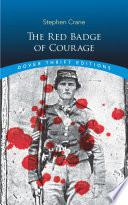
Stephen Crane book The Open Boat
Pt. VI
The Open Boat (1894)
Source: The Open Boat and Other Stories
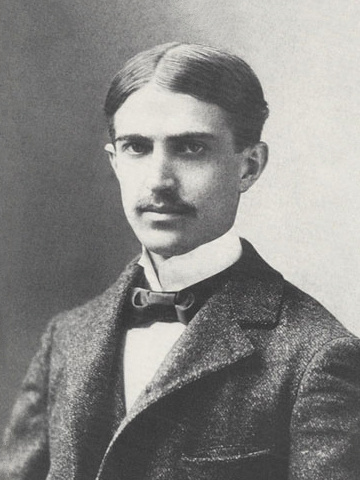
Stephen Crane was an American poet, novelist, and short story writer. Prolific throughout his short life, he wrote notable works in the Realist tradition as well as early examples of American Naturalism and Impressionism. He is recognized by modern critics as one of the most innovative writers of his generation.
The ninth surviving child of Methodist parents, Crane began writing at the age of four and had published several articles by the age of 16. Having little interest in university studies though he was active in a fraternity, he left Syracuse University in 1891 to work as a reporter and writer. Crane's first novel was the 1893 Bowery tale Maggie: A Girl of the Streets, generally considered by critics to be the first work of American literary Naturalism. He won international acclaim in 1895 for his Civil War novel The Red Badge of Courage, which he wrote without having any battle experience.
In 1896, Crane endured a highly publicized scandal after appearing as a witness in the trial of a suspected prostitute, an acquaintance named Dora Clark. Late that year he accepted an offer to travel to Cuba as a war correspondent. As he waited in Jacksonville, Florida for passage, he met Cora Taylor, with whom he began a lasting relationship. En route to Cuba, Crane's vessel the SS Commodore sank off the coast of Florida, leaving him and others adrift for 30 hours in a dinghy. Crane described the ordeal in "The Open Boat". During the final years of his life, he covered conflicts in Greece and later lived in England with her. He was befriended by writers such as Joseph Conrad and H. G. Wells. Plagued by financial difficulties and ill health, Crane died of tuberculosis in a Black Forest sanatorium in Germany at the age of 28.
At the time of his death, Crane was considered an important figure in American literature. After he was nearly forgotten for two decades, critics revived interest in his life and work. Crane's writing is characterized by vivid intensity, distinctive dialects, and irony. Common themes involve fear, spiritual crises and social isolation. Although recognized primarily for The Red Badge of Courage, which has become an American classic, Crane is also known for his poetry, journalism, and short stories such as "The Open Boat", "The Blue Hotel", "The Bride Comes to Yellow Sky", and The Monster. His writing made a deep impression on 20th-century writers, most prominent among them Ernest Hemingway, and is thought to have inspired the Modernists and the Imagists.
Wikipedia
Stephen Crane book The Open Boat
Pt. VI
The Open Boat (1894)
Source: The Open Boat and Other Stories
Stephen Crane book The Red Badge of Courage
Source: The Red Badge of Courage
“The man had arrived at that stage of drunkenness where affection is felt for the universe.”
Stephen Crane book Maggie: A Girl of the Streets
Source: Maggie: A Girl of the Streets
Stephen Crane book The Open Boat
Pt. III
The Open Boat (1894)
Stephen Crane book The Open Boat
Pt. I
The Open Boat (1894)
Do Not Weep, Maiden, For War is Kind, st. 2
War Is Kind and Other Lines (1899)
Do Not Weep, Maiden, For War is Kind, p. 4
War Is Kind and Other Lines (1899)
Source: Epigraph in " The Clan of No Name http://web.archive.org/20040803101258/www.geocities.com/stephen_crane_us/clannoname.html" (1899); published in the anthology Wounds in the Rain (1900)
Stephen Crane book The Red Badge of Courage
Source: The Red Badge of Courage (1895), Ch. 3
Context: The line, broken into moving fragments by the ground, went calmly on through fields and woods. The youth looked at the men nearest him, and saw, for the most part, expressions of deep interest, as if they were investigating something that had fascinated them. One or two stepped with overvaliant airs as if they were already plunged into war. Others walked as upon thin ice. The greater part of the untested men appeared quiet and absorbed. They were going to look at war, the red animal — war, the blood-swollen god. And they were deeply engrossed in this march.
Stephen Crane book The Red Badge of Courage
Source: The Red Badge of Courage (1895), Ch. 1 First lines.
Context: The cold passed reluctantly from the earth, and the retiring fogs revealed an army stretched out on the hills, resting. As the landscape changed from brown to green, the army awakened, and began to tremble with eagerness at the noise of rumors.
“I saw a man pursuing the horizon;
Round and round they sped.”
Stephen Crane book The Black Riders and Other Lines
Source: The Black Riders and Other Lines (1895), XXIV
Context: I saw a man pursuing the horizon;
Round and round they sped.
I was disturbed at this;
I accosted the man.
"It is futile," I said,
"You can never—""You lie," he cried,
And ran on.
Epigraph in " The Clan of No Name http://web.archive.org/20040803101258/www.geocities.com/stephen_crane_us/clannoname.html" (1899); published in the anthology Wounds in the Rain (1900) <br class="br">Context: Unwind my riddle.<br>Cruel as hawks the hours fly;<br>Wounded men seldom come home to die;<br>The hard waves see an arm flung high;<br>Scorn hits strong because of a lie;<br>Yet there exists a mystic tie.<br>Unwind my riddle.
Do Not Weep, Maiden, For War is Kind, No. 1, st. 1
War Is Kind and Other Lines (1899)
A Man Said to the Universe, No. 20
War Is Kind and Other Lines (1899)
Source: War Is Kind and Other Poems
Source: Complete Poems of Stephen Crane
Stephen Crane book The Open Boat
Pt. IV
The Open Boat (1894)
Stephen Crane book The Black Riders and Other Lines
Source: The Black Riders and Other Lines (1895), III
The Colors by Nathalia Crane
Misattributed
The Wayfarer, No. 13
War Is Kind and Other Lines (1899)
Do Not Weep, Maiden, For War is Kind, st. 3
War Is Kind and Other Lines (1899)
Stephen Crane book The Open Boat
Pt. I
The Open Boat (1894)
Stephen Crane book The Red Badge of Courage
Source: The Red Badge of Courage (1895), Ch. 5
“The red sun was pasted in the sky like a wafer.”
Stephen Crane book The Red Badge of Courage
Source: The Red Badge of Courage (1895), Ch. 9
Stephen Crane book The Black Riders and Other Lines
Source: The Black Riders and Other Lines (1895), XXVIII
Stephen Crane book The Black Riders and Other Lines
Source: The Black Riders and Other Lines (1895), XIII
Stephen Crane book The Open Boat
Pt. VI
The Open Boat (1894)
“Every sin is the result of a collaboration.”
Stephen Crane book The Blue Hotel
"The Blue Hotel", from The Monster and Other Stories (1898)
Stephen Crane book The Red Badge of Courage
Source: The Red Badge of Courage (1895), Ch. 24
Stephen Crane book The Red Badge of Courage
Source: The Red Badge of Courage (1895), Ch. 24
"The Clan of No Name" (1899); published in the anthology Wounds in the Rain (1900)
“He had fought like a pagan who defends his religion.”
Stephen Crane book The Red Badge of Courage
Source: The Red Badge of Courage (1895), Ch. 17
Later he saw that each weed
Was a singular knife.
"Well," he mumbled at last,
"Doubtless there are other roads."
The Wayfarer, No. 13
War Is Kind and Other Lines (1899)
Stephen Crane book The Black Riders and Other Lines
Source: The Black Riders and Other Lines (1895), XXIV


