“I may use mine own as I will.”
Robins v. Barnes (1614), Lord Hobart's Rep. 131.
Sir Henry Hobart, 1st Baronet , of Blickling Hall, was an English politician who succeeded Sir Edward Coke to become Chief Justice of the Court of Common Pleas. Wikipedia
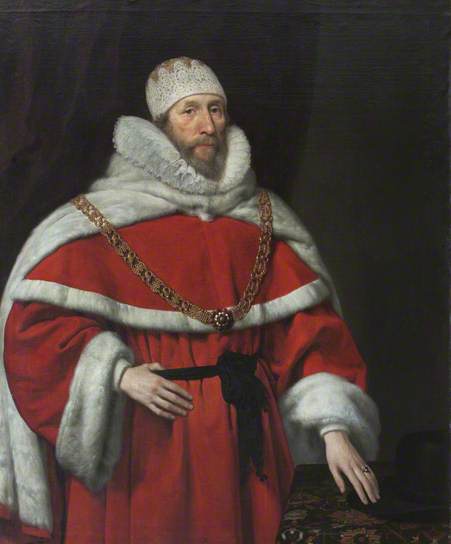
“I may use mine own as I will.”
Robins v. Barnes (1614), Lord Hobart's Rep. 131.
“Aucupia verborum sunt judice indigna: Catching at words is unworthy of a Judge.”
Lord Hobart's Rep. 343.
Sheffield v. Ratcliffe (1615)
“Men will not commonly steal women that are nothing worth.”
Bruton v. Morris (1614), Lord Hobart's Rep. 182.
“That whom he could not by the sword destroy, he might supplant by the law.”
Lord Hobart's Rep. 335.
Sheffield v. Ratcliffe (1615)
“Nothing is more natural than to marry.”
Lord Hobart's Rep. 342.
Sheffield v. Ratcliffe (1615)
Bruton v. Morris (1614), Lord Hobart's Rep. 149.
Colt v. Glover (1614), Lord Hobart's Rep. 157.
Lord Hobart's Rep. 341.
Sheffield v. Ratcliffe (1615)
Quoted by Sir Thomas Twisden, 1st Baronet, C.J., in Maleverer v. Redshaw (1670), 1 Mod. Rep. 36 ; and by Wilmot, L.C.J., in Collins v. Blantern (1767), 2 Wils. 351.
“A woman cannot be a pastor by the law of God. I say more, it is against the law of the realm.”
Colt and another v. Bishop of Coventry and Lichfield (1612), Hob. Rep. 148.
“The laws of the realm do admit nothing against the law of God.”
Colt v. Glover (1614), Lord Hobart's Rep. 149.
Pits v. James (1614), Lord Hobart's Rep. 124-125
Pits v. James (1614), Lord Hobart's Rep. 124-125
Pits v. James (1614), Lord Hobart's Rep. 124-125
“Zeal and indignation are fervent passions.”
Lord Hobart's Rep. 335.
Sheffield v. Ratcliffe (1615)
Earl of Clanrickard's Case (1614), Lord Hobart's Rep. 277.
“Fiction is never admitted where truth may work.”
Wright v. Gerrard (1617), Lord Hobart's Rep. 311.
Pits v. James (1614), Lord Hobart's Rep. 124-125


