“Honour is to you and me as strong an obligation, as necessity to others.”
Neque enim minus apud nos honestas quam apud alios necessitas valet.
Letter 10, 3.
Letters, Book IV
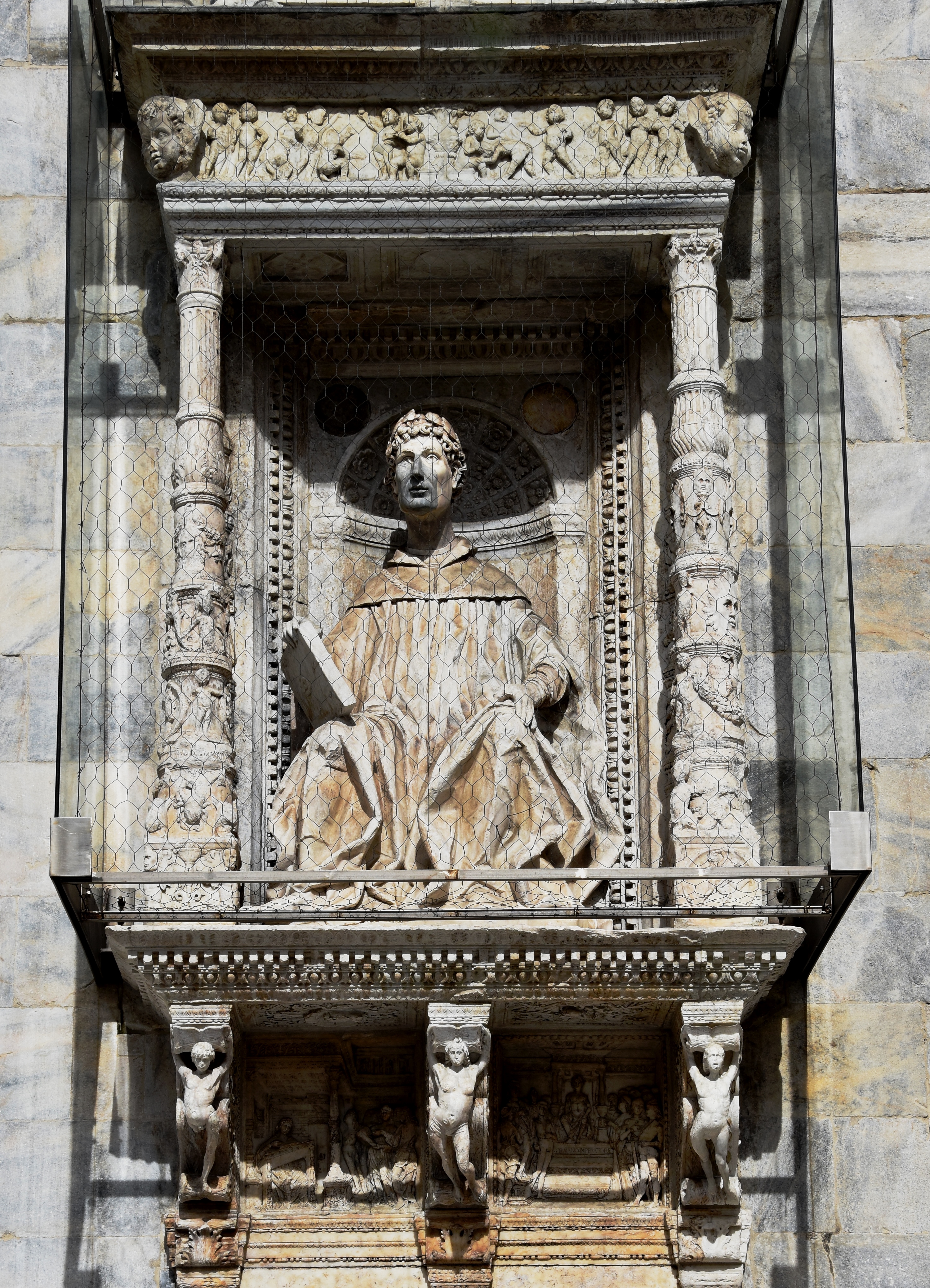
Gaius Plinius Caecilius Secundus, born Gaius Caecilius or Gaius Caecilius Cilo , better known as Pliny the Younger , was a lawyer, author, and magistrate of Ancient Rome. Pliny's uncle, Pliny the Elder, helped raise and educate him.
Pliny the Younger wrote hundreds of letters, of which 247 survive and are of great historical value. Some are addressed to reigning emperors or to notables such as the historian Tacitus. Pliny served as an imperial magistrate under Trajan , and his letters to Trajan provide one of the few surviving records of the relationship between the imperial office and provincial governors.Pliny rose through a series of civil and military offices, the cursus honorum. He was a friend of the historian Tacitus and might have employed the biographer Suetonius on his staff. Pliny also came into contact with other well-known men of the period, including the philosophers Artemidorus and Euphrates the Stoic, during his time in Syria.
Wikipedia
“Honour is to you and me as strong an obligation, as necessity to others.”
Neque enim minus apud nos honestas quam apud alios necessitas valet.
Letter 10, 3.
Letters, Book IV
“It is in the body politic, as in the natural, those disorders are most dangerous that flow from the head.”
Utque in corporibus sic in imperio gravissimus est morbus, qui a capite diffunditur.
Letter 22, 7.
Letters, Book IV
“Prosperity proves men to be fortunate, while it is adversity which makes them great.”
Secunda felices, adversa magnos probent.
XXXI.
Panegyricus
“The lust of lucre has so totally seized upon mankind, that their wealth seems rather to possess them, than they to possess their wealth.”
Ea invasit homines habendi cupido, ut possideri magis quam possidere videantur.
Letter 30, 4.
Letters, Book IX
“As it is far better to excel in any single art, than to arrive only at a mediocrity in several; so on the other hand, a moderate skill in several is to be preferred, where one cannot attain to excellency in any.”
Ut satius unum aliquid insigniter facere quam plura mediocriter, ita plurima mediocriter, si non possis unum aliquid insigniter.
Letter 29, 1.
Letters, Book IX
“His only fault is that he has no fault.”
Nihil peccat, nisi quod nihil peccat.
Letter 26, 1.
Letters, Book IX
Letter 12, 11–13; on the death of his friend Cornelius Rufus.
Letters, Book I
“More cruel than death itself, to die at that particular conjuncture!”
O morte ipsa mortis tempus indignius!
Letter 16, 6.
Letters, Book V
“Let us strive then, while Life is ours, to secure that Death may find we have left little or nothing he can destroy.”
Proinde, dum suppetit vita, enitamur ut mors quam paucissima quae abolere possit inveniat.
Letter 5, 8.
Letters, Book V
“For my part, I regard every death as cruel and premature, that removes one who is preparing some immortal work.”
Mihi autem videtur acerba semper et immatura mors eorum, qui immortale aliquid parant.
Letter 5, 4.
Letters, Book V
“Objects which are usually the motives of our travels by land and by sea are often overlooked and neglected if they lie under our eye.”
Ad quae noscenda iter ingredi, transmittere mare solemus, ea sub oculis posita neglegimu. ... Differimus tamquam saepe visuri, quod datur videre quotiens velis cernere.
Letter 20, 1.
Letters, Book VIII
Context: Objects which are usually the motives of our travels by land and by sea are often overlooked and neglected if they lie under our eye.... We put off from time to time going and seeing what we know we have an opportunity of seeing when we please.
“Experience, that excellent master.”
Usus, magister egregius.
Letter 20, 12.
Letters, Book I
“It is the usual though inequitable method of the world, to pronounce an action to be either right or wrong, as it is attended with good or ill success.”
Est omnino iniquum, sed usu receptum, quod honesta consilia vel turpia, prout male aut prospere cedunt, ita vel probantur vel reprehenduntur.
Letter 9, 7.
Letters, Book V
“Such are the vicissitudes of our mortal lot: misfortune is born of prosperity, and good fortune of ill-luck.”
Habet has vices conditio mortalium, ut adversa ex secundis, ex adversis secunda nascantur.
V.
Panegyricus
“Modestus said of Regulus that he was "the biggest rascal that walks upon two legs."”
Letter 5, 14.
Letters, Book I
“We should read much, we should not read many books.”
Multum legendum esse, non multa.
Letter 9, 15.
Letters, Book VII
“A man must rate public and permanent, above private and fleeting advantages and study how to render his benefaction most useful, rather than how he may bestow it with least expense.”
Oportet privatis utilitatibus publicas, mortalibus aeternas anteferre, multoque diligentius muneri suo consulere quam facultatibus.
Letter 18, 5.
Letters, Book VII
“They will by this means receive their education where they receive their birth, and be accustomed from their infancy to inhabit and affect their native soil.”
Educentur hic qui hic nascuntur, statimque ab infantia natale solum amare frequentare consuescant.
Letter 13, 9.
Letters, Book IV
“The truth is, the generality of mankind stand in awe of public opinion, while conscience is feared only by the few.”
Multi famam, conscientiam pauci verentur.
Letter 20, 9.
Letters, Book III
“A certain large collective wisdom resides in a crowd, as such; and men whose individual judgement is defective are excellent judges when grouped together.”
In numero ipso est quoddam magnum collatumque consilium, quibusque singulis iudicii parum, omnibus plurimum.
Letter 17, 10.
Letters, Book VII
Nam nec historia debet egredi veritatem, et honeste factis veritas sufficit.
Letter 33, 10.
Letters, Book VII
“There is certainly no truth in the popular belief, that a man's will is the mirror of his character.”
Falsum est nimirum quod creditur vulgo, testamenta hominum speculum esse morum.
Letter 18, 1.
Letters, Book VIII
“By then day had broken everywhere, but here it was still night—no, more than night.”
Letter 16.
Letters, Book IV
“If you compute the years in which all this has happened, it is but a little while; if you number the vicissitudes, it seems an age.”
Si computes annos, exiguum tempus, si vices rerum, aevum putes.
Letter 24, 5.
Letters, Book IV
“Never do a thing concerning the rectitude of which you are in doubt.”
Quod dubites, ne feceris.
Letter 18, 5.
Letters, Book I
“To name the man is to say all!”
Dixi omnia cum hominem nominavi.
Letter 22, 4.
Letters, Book IV
“An object in possession seldom retains the same charm that it had in pursuit.”
Rarum id quidem nihil enim aeque gratum est adeptis quam concupiscentibus.
Letter 15, 1.
Letters, Book II
“The expense of a monument is superfluous; my memory will endure if my actions deserve it.”
Impensa monumenti supervacua est; memoria nostri durabit, si vita meruimus.
Letter 19, 6; quoting Frontinus.
Letters, Book IX
“There is little difference between expecting misfortune and undergoing it; except that grief has limits, whereas apprehension has none. For we grieve only for what we know has happened; but we fear all that possibly may happen.”
Parvolum differt, patiaris adversa an exspectes; nisi quod tamen est dolendi modus, non est timendi. Doleas enim quantum scias accidisse, timeas quantum possit accidere.
Letter 17, 6.
Letters, Book VIII
“How much does the fame of human actions depend upon the station of those who perform them!”
Quam multum interest quid a quoque fiat!
Letter 24, 1.
Letters, Book VI
“Character lies more concealed, and out of the reach of common observation.”
Vita hominum altos recessus magnasque latebras habet.
Letter 3, 6.
Letters, Book III
“To all this, his illustrious mind reflects the noblest ornament; he places no part of his happiness in ostentation, but refers the whole of it to conscience; and seeks the reward of a virtuous action, not in the applauses of the world, but in the action itself.”
Ornat haec magnitudo animi, quae nihil ad ostentationem, omnia ad conscientiam refert recteque facti non ex populi sermone mercedem, sed ex facto petit.
Letter 22, 5.
Letters, Book I
“Oblige people never so often, and, if you deny them on a single point, they remember nothing but that refusal.”
Quamlibet saepe obligati, si quid unum neges, hoc solum meminerunt quod negatum est.
Letter 4, 6.
Letters, Book III
“Those who are actuated by the desire of fame and glory are amazingly gratified by approbation and praise, even though it comes from their inferiors.”
Omnes enim, qui gloria famaque ducuntur, mirum in modum assensio et laus a minoribus etiam profecta delectat.
Letter 12, 6.
Letters, Book IV
“He died full of years and of glory.”
Plenus annis abit, plenus honoribus.
Letter 1, 7.
Letters, Book II
“The day, even when it is at the longest, is quickly spent.”
Quamquam longissimus, dies cito conditur.
Letter 36, 4.
Letters, Book IX
“I am sensible how much nobler it is to place the reward of virtue in the silent approbation of one's own breast than in the applause of the world. Glory ought to be the consequence, not the motive of our actions.”
Meminimus quanto maiore animo honestatis fructus in conscientia quam in fama reponatur. Sequi enim gloria, non appeti debet.
Letter 8, 14.
Letters, Book I
“For there is a certain luxury in grief; especially when we pour out our sorrows in the bosom of a friend, who will approve, or, at least, pardon our tears.”
Est enim quaedam etiam dolendi voluptas, praesertim si in amici sinu defleas, apud quem lacrimis tuis vel laus sit parata vel venia.
Letter 16, 5.
Letters, Book VIII
“Votes go by number, not weight; nor can it be otherwise in assemblies of this kind, where nothing is more unequal than that equality which prevails in them.”
Numerantur enim sententiae, non ponderantur; nec aliud in publico consilio potest fieri, in quo nihil est tam inaequale quam aequalitas ipsa.
Letter 12, 5.
Letters, Book II
“He used to say that "no book was so bad but that some good might be got out of it."”
Dicere etiam solebat nullum esse librum tam malum ut non aliqua parte prodesset..
Letter 5, 10, referring to Pliny the Elder.
Letters, Book III
“For the malicious, is not, I trust, the only judicious reader.”
Neque enim soli iudicant qui maligne legunt.
Letter 38.
Letters, Book IX
“Informations without the accuser's name subscribed must not be admitted in evidence against anyone, as it is introducing a very dangerous precedent, and by no means agreeable to the spirit of the age.”
Sine auctore vero propositi libelli nullo crimine locum habere debent. Nam et pessimi exempli nec nostri saeculi est.
Letter 97, 2; Trajan to Puny.
Letters, Book X
“Such is the disposition of mankind, if they cannot blast an action, they will censure the parade of it; and whether you do what does not deserve to be taken notice of, or take notice yourself of what does, either way you incur reproach.”
Homines enim cum rem destruere non possunt, iactationem eius incessunt. Ita si silenda feceris, factum ipsum, si laudanda non sileas, ipse culparis.
Letter 8, 15.
Letters, Book I
“Generosity, when once she is set forward, knows not how to stop her progress; as her beauty is of that order which grows the more engaging upon nearer acquaintance.”
Nescit enim semel incitata liberalitas stare, cuius pulchritudinem usus ipse commendat.
Letter 11, 3.
Letters, Book V
“It is long since I have known the sweets of leisure and repose; since I have known in fine, that indolent but agreeable condition of doing nothing, and being nothing.”
Olim nescio quid sit otium quid quies, quid denique illud iners quidem, iucundum tamen nihil agere nihil esse.
Letter 9, 1.
Letters, Book VIII


