
Works

The Scarlet Letter
Nathaniel Hawthorne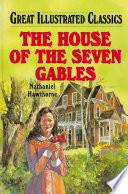
The House of the Seven Gables
Nathaniel Hawthorne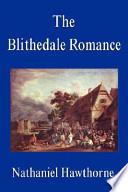
The Blithedale Romance
Nathaniel HawthorneThe Scarlet Letter
Nathaniel HawthorneThe House of the Seven Gables
Nathaniel HawthorneThe Blithedale Romance
Nathaniel HawthorneFamous Nathaniel Hawthorne Quotes
Nathaniel Hawthorne book The Blithedale Romance
The Blithedale Romance (1852), chapter 2
“Easy reading is damn hard writing.”
Also attributed to Ernest Hemingway and others; the earliest definite occurrence of this yet found in research for Wikiquote is by Maya Angelou, who stated it in Conversations With Maya Angelou (1989) edited by Jeffrey M. Elliot:
I think it's Alexander Pope who says, "Easy writing is damn hard reading," and vice versa, easy reading is damn hard writing
The statement she referred to is most probably:
You write with ease, to show your breeding,
But easy writing's curst hard reading
Clio's Protest, or the Picture Varnished (written 1771, published 1819) by Richard Brinsley Sheridan
Disputed
“We dream in our waking moments, and walk in our sleep.”
Nathaniel Hawthorne book The Scarlet Letter
Source: The Scarlet Letter
Nathaniel Hawthorne Quotes about the world
"The Artist of the Beautiful" (1844)
Nathaniel Hawthorne book The Scarlet Letter
Source: The Scarlet Letter (1850), Chapter XXIV: Conclusion
Context: Among many morals which press upon us from the poor minister's miserable experience, we put only this into a sentence: — "Be true! Be true! Be true! Show freely to the world, if not your worst, yet some trait whereby the worst may be inferred!"
1836
Notebooks, The American Notebooks (1835 - 1853)
Nathaniel Hawthorne book The Scarlet Letter
Source: The Scarlet Letter (1850), Chapter XVIII: A Flood of Sunshine
“There are many things in this world that a child must not ask about.”
Nathaniel Hawthorne book The Scarlet Letter
Source: The Scarlet Letter
Nathaniel Hawthorne Quotes about heart
p, 125
"Ethan Brand" (1850)
Nathaniel Hawthorne book Young Goodman Brown
Source: "Young Goodman Brown"
Context: "Lo, there ye stand, my children," said the figure, in a deep and solemn tone, almost sad with its despairing awfulness, as if his once angelic nature could yet mourn for our miserable race. "Depending upon one another's hearts, ye had still hoped that virtue were not all a dream. Now are ye undeceived. Evil is the nature of mankind. Evil must be your only happiness. Welcome again, my children, to the communion of your race."
Nathaniel Hawthorne book The Scarlet Letter
Source: The Scarlet Letter (1850), Chapter XV: Hester and Pearl
“What other dungeon is so dark as one's own heart! What jailer so inexorable as one's self!”
Nathaniel Hawthorne book The House of the Seven Gables
Source: The House of the Seven Gables (1851), Ch. XI : The Arched Window
"The Old Manse": The Author Makes the Reader Acquainted with His Abode http://www.ibiblio.org/eldritch/nh/tom.html from Mosses from an Old Manse (1846)
Nathaniel Hawthorne: Trending quotes
“A single dream is more powerful than a thousand realities.”
Nathaniel Hawthorne book Fanshawe
Source: Fanshawe
“I cannot endure to waste anything so precious as autumnal sunshine by staying in the house.”
1842
Source: Notebooks, The American Notebooks (1835 - 1853)
“Religion and art spring from the same root and are close kin. Economics and art are strangers.”
Willa Cather, "Four Letters: Escapism" first published in Commonweal (17 April 1936)
Misattributed
Nathaniel Hawthorne Quotes
1836
Notebooks, The American Notebooks (1835 - 1853)
Nathaniel Hawthorne book The Scarlet Letter
Source: The Scarlet Letter (1850), Chapter XX: The Minister in a Maze
“Long, long may it be, ere he comes again! His hour is one of darkness, and adversity, and peril.”
Nathaniel Hawthorne book The Gray Champion
"The Gray Champion" (1835) from Twice Told Tales (1837, 1851)
Context: Long, long may it be, ere he comes again! His hour is one of darkness, and adversity, and peril. But should domestic tyranny oppress us, or the invader's step pollute our soil, still may the Gray Champion come, for he is the type of New England's hereditary spirit; and his shadowy march, on the eve of danger, must ever be the pledge, that New England's sons will vindicate their ancestry.
Nathaniel Hawthorne book The House of the Seven Gables
Preface
The House of the Seven Gables (1851)
Context: Many writers lay very great stress upon some definite moral purpose, at which they profess to aim their works. Not to be deficient in this particular, the author has provided himself with a moral, — the truth, namely, that the wrong-doing of one generation lives into the successive ones, and, divesting itself of every temporary advantage, becomes a pure and uncontrollable mischief; and he would feel it a singular gratification if this romance might effectually convince mankind — or, indeed, any one man — of the folly of tumbling down an avalanche of ill-gotten gold, or real estate, on the heads of an unfortunate posterity, thereby to maim and crush them, until the accumulated mass shall be scattered abroad in its original atoms. In good faith, however, he is not sufficiently imaginative to flatter himself with the slightest hope of this kind. When romances do really teach anything, or produce any effective operation, it is usually through a far more subtile process than the ostensible one. The author has considered it hardly worth his while, therefore, relentlessly to impale the story with its moral as with an iron rod, — or, rather, as by sticking a pin through a butterfly, — thus at once depriving it of life, and causing it to stiffen in an ungainly and unnatural attitude. A high truth, indeed, fairly, finely, and skilfully wrought out, brightening at every step, and crowning the final development of a work of fiction, may add an artistic glory, but is never any truer, and seldom any more evident, at the last page than at the first.
1851
Notebooks, The American Notebooks (1835 - 1853)
Context: Happiness in this world, when it comes, comes incidentally. Make it the object of pursuit, and it leads us a wild-goose chase, and is never attained. Follow some other object, and very possibly we may find that we have caught happiness without dreaming of it.
“What, in the name of common-sense, had I to do with any better society than I had always lived in?”
Nathaniel Hawthorne book The Blithedale Romance
The Blithedale Romance (1852)
Context: What, in the name of common-sense, had I to do with any better society than I had always lived in? It had satisfied me well enough. My pleasant bachelor-parlor, sunny and shadowy, curtained and carpeted, with the bedchamber adjoining... my evening at the billiard club, the concert, the theatre, or at somebody's party, if I pleased - what could be better than all this? Was it better to hoe, to mow, to toil and moil amidst the accumulations of a barnyard; to be the chambermaid of two yoke of oxen and a dozen cows; to eat salt beef, and earn it with the sweat of my brow, and thereby take the tough morsel out of some wretch's mouth, into whose vocation I had thrust myself?
Nathaniel Hawthorne book The Scarlet Letter
Introduction: The Custom-House
The Scarlet Letter (1850)
Context: The moment when a man's head drops off is seldom or never, I am inclined to think, precisely the most agreeable of his life. Nevertheless, like the greater part of our misfortunes, even so serious a contingency brings its remedy and consolation with it, if the sufferer will but make the best, rather than the worst, of the accident which has befallen him.
“How slowly I have made my way in life! How much is still to be done!”
Letter http://www.ibiblio.org/eldritch/nh/hb12.html to Horatio Bridge (15 March 1851) <br class="br">Context: How slowly I have made my way in life! How much is still to be done! How little worth — outwardly speaking — is all that I have achieved! The bubble reputation is as much a bubble in literature as in war, and I should not be one whit the happier if mine were world-wide and time-long than I was when nobody but yourself had faith in me.<br>The only sensible ends of literature are, first, the pleasurable toil of writing; second, the gratification of one's family and friends; and, lastly, the solid cash.
“Romance and poetry, ivy, lichens and wallflowers need ruin to make them grow.”
Nathaniel Hawthorne book The Marble Faun
Preface
The Marble Faun (1860)
Context: No author, without a trial, can conceive of the difficulty of writing a romance about a country where there is no shadow, no antiquity, no mystery, no picturesque and gloomy wrong, nor anything but a commonplace prosperity, in broad and simple daylight, as is happily the case with my dear native land. It will be very long, I trust, before romance writers may find congenial and easily handled themes, either in the annals of our stalwart republic, or in any characteristic and probable events of our individual lives. Romance and poetry, ivy, lichens and wallflowers need ruin to make them grow.
“I do detest all offices — all, at least, that are held on a political tenure.”
1840
Notebooks, The American Notebooks (1835 - 1853)
Context: I do detest all offices — all, at least, that are held on a political tenure. And I want nothing to do with politicians. Their hearts wither away, and die out of their bodies. Their consciences are turned to india-rubber, or to some substance as black as that, and which will stretch as much.
Nathaniel Hawthorne book The House of the Seven Gables
Source: The House of the Seven Gables (1851), Ch. I : The Old Pyncheon Family
Context: Halfway down a by-street of one of our New England towns stands a rusty wooden house, with seven acutely peaked gables, facing towards various points of the compass, and a huge, clustered chimney in the midst. The street is Pyncheon Street; the house is the old Pyncheon House; and an elm-tree, of wide circumference, rooted before the door, is familiar to every town-born child by the title of the Pyncheon Elm.
Nathaniel Hawthorne book The Blithedale Romance
The Blithedale Romance (1852)
Context: Hollingworth's more than brotherly attendance gave me inexpressible comfort. Most men - and certainly I could not always claim to be one of the exceptions - have a natural indifference, if not an absolute hostile feeling, towards those whose disease, or weakness, or calamity of any kind causes to falter or faint among the rude jostle of our existence. The education of Christianity, it is true, the sympathy of a like experience and the example of women, may soften and, possibly, subvert this ugly characteristic of our sex; but it is originally there, and has likewise its analogy in the practice of our brute brethren, who hunt the sick and disabled member of the herd from among them, as an enemy. It is for this reason that the stricken deer goes apart, and the sick lion grimly withdraws into his den. Except in love, or the attachments of kindred, or other very long and habitual affection, we really have no tenderness. But there was something of the woman moulded into the great, stalwart frame of Holligsworth; nor was he ashamed of it, as men often are of what is best in them, nor seemed ever to know that there was such a soft place in his heart. I knew it well, however, at that time, although afterwards it came nigh to be forgotten. Methought there could not be two such men alive as Holligsworth. There never was any blaze of a fireside that warmed and cheered me, in the down—sinkings and shiverings of my spirit, so effectually as did the light out of those eyes, which lay so deep and dark under his shaggy brows. Happy the man that has such a friend beside him when he comes to die!... How many men, I wonder, does one meet with in a lifetime, whom he would choose for his deathbed companions! It still impresses me as almost a matter of regret that I did not die then, when I had tolerably made up my mind to it; for Holligsworth would have gone with me to the hither verge of life, and have sent his friendly and hopeful accents far over on the other side, while I should be treading the unknown path.
Nathaniel Hawthorne book Sketches from Memory
"Sketches from Memory": The Notch of the White Mountains (1835)
Context: Let us forget the other names of American statesmen, that have been stamped upon these hills, but still call the loftiest — WASHINGTON. Mountains are Earth's undecaying monuments. They must stand while she endures, and never should be consecrated to the mere great men of their own age and country, but to the mighty ones alone, whose glory is universal, and whom all time will render illustrious.
"The Hall of Fantasy" (1843)
Context: As far as my experience goes, men of genius are fairly gifted with the social qualities; and in this age, there appears to be a fellow-feeling among them, which had not heretofore been developed. As men, they ask nothing better than to be on equal terms with their fellow-men; and as authors, they have thrown aside their proverbial jealousy, and acknowledge a generous brotherhood.
Nathaniel Hawthorne book Sketches from Memory
"Sketches from Memory": The Notch of the White Mountains (1835)
Context: In old times, the settlers used to be astounded by the inroads of the northern Indians, coming down upon them from this mountain rampart, through some defile known only to themselves. It is indeed a wondrous path. A demon, it might be fancied, or one of the Titans, was travelling up the valley, elbowing the heights carelessly aside as he passed, till at length a great mountain took its stand directly across his intended road. He tarries not for such an obstacle, but rending it asunder, a thousand feet from peak to base, discloses its treasures of hidden minerals, its sunless waters, all the secrets of the mountain's inmost heart, with a mighty fracture of rugged precipices on each side. This is the Notch of the White Hills. Shame on me, that I have attempted to describe it by so mean an image — feeling, as I do, that it is one of those symbolic scenes, which lead the mind to the sentiment, though not to the conception, of Omnipotence.
Nathaniel Hawthorne book The House of the Seven Gables
Preface
The House of the Seven Gables (1851)
Context: Many writers lay very great stress upon some definite moral purpose, at which they profess to aim their works. Not to be deficient in this particular, the author has provided himself with a moral, — the truth, namely, that the wrong-doing of one generation lives into the successive ones, and, divesting itself of every temporary advantage, becomes a pure and uncontrollable mischief; and he would feel it a singular gratification if this romance might effectually convince mankind — or, indeed, any one man — of the folly of tumbling down an avalanche of ill-gotten gold, or real estate, on the heads of an unfortunate posterity, thereby to maim and crush them, until the accumulated mass shall be scattered abroad in its original atoms. In good faith, however, he is not sufficiently imaginative to flatter himself with the slightest hope of this kind. When romances do really teach anything, or produce any effective operation, it is usually through a far more subtile process than the ostensible one. The author has considered it hardly worth his while, therefore, relentlessly to impale the story with its moral as with an iron rod, — or, rather, as by sticking a pin through a butterfly, — thus at once depriving it of life, and causing it to stiffen in an ungainly and unnatural attitude. A high truth, indeed, fairly, finely, and skilfully wrought out, brightening at every step, and crowning the final development of a work of fiction, may add an artistic glory, but is never any truer, and seldom any more evident, at the last page than at the first.
“She had not known the weight until she felt the freedom.”
Nathaniel Hawthorne book The Scarlet Letter
Source: The Scarlet Letter
“Death should take me while I am in the mood.”
Nathaniel Hawthorne book The Blithedale Romance
Source: The Blithedale Romance
1848
Notebooks, The American Notebooks (1835 - 1853)
“I have not lived, but only dreamed about living.”
Letter to Henry Wadsworth Longfellow (4 June 1837)
“She could no longer borrow from the future to ease her present grief.”
Nathaniel Hawthorne book The Scarlet Letter
Source: The Scarlet Letter
“Do anything, save to lie down and die!”
Nathaniel Hawthorne book The Scarlet Letter
Source: The Scarlet Letter
Nathaniel Hawthorne book The Scarlet Letter
Source: The Scarlet Letter
“Shall we never never get rid of this Past?… It lies upon the Present like a giant's dead body.”
Nathaniel Hawthorne book The House of the Seven Gables
Source: The House of the Seven Gables
Nathaniel Hawthorne book The Scarlet Letter
Source: The Scarlet Letter (1850), Chapter II: The Market-Place
“The sorrow that lay cold in her mother's heart… converted it into a tomb.”
Nathaniel Hawthorne book The Scarlet Letter
Source: The Scarlet Letter
Nathaniel Hawthorne book The Scarlet Letter
Source: The Scarlet Letter (1850), Chapter XXIV: Conclusion
Context: It is a curious subject of observation and inquiry, whether hatred and love be not the same thing at bottom. Each, in its utmost development, supposes a high degree of intimacy and heart-knowledge; each renders one individual dependent for the food of his affections and spiritual life upon another; each leaves the passionate lover, or the no less passionate hater, forlorn and desolate by the withdrawal of his object.
“She poured out the liquid music of her voice to quench the thirst of his spirit.”
"The Birthmark" from Mosses from an Old Manse (1846)
“All merely graceful attributes are usually the most evanescent.”
Nathaniel Hawthorne book The Scarlet Letter
Source: The Scarlet Letter
“Moonlight is sculpture; sunlight is painting.”
1838
Notebooks, The American Notebooks (1835 - 1853)
“A pure hand needs no glove to cover it.”
Nathaniel Hawthorne book The Scarlet Letter
Source: The Scarlet Letter (1850), Chapter XII: The Minister's Vigil
Nathaniel Hawthorne book The House of the Seven Gables
Source: The House of the Seven Gables (1851), Ch. I : The Old Pyncheon Family
“Trusting no man as his friend, he could not recognize his enemy when the latter actually appeared.”
Nathaniel Hawthorne book The Scarlet Letter
Source: The Scarlet Letter (1850), Chapter X: The Leech and His Patient
Nathaniel Hawthorne book The Scarlet Letter
Introduction: The Custom-House
The Scarlet Letter (1850)
Nathaniel Hawthorne book The Marble Faun
Volume I, Chapter XXI.
The Marble Faun (1860)
Nathaniel Hawthorne book Wakefield
"Wakefield" (1835) from Twice Told Tales (1837, 1851)
“Let the black flower blossom as it may!”
Nathaniel Hawthorne book The Scarlet Letter
Source: The Scarlet Letter (1850), Chapter XIV: Hester and the Physician
"The Artist of the Beautiful" (1844)
Nathaniel Hawthorne book The Scarlet Letter
Source: The Scarlet Letter (1850), Chapter II: The Market-Place


