Max Stirner book The Ego and Its Own
The state calls its own violence law, but that of the individual, crime.
As quoted in The Great Quotations (1960) by George Seldes, p. 664
The Ego and Its Own (1845)
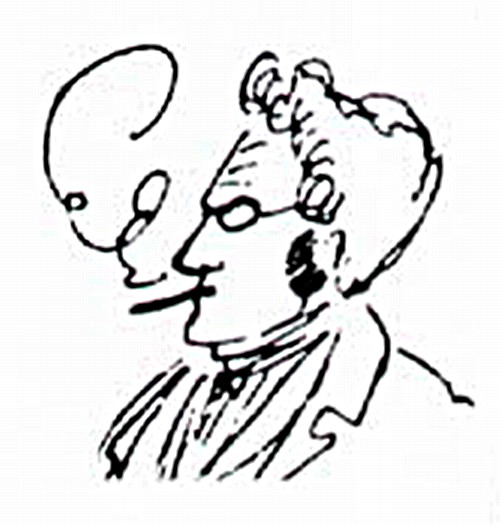
Johann Kaspar Schmidt , better known as Max Stirner, was a German philosopher. He is often seen as one of the forerunners of nihilism, existentialism, psychoanalytic theory, postmodernism, and individualist anarchism. Stirner's main work is The Ego and Its Own, also known as The Ego and His Own . This work was first published in 1845 in Leipzig, and has since appeared in numerous editions and translations.
Max Stirner book The Ego and Its Own
The state calls its own violence law, but that of the individual, crime.
As quoted in The Great Quotations (1960) by George Seldes, p. 664
The Ego and Its Own (1845)
“Thus the radii of all education run together into one center which is called personality.”
Max Stirner book The False Principle of our Education
Source: The False Principle of our Education (1842), p. 25
Max Stirner book The False Principle of our Education
Wollen wir etwa die Pädagogik den Philosophen in die Hände spielen? Nichts weniger als das! Sie würden sich ungeschickt genug benehmen. Denen allein werde sie anvertraut, die mehr sind als Philosophen, darum aber auch unendlich mehr als Humanisten oder Realisten.
Source: The False Principle of our Education (1842), p. 19
“Liberty of the people is not my liberty!”
Max Stirner book The Ego and Its Own
Cambridge 1995, p. 190
The Ego and Its Own (1845)
“Whoever will be free must make himself free. Freedom is no fairy gift to fall into a man's lap.”
As quoted in Forbes Vol. 78 (1956), and in Lifetime Speaker's Encyclopedia (1962) by Jacob Morton Braude, p. 275
Context: Whoever will be free must make himself free. Freedom is no fairy gift to fall into a man's lap. What is freedom? To have the will to be responsible for one's self.
Max Stirner book The False Principle of our Education
Source: The False Principle of our Education (1842), p. 23
Max Stirner book The False Principle of our Education
Source: The False Principle of our Education (1842), p. 23
Max Stirner book The Ego and Its Own
Dover 2005, p. 163
The Ego and Its Own (1845)
Max Stirner book The False Principle of our Education
Source: The False Principle of our Education (1842), p. 23
Max Stirner book The False Principle of our Education
Source: The False Principle of our Education (1842), p. 21
Max Stirner book The Ego and Its Own
Dover 2005, p. 163
The Ego and Its Own (1845)
Max Stirner book The False Principle of our Education
Source: The False Principle of our Education (1842), p. 22
Max Stirner book The False Principle of our Education
Source: The False Principle of our Education (1842), p. 22
Max Stirner book The False Principle of our Education
Source: The False Principle of our Education (1842), p. 25
Max Stirner book The False Principle of our Education
Source: The False Principle of our Education (1842), p. 11
Max Stirner book The False Principle of our Education
Source: The False Principle of our Education (1842), p. 12
Max Stirner book The False Principle of our Education
Truth consists in nothing other than man's revelation of himself, and thereto belongs the discovery of himself, the liberation from all that is alien, the uttermost abstraction or release from all authority, the re-won naturalness. Such thoroughly true men are not supplied by school; if they are there, they are there in spite of school.
Source: The False Principle of our Education (1842), p. 21
Max Stirner book The Ego and Its Own
S. Byington, trans. (1913), p. 421
The Ego and Its Own (1844)
Context: Revolution is aimed at new arrangements; insurrection [Empörung] leads us no longer to let ourselves be arranged, but to arrange ourselves, and set no glittering hopes on “institutions.”
“What is not supposed to be my concern!”
Max Stirner book The Ego and Its Own
Cambridge 1995, p. 5
The Ego and Its Own (1844)
Context: What is not supposed to be my concern! First and foremost, the Good Cause, then God's cause, the cause of mankind, of truth, of freedom, of humanity, of justice; further, the cause of my people, my prince, my fatherland; finally, even the cause of Mind, and a thousand other causes. Only my cause is never to be my concern. "Shame on the egoist who thinks only of himself!"
“The divine is God's concern; the human, man's.”
Max Stirner book The Ego and Its Own
Cambridge 1995, p. 7
The Ego and Its Own (1844)
Context: The divine is God's concern; the human, man's. My concern is neither the divine nor the human, not the true, good, just, free, etc., but solely what is mine, and it is not a general one, but is — unique, as I am unique. Nothing is more to me than myself!
Max Stirner book The Ego and Its Own
Ich setze Mich nicht voraus, weil Ich Mich jeden Augenblick überhaupt erst setze oder schaffe, und nur dadurch Ich bin, dass Ich nicht vorausgesetzt, sondern gesetzt bin, und wiederum nur in dem Moment gesetzt, wo ich mich setze, d.h. Ich bin Schöpfer un Geschöpf in Einem.
Cambridge 1995, p. 135
The Ego and Its Own (1845)
Max Stirner book The Ego and Its Own
Cambridge 1995, p. 219
The Ego and Its Own (1845)
Max Stirner book The Ego and Its Own
Dover 2005, p. 296, 297
The Ego and Its Own (1845)
Max Stirner book The Ego and Its Own
New York 1907, p. 187
The Ego and Its Own (1844)
Max Stirner book The Ego and Its Own
Cambridge 1995, p. 44
The Ego and Its Own (1845)
Max Stirner book The False Principle of our Education
Source: The False Principle of our Education (1842), p. 28
Max Stirner book The Ego and Its Own
Dover 2005, p. 162
The Ego and Its Own (1845)
Max Stirner book The Ego and Its Own
Cambridge 1995, pp. 61-62
The Ego and Its Own (1845)
Max Stirner book The Ego and Its Own
Cambridge 1995, p. 56
The Ego and Its Own (1845)
Max Stirner book The Ego and Its Own
Dover 2005, p. 242
The Ego and Its Own (1845)
“Man with the great M is only an ideal, the species only something thought of.”
Max Stirner book The Ego and Its Own
Dover 2005, p. 182
The Ego and Its Own (1845)
Max Stirner book The Ego and Its Own
Cambridge 1995, p. 237
The Ego and Its Own (1845)
Max Stirner book The Ego and Its Own
Cambridge 1995, p. 170, 171
The Ego and Its Own (1844)
Max Stirner book The Ego and Its Own
Dover 2005, p. 236
The Ego and Its Own (1845)
Max Stirner book The Ego and Its Own
New York 1907, p. 54, 55
The Ego and Its Own (1845)
“Everything sacred is a tie, a fetter.”
Max Stirner book The Ego and Its Own
Cambridge 1995, p. 192
The Ego and Its Own (1845)
Max Stirner book The Ego and Its Own
Cambridge 1995, p. 108
The Ego and Its Own (1844)
Max Stirner book The Ego and Its Own
Tucker 1907, p. 307
The Ego and Its Own (1844)
“The men of the future will yet fight their way to many a liberty that we do not even miss.”
Max Stirner book The Ego and Its Own
Cambridge 1995, p. 114
The Ego and Its Own (1845)
Max Stirner book The Ego and Its Own
S. Byington, trans. (1913), p. 383
The Ego and Its Own (1845)
Max Stirner book The Ego and Its Own
Cambridge 1995, p. 6
The Ego and Its Own (1845)
Max Stirner book The False Principle of our Education
Source: The False Principle of our Education (1842), p. 19
Max Stirner book The Ego and Its Own
S. Byington, trans. (1913), p. 191
The Ego and Its Own (1845)
Stirner's Critics (1845)
Max Stirner book The Ego and Its Own
Dover 2005, p. 184
The Ego and Its Own (1845)
Max Stirner book The False Principle of our Education
Source: The False Principle of our Education (1842), p. 21
“I am owner of my might, and I am so when I now myself as unique.”
Max Stirner book The Ego and Its Own
In the unique one the owner himself returns into his creative nothing, of which he is born. Every higher essence above me, be it God, be it man, weakens the feeling of my uniqueness, and pales only before the sun of this consciousness. If I concern myself for myself, the unique one, then my concern rests on its transitory, mortal creator, who consumes himself, and I may say: All things are nothing to me.
Dover 2005, p. 366
The Ego and Its Own (1845)
Max Stirner book The False Principle of our Education
Only a formal and material training is being aimed at and only scholars come out of the menageries of the humanists, only "useful citizens" out of those of the realists, both of whom are indeed nothing but subservient people. Our good background of recalcitrancy [sic] gets strongly suppressed and with it the development of knowledge to free will. The result of school is then philistinism.
Source: The False Principle of our Education (1842), p. 23
Attributed in Forbes Vol 38 Iss. 2 (1936) p. 18, and in Lifetime Speaker's Encyclopedia (1962) by Jacob Morton Braude, p. 275


