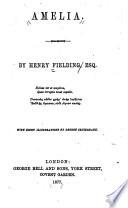
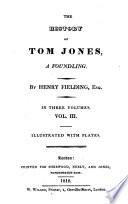
“They are the affectation of affectation.”
Henry Fielding book Joseph Andrews
Book III, Ch. 3
Joseph Andrews (1742)
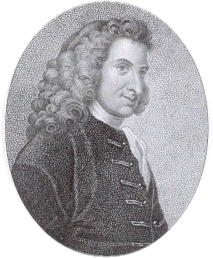
Henry Fielding was an English novelist and dramatist known for his rich, earthy humour and satirical prowess, and as the author of the comic novel Tom Jones. Additionally, he holds a significant place in the history of law enforcement, having used his authority as a magistrate to found what some have called London's first police force, the Bow Street Runners. His younger sister, Sarah, also became a successful writer. Wikipedia
“They are the affectation of affectation.”
Henry Fielding book Joseph Andrews
Book III, Ch. 3
Joseph Andrews (1742)
“The only source of the true Ridiculous (as it appears to me) is affectation”
Henry Fielding book Joseph Andrews
Author's Preface
Joseph Andrews (1742)
“It is much easier to make good men wise, than to make bad men good.”
Henry Fielding book The History of Tom Jones, a Foundling
Source: The History of Tom Jones, a Foundling
Henry Fielding book Joseph Andrews
Book II, Ch. 14
Joseph Andrews (1742)
“Love and scandal are the best sweeteneers of tea.”
Henry Fielding Love in Several Masques
Act IV, sc. xi
Love in Several Masques (1728)
“Some folks rail against other folks, because other folks have what some folks would be glad of.”
Henry Fielding book Joseph Andrews
Book IV, Ch. 6
Joseph Andrews (1742)
“I describe not men, but manners; not an individual, but a species.”
Henry Fielding book Joseph Andrews
Book III, Ch. 1
Joseph Andrews (1742)
Book V, ch. 1
The History of Tom Jones (1749)
“Men who pay for what they eat will insist on gratifying their palates”
Book I, Chapter 1
The History of Tom Jones (1749)
“Money is the fruit of evil as often as the root of it.”
Don Quixote in England (1731), Act I, scene vi http://books.google.com/books?id=8_VbAAAAQAAJ&q=%22Money+is+the+fruit+of+evil+as+often+as+the+root+of+it%22&pg=PA13#v=onepage
Henry Fielding book The History of Tom Jones, a Foundling
Source: The History of Tom Jones, a Foundling
Fielding, Henry; ed. by William Ernest Henley. 1903. The Complete Works of Henry Fielding, Esq: Miscellaneous writings. W. Heinemann. p. 162
“Guilt has very quick ears to an accusation.”
Henry Fielding book Amelia
Book III, ch. 11
Amelia (1751)
Henry Fielding book Joseph Andrews
Abraham Adams, speaking of his host, Wilson.
Book III, Ch. 5
Joseph Andrews (1742)
“To whom nothing is given, of him can nothing be required.”
Henry Fielding book Joseph Andrews
Book II, Ch. 8
Joseph Andrews (1742)
Book V, Ch. 10
The History of Tom Jones (1749)
“Oh, the roast beef of England,
And old England's roast beef!”
The Grub Street Opera (1731), Act iii, scene 2; reported in Bartlett's Familiar Quotations, 10th ed. (1919)
“Oons, sir! do you say that I am drunk? I say, sir, that I am as sober as a judge.”
Don Quixote in England (1731), Act III, scene xiv
“This story will not go down.”
Tumble-down Dick; reported in Bartlett's Familiar Quotations, 10th ed. (1919)
“Can any man have a higher notion of the rule of right and the eternal fitness of things?”
Book IV, Ch. 4
The History of Tom Jones (1749)
“When children are doing nothing, they are doing mischief.”
Book XV, Ch. 2
The History of Tom Jones (1749)
Book I, Chapter 1
The History of Tom Jones (1749)
“Depend on me; never fear your enemies. I'll warrant we make more noise than they.”
Eurydice Hissed : or A Word to the Wise (1736) in The Works of Henry Fielding (1775) in Twelve Volumes, Vol. IV, p. 222
Jonathan Wild (1743, rev. 1754), Book III, ch. 7
Henry Fielding book Amelia
Book IX, Ch. 10
Amelia (1751)
Book XI, Ch. 4
The History of Tom Jones (1749)
Act III, sc. vii
The Miser (1733)
Henry Fielding book The Journal of a Voyage to Lisbon
The Journal of a Voyage to Lisbon (1754), Introduction
“Thwackum was for doing justice, and leaving mercy to heaven.”
Book III, Ch. 10
The History of Tom Jones (1749)
“Much may be said on both sides.”
Spectator, No. 122.
Bartlett's Familiar Quotations, 10th ed. (1919)
“Hairbreadth missings of happiness look like the insults of Fortune.”
Book XIII, Ch. 2
The History of Tom Jones (1749)
“Life may as properly be called an art as any other.”
Henry Fielding book Amelia
Book I, Ch. 1
Amelia (1751)
“It is a trite but true observation, that examples work more forcibly on the mind than precepts.”
Henry Fielding book Joseph Andrews
Book I, Ch. 1
Joseph Andrews (1742)
“It hath been often said, that it is not death, but dying which is terrible.”
Henry Fielding book Amelia
Book III, Ch. 4
Amelia (1751)
“When I'm not thanked at all, I'm thanked enough;
I've done my duty, and I've done no more.”
Source: Tom Thumb the Great (1730), Act I, sc. iii
Henry Fielding Love in Several Masques
Act II, sc. xi
Love in Several Masques (1728)
Henry Fielding Love in Several Masques
Act III, sc. vii
Love in Several Masques (1728)
“Every physician almost hath his favorite disease.”
Book II, Ch. 9
The History of Tom Jones (1749)
“These are called the pious frauds of friendship.”
Henry Fielding book Amelia
Book VI, Ch. 6
Amelia (1751)
Book I, Chapter 6
The History of Tom Jones (1749)


