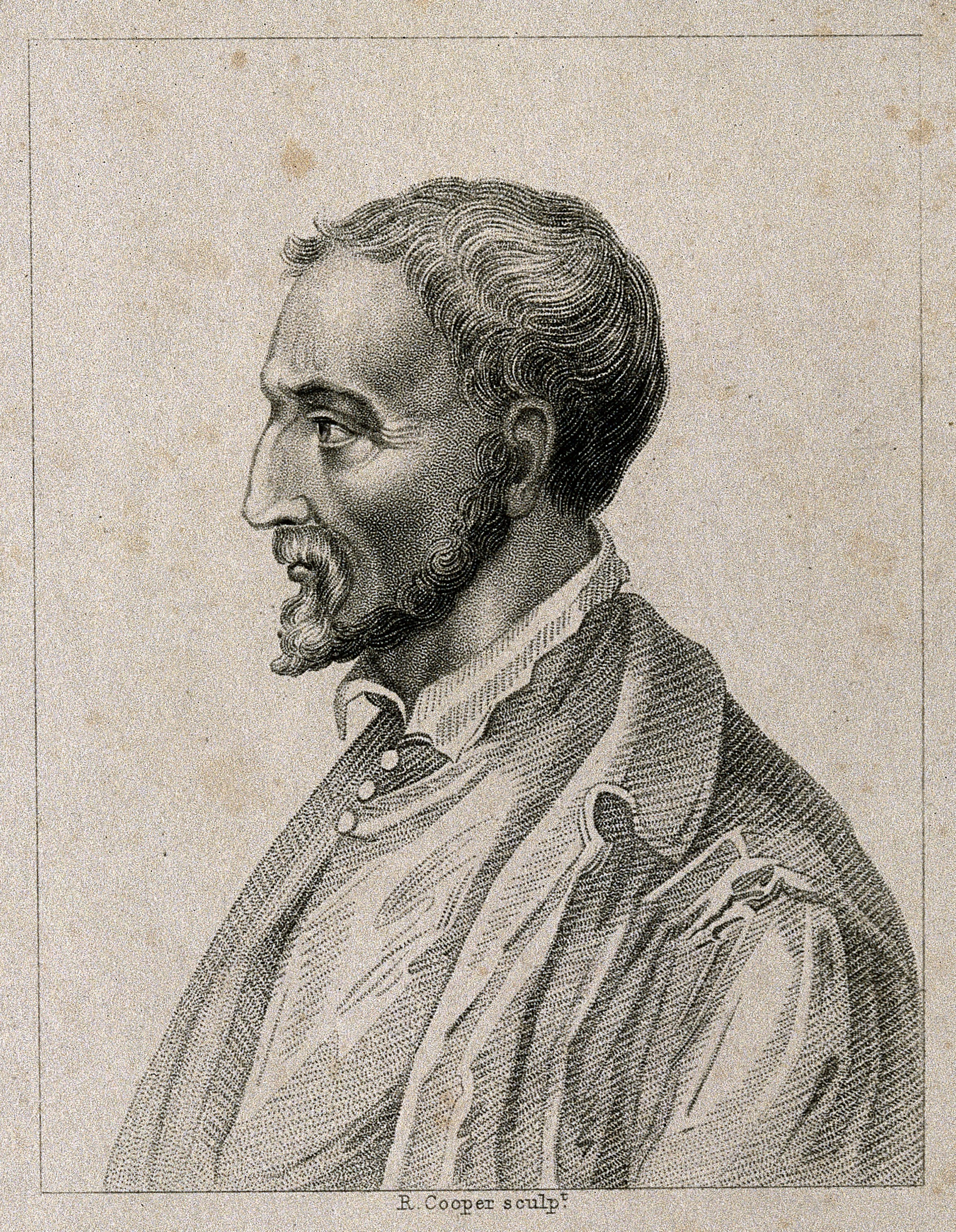
Source: The Great Rules of Algebra (1968), Ch.1 On Double Solutions in Certain Types of Cases
Girolamo Cardano: 17 quotes3 likes
Famous Girolamo Cardano Quotes
The Book of My Life (1930)
“I ponder over ideas, many and weighty, and even over things which can never come to pass.”
The Book of My Life (1930), Ch. 13
Context: I am cold of heart, warm of brain, and given to never-ending meditation; I ponder over ideas, many and weighty, and even over things which can never come to pass.
Cardanus Comforte (1574)
Cardanus Comforte (1574)
Girolamo Cardano Quotes
The Book of My Life (1930)
Context: What if one should address a word to the kings of the earth and say, "Not one of you but eats lice, flies, bugs, worms, fleas—nay the very filth of your servants! With what an attitude would they listen to such statements, though they be truths? What is this complacency then but an ignoring of conditions, a pretense of not being aware of what we know exists, or a will to set aside a fact by force? And so it is with everything else foul, vain, confused and untrue in our lives.
“Yet I avoid this practice in the presence of my benefactors and of my superiors.”
The Book of My Life (1930)
Context: This I recognize as unique and outstanding among my faults—the habit... of preferring to say above all things what I know to be displeasing to the ears of my hearers.... I keep it up wilfully, in no way ignorant of how many enemies it makes for me.... Yet I avoid this practice in the presence of my benefactors and of my superiors. It is enough not to fawn upon these, or at least not to flatter them.<!--Ch. 13
“Better it is to have the worst, than none at all.”
Cardanus Comforte (1574)
Context: Better it is to have the worst, than none at all. for example we see, that houses are nedefull, such as can not possese & stately pallaces of stone, do persuade themselves to dwell in houses of timber and clap, and wanting them, are contented to inhabite the simple cotage, yea rather than not to be housed at all refuse not the pore cabbon, and most beggerly cave. So necessarie is this gift of consolacion, as there livith no man, but that hathe cause to embrace it. for in these things better is it to have any than none at al.
“This is the knowledge I was able to acquire and learn without any elementary schooling”
The Book of My Life (1930)
Context: My father, in my earliest childhood, taught me the rudiments of arithmetic, and about that time made me acquainted with the arcana; whence he had come by this learning I know not. This was about my ninth year. Shortly after, he instructed me in the elements of the astronomy of Arabia, meanwhile trying to instill in me some system of theory for memorizing, for I had been poorly endowed with the ability to remember. After I was twelve years old he taught me the first six books of Euclid, but in such a manner that he expended no effort on such parts as I was able to understand by myself.
This is the knowledge I was able to acquire and learn without any elementary schooling...<!--Ch. 34
The Book of My Life (1930)
Context: I have accustomed my features always to assume an expression quite contrary to my feelings; thus I am able to feign outwardly, yet within know nothing of dissumulation. This habit is easy if compared to the practice of hoping for nothing, which I have bent my efforts toward acquiring for fifteen successive years, and have at last succeeded.<!--Ch. 13
“I am able to admit two distinct trains of thought to my mind at the same time.”
The Book of My Life (1930), Ch. 13
Cardanus Comforte (1574)
Context: Better it is to have the worst, than none at all. for example we see, that houses are nedefull, such as can not possese & stately pallaces of stone, do persuade themselves to dwell in houses of timber and clap, and wanting them, are contented to inhabite the simple cotage, yea rather than not to be housed at all refuse not the pore cabbon, and most beggerly cave. So necessarie is this gift of consolacion, as there livith no man, but that hathe cause to embrace it. for in these things better is it to have any than none at al.
The Great Rules of Algebra (1968)
Context: Although a long series of rules might be added and a long discourse given about them, we conclude our detailed consideration with the cubic, others being merely mentioned, even if generally, in passing. For as positio refers to a line, quadratum to the surface, and cubum to a solid body, it would be very foolish for us to go beyond this point. Nature does no permit it.
Source: The Book of My Life (1930), Ch. 13 Customs, Vices and Errors
“The greatest advantage in gambling lies in not playing at all.”
[Gerolamo Cardano, Liber de ludo aleae, around 1560]


