George Granville, 1st Baron Lansdowne
Epistle to Mrs. Higgons (1690), line 79; reported in Hoyt's New Cyclopedia Of Practical Quotations (1922), "Contentment", p. 133-36.
George Granville, 1st Baron Lansdowne PC was an English poet, playwright, and politician who served as a Privy Counsellor from 1712.
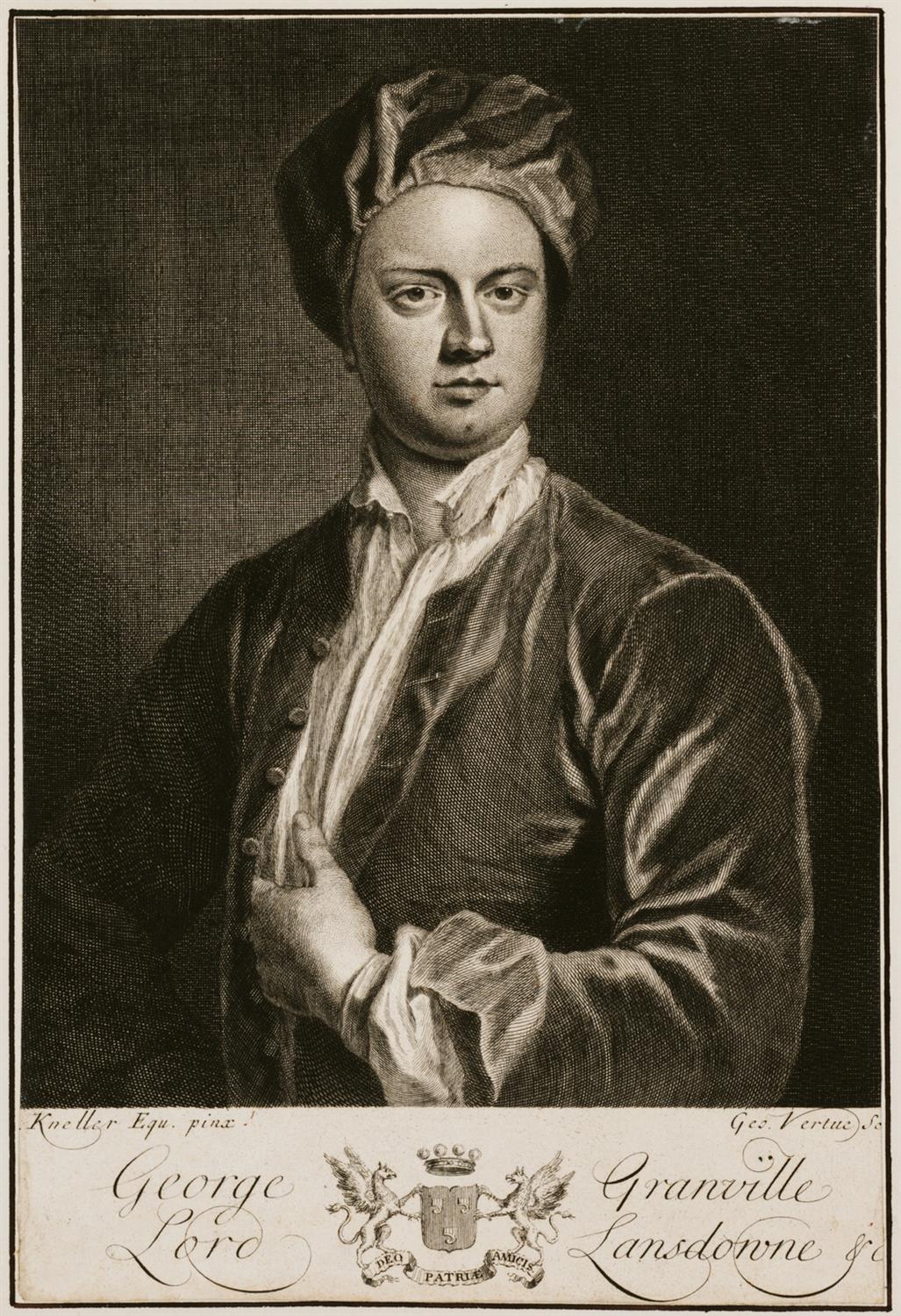
George Granville, 1st Baron Lansdowne
Epistle to Mrs. Higgons (1690), line 79; reported in Hoyt's New Cyclopedia Of Practical Quotations (1922), "Contentment", p. 133-36.
“But, oh! what mighty magician can assuage
A woman's envy?”
George Granville, 1st Baron Lansdowne
Progress of Beauty; reported in Hoyt's New Cyclopedia Of Practical Quotations (1922), "Envy", p. 226-27.
“Tis impious pleasure to delight in harm.
And beauty should be kind, as well as charm.”
George Granville, 1st Baron Lansdowne
To Myra, line 21; reported in Hoyt's New Cyclopedia Of Practical Quotations (1922), "Beauty", p. 57-63.
“Of all pains, the greatest pain
Is to love, and love in vain.”
George Granville, 1st Baron Lansdowne
The British Enchanters (1705), Act III, scene iii.
“Thy thoughts to nobler meditations give,
And study how to die, not how to live.”
George Granville, 1st Baron Lansdowne
Meditations on Death, Stanza 1; reported in Hoyt's New Cyclopedia Of Practical Quotations (1922), p. 504.
“Whoe'er thou art, thy Lord and master see,
Thou wast my Slave, thou art, or thou shalt be.”
George Granville, 1st Baron Lansdowne
Inscription for a Figure representing the God of Love. See Genuine Works. (1732) I. 129. Version of a Greek couplet from the Greek Anthology.
“The kiss you take is paid by that you give:
The joy is mutual, and I'm still in debt.”
George Granville, 1st Baron Lansdowne
Heroic Love, Act V, scene 1; reported in Hoyt's New Cyclopedia Of Practical Quotations (1922), "Kissing", p. 416-19.
George Granville, 1st Baron Lansdowne
She-Gallants; reported in Hoyt's New Cyclopedia Of Practical Quotations (1922), "Women", p. 886-97.
George Granville, 1st Baron Lansdowne
To Myra; reported in Hoyt's New Cyclopedia Of Practical Quotations (1922), "Example", p. 242-43.


